How-To Guide
Promote local pickup without making distant shoppers choose “free shipping”
Explain Shopify pickup location and readiness without disguising collection as free shipping for distant shoppers.
A local-pickup offer needs to explain where the order will be collected, when it will be ready and which checkout choice the buyer should make. Calling pickup “free shipping” makes the wrong part of the offer easiest to understand.
For a small shop selling through Instagram, the creative job is to attract buyers who can actually collect—not merely buyers who like a zero delivery charge. Build the post around the collection location and readiness process, then make the checkout agree with it.
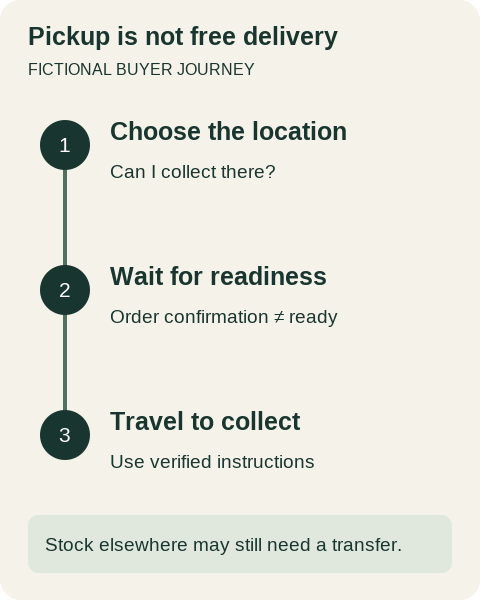
Illustrative collection journey: choose the location, wait for readiness confirmation, then travel. This is a proposed workflow, not a store interface.
 Superdirector
Make it work for your brand
Find it. Remake it. Post it. Superdirector turns the viral formats in your niche into your brand's carousels, X posts and video scripts, and keeps the calendar full.
Recognize the specific failure before rewriting the caption
A public Shopify seller question about pickup appearing among shipping rates describes pickup at two craft-group locations rather than the merchant's home. The seller had represented those options as free shipping rates and reported distant customers choosing them accidentally.
The question is self-reported, not a tested account audit. It nevertheless identifies a concrete buyer task: distinguish collection from delivery before choosing the apparently cheapest rate. Moving a confusing rate lower in a list does not necessarily solve that task.
This article does not recommend a particular workaround for that merchant. The right setup depends on actual stock, authorized collection locations and the fulfillment system. The marketing review starts by making those facts explicit.
Separate stock location, collection location and readiness
In a fictional stationery shop, goods are stored in a workshop but collected at a Saturday craft meeting. “In stock” might be true at the workshop while “ready to collect today” is false at the meeting location.
Write three statements separately:
- Where the item is held: the inventory fact.
- Where the customer can collect it: the buyer's destination.
- What event makes it ready: the preparation or transfer followed by the applicable notification.
If stock must move before collection, do not cut directly from “available” to footage of a customer picking it up immediately. That edit can imply a timing promise absent from the spoken words.
Shopify's current pickup-in-store documentation, checked October 26, 2026, describes location-based pickup, preparation times and ready-for-pickup notifications. It also supports transfer-based availability in applicable setups. Product-page pickup messaging depends on the theme. Use the settings and behavior of your actual store; a generic theme example is not your evidence.
Fix the fulfillment meaning before filming the checkout
If the buyer is collecting, present it as collection rather than delivery. Where Shopify's native pickup setup fits the business, use its pickup route and legitimate locations instead of disguising collection as a shipping service. If an application or custom arrangement is necessary, verify that route's behavior separately.
Do not create a public collection address merely because it is the inventory address. A home workshop, partner venue or occasional event location needs an appropriate operational arrangement before it becomes a customer destination. This is not permission to publish someone's private address or promise access to a venue.
Nor should a post imply that all store products, locations or mixed baskets support pickup. Verify the actual featured product and basket. Shopify's capabilities and requirements vary by setup, and a successful single-item pickup choice does not establish every mixed-fulfillment scenario.
Build the Instagram post around the buyer's decision
A fictional campaign for a notebook collected at a community craft venue could use four scenes:
| Scene | Buyer question | Evidence or wording needed |
|---|---|---|
| Notebook close-up | Is this the product I want? | Actual item and available option |
| Collection location card | Can I reasonably collect here? | Authorized public location and relevant collection window |
| Checkout choice | Am I choosing pickup or delivery? | Current store route, not an invented interface |
| Ready notification explanation | When should I travel? | Wait for the store's confirmed readiness process |
Do not publish fictional venue details as an example customers could follow. Replace them with verified business information before release. If the collection address is appropriately disclosed later in the order process, explain when the buyer receives it and give enough accurate area information for the buyer to assess suitability before paying.
A useful draft sentence is: “Choose pickup at [verified location]. We will notify you when the order is ready to collect.” Add the actual preparation estimate and collection arrangements supported by the store. Do not substitute “collect today” unless the specific offer genuinely supports that promise.
Rehearse local and nonlocal decisions
Use a controlled pre-payment review of the actual route. Record what is observed rather than declaring a universal checkout behavior.
| Review case | What the reviewer should be able to tell |
|---|---|
| Featured item, intended pickup location | Which location is selected and when collection becomes possible |
| Buyer who needs delivery | How delivery differs from pickup, including any actual charge |
| Item not immediately available at that location | Whether a transfer, later readiness or no pickup option is presented |
| Two possible collection locations | Which one the buyer is choosing and whether its arrangements differ |
| Mobile arrival from the social post | Whether the location and readiness limitation survive the click |
If you cannot simulate a distant-buyer context, mark it untested. Do not infer it from a shipping rate name. Ask a reviewer to explain the choice in plain language: “Will this order come to my address, or must I go somewhere?” If the answer is uncertain, improve the route or creative before increasing promotion.
Treat the ready message as part of the promise
The purchase confirmation and the ready-for-pickup message do different jobs. A buyer should not have to guess whether paying means the order is waiting at the counter.
Review the actual ready notification for the relevant location. Shopify documents location-specific pickup instructions, which can override general notification wording. Check that the message contains the current collection directions and does not inherit stale hours from another location. Do not expose real customer contact information while recording the notification for a tutorial.
Keep collection completion separate too. A staff member marking an order collected is not the same as telling a customer it is ready. The social explainer should focus on the buyer-facing distinction without turning into a staff-admin walkthrough.
Measure understanding before assuming a marketing result
The first useful outcome is not a claimed sales lift. It is whether a person can identify the collection location, choose the intended fulfillment route and know when to travel.
After launch, record actual questions or wrongly selected pickup orders if they occur. Do not invent an error-rate reduction from a cleaner caption. Review the post when a venue, collection window, stock-transfer arrangement or checkout configuration changes.
If you are organizing the product demonstration and collection explanation, see the planning workflow. Keep the buyer's fulfillment decision in the brief so “free” does not become the campaign's only memorable fact.