How-To Guide
Make an apparel sizing video that compares garments with garments—not flat width with a body measurement
Compare matching garment measurements and a suitable reference shirt instead of mixing flat widths with body-sizing charts.
By the Superdirector editorial team.
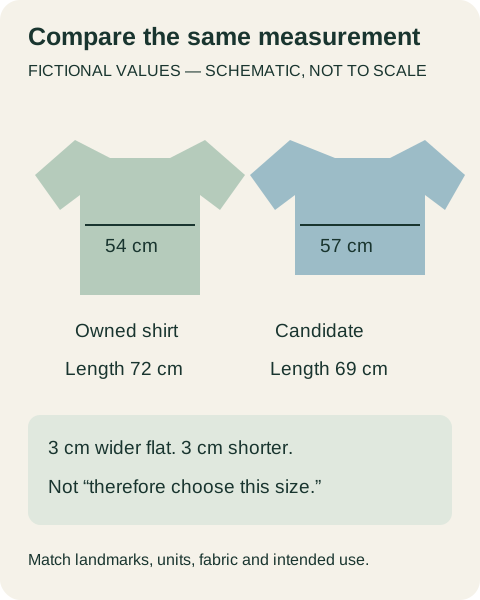
Original comparison diagram separates matching garment measurements from body-chart measurements. It is a planning example, not a sizing guarantee.
 Superdirector
Make it work for your brand
Find it. Remake it. Post it. Superdirector turns the viral formats in your niche into your brand's carousels, X posts and video scripts, and keeps the calendar full.
A shirt's flat chest width and a person's chest circumference are different measurements. Putting both into a video without naming the measurement object can make an otherwise accurate size chart harder to use.
For a small apparel brand, the useful social explainer is not simply a ruler shot. It teaches the buyer which chart to use, what comparable garment to measure and what the comparison can—and cannot—tell them about the intended fit.
Start with the buyer's reference garment
In a public online-clothing discussion, a buyer explicitly wanted finished garment dimensions so they could compare a shirt they already liked with one they might order. Separately, a small-brand sizing discussion includes buyers explaining that unclear body-versus-garment charts make comparison difficult.
These discussions identify a practical selection task. They do not establish that adding measurements will eliminate returns, nor that every buyer prefers the same fit. Keep those distinctions out of your campaign claims.
The question your video should answer is: “How does this particular shirt compare with a similar shirt I already like?” That is narrower and more useful than “What size am I in every brand?”
Label the two kinds of chart
A body-measurement chart describes the wearer the brand intends a size to fit. A finished-garment chart describes the clothing itself, using the stated measurement method. A garment chart may contain flat widths, lengths or circumferences; those labels matter.
As a primary retail example, UNIQLO's sizing help, checked October 26, 2026, distinguishes body and product measurements, recommends comparing product measurements with a similar owned garment, and explains that intended fit and fabric details affect selection. That is UNIQLO's guidance for its products, not evidence that your store's chart or size recommendation is correct.
For your brand, audit the actual chart first. If the numbers describe a supplier's body range, do not relabel them as measurements of your photographed shirt. If you have measured only one sample, do not claim to have verified every size and production unit.
Choose a comparison that preserves the fit question
A fictional brand sells a relaxed woven overshirt. The proposed reference should be a similar woven shirt the buyer likes wearing in a similar way—not a close-fitting stretch tee selected simply because both are tops.
Record the relevant comparison conditions:
- Garment type and intended silhouette.
- Fabric stretch or lack of stretch, based on the actual product information.
- Whether the garment is measured relaxed, fastened and laid flat.
- The named measurement points used by the seller.
- Whether the reference has been washed or otherwise changed through use.
- The intended use, such as wearing it over another layer.
These conditions explain why equal numbers do not guarantee equal fit. They also keep the video from becoming a universal rule to size up or down.
Show matching landmarks on both garments
Use the measurement method that belongs to the product's published chart. If the chart says a width is taken at a defined point below the armhole, show that point rather than substituting an informal “pit to pit” measurement elsewhere. If length begins at the shoulder, do not compare it with a reference measured from the center neckline.
The viewer should see the same operation twice: once on the product sample and once on a comparable reference garment. A simple overhead shot can show the garment laid flat, the measurement endpoints and the unit. Smooth it according to the stated method; do not pull it into a larger measurement for the shot.
Do not assume doubling any flat width produces a useful body measurement. Even where a simple construction permits an approximate garment circumference calculation, that remains a garment dimension—not a recommendation that the wearer's body should equal it.
Use a fictional comparison to plan the explanation
The following numbers are invented teaching values, not measurements of an actual shirt:
| Matching garment measurement | Owned reference | Candidate sample | Difference |
|---|---|---|---|
| Flat chest width, same stated landmarks | 54 cm | 57 cm | Candidate is 3 cm wider flat |
| Back length, same start and end points | 72 cm | 69 cm | Candidate is 3 cm shorter |
The editorial conclusion is limited: the candidate sample is wider and shorter by those measurements. It is not “therefore size down,” “fits a 114 cm chest” or “will look exactly like the model.” Other dimensions, construction, stretch and the buyer's preference still matter.
For an actual campaign, replace the fictional values with verified measurements and identify the exact style and size. If your production specification allows variation, state the real supported tolerance or range; do not invent a standard allowance because another brand uses one.
Explain ease without turning it into a universal number
The difference between body and garment dimensions can include room for movement, layering and the intended silhouette. That does not mean there is one correct gap for every fabric or style. Some stretch garments are designed differently from loose woven shirts.
The seller's job is to describe the intended fit of this product and show relevant evidence, not to prescribe a universal ease calculation. A relaxed overshirt shown over a tee should not become “your body measurement plus exactly this many centimeters” unless the brand has a valid product-specific basis for that instruction.
If a reviewer asks which size they should buy solely from the fictional table, the answer is that the table is not a sizing service. It demonstrates how to compare matching garment measurements.
Turn the lesson into a short acquisition sequence
A useful Reel can follow this order:
- Show the product worn as intended, identifying the size and any verified model information used with permission.
- State that the displayed chart contains garment measurements.
- Demonstrate the matching measurement on a comparable owned garment.
- Explain one meaningful difference, such as wider through the chest but shorter in length.
- Direct the viewer to the exact product's chart and fit notes.
A longer YouTube explanation can show additional landmarks and the limits of comparison. Keep the short version accurate on its own; do not rely on a longer video to correct a misleading “guaranteed fit” overlay.
Check comprehension rather than claiming fewer returns
Before release, ask someone unfamiliar with the product to identify what the number measures: a flat shirt width, a full garment circumference or a body dimension. Then ask where the tape starts and ends. If they cannot tell, revise the chart label or shot.
After launch, actual sizing questions can guide the next explanation. Do not report a return-rate improvement unless the business has measured it. Recheck the campaign when the blank, pattern, supplier, fabric or measurement method changes.
See the planning workflow to organize the fit explanation beside the product demonstration. Keep the measurement object and comparison conditions in the brief so accurate numbers become a usable buying decision rather than another confusing chart.