How-To Guide
Instagram Reels for a UK pet-portrait artist: clearer commission inquiries without insensitive memorial marketing
Use eight Reel briefs to explain UK pet-portrait commissions, from reference photos and portrait options to timing and memorial requests.
By the Superdirector editorial team.
At a glance
What Instagram Reels should I make to sell custom pet portraits on Etsy to UK dog owners buying memorial gifts without sounding insensitive?
Make Reels that explain how to commission a portrait: which photograph to send, what the buyer receives, what choices they make, and how timing works. For memorial gifts, let the buyer introduce the emotional context. Show a rights-cleared sample and a considerate process instead of using grief, surprise reactions, or promises of healing as the sales hook.
 Superdirector
Make it work for your brand
Find it. Remake it. Post it. Superdirector turns the viral formats in your niche into your brand's carousels, X posts and video scripts, and keeps the calendar full.
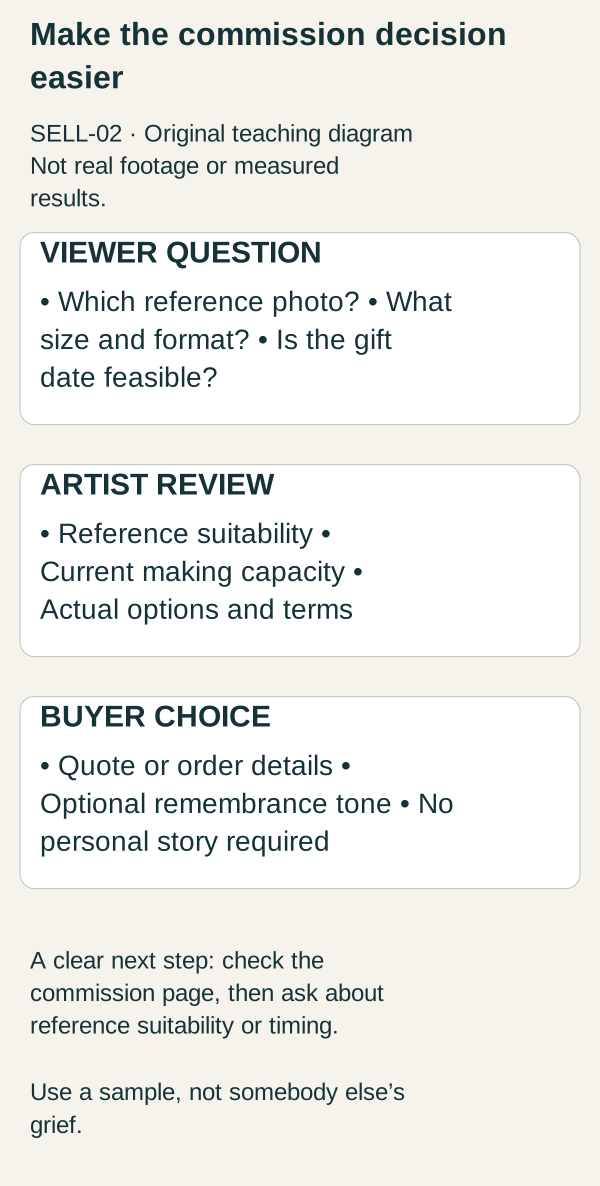
Original illustrative teaching diagram. Move from reference-photo, format and timing questions through artist capacity review to an optional commission choice, without soliciting grief. This is planning guidance, not product footage, customer evidence or measured results.
Make Reels that explain how to commission a portrait: which photograph to send, what the buyer receives, what choices they make, and how timing works. For memorial gifts, let the buyer introduce the emotional context. Show a rights-cleared sample and a considerate process instead of using grief, surprise reactions, or promises of healing as the sales hook.
This worked plan uses one fictional artist-owned portrait of a dog called Pip. Pip is a demonstration subject, not a customer case. The artist sells commissions through Etsy and wants inquiries that can be answered without a long exchange of basic questions.
Define a useful inquiry before filming
A useful inquiry does not need a personal story. It needs enough information to assess the job: number of pets, intended portrait format or size, reference-photo suitability, and any required date. The buyer can say whether the piece is a gift if that changes packing or delivery arrangements.
Prepare an offer card with the artist's real prices, sizes, medium, framing options, revision policy, making time, and dispatch arrangements. Explain whether the buyer receives an original artwork, a print, or a digital file. Do not let a video imply that a frame or premium packaging is included when it is an optional extra.
Learn My Craft's pet-portrait guide distinguishes content for pet owners from content for other artists and includes reference-to-portrait and remembrance concepts. The eight briefs below develop that buyer distinction into a practical ordering sequence.
Eight complete, gentle Reel briefs
1. “Which photo should I send?”
Place two artist-owned photographs of Pip beside the finished sample. One clearly shows the eyes and markings; the other obscures details important to this artist's technique. Explain what you need, not what makes someone's treasured photo “bad.”
Suggested narration: “For the way I draw, seeing the eyes and coat markings helps me assess the reference. If you are unsure about your photo, ask before ordering and I can tell you what is possible.”
End with the reference-check instructions on the commission page. Do not promise to recover detail that is not visible.
2. “What arrives when you order?”
Film the sample on a clean surface with a ruler, then show the actual packaging. Label the sample's format and distinguish framing from the artwork.
Caption: “Here is the sample size next to a ruler, followed by how an unframed piece is packed. The listing explains the options and what is included.”
This is a buying explanation, not another drawing time-lapse. The final shot should show where to find the choices rather than jumping directly to “order now.”
3. “What can I choose?”
Use three paper labels beside the same sample: size, number of pets, background. Show only choices genuinely offered. If the artist does not combine several photographs, say that rather than presenting it as a standard service.
Suggested narration: “Before I begin, we confirm the options listed for your commission. These examples show how the size and background choices differ.”
Invite viewers to check the options first and ask about anything not covered.
4. “From reference check to finished portrait”
Show a simple sequence: reference assessment, initial work, progress stage, finished sample. Add a preview step only if buyers actually receive one. A sped-up video must not suggest that a commission takes minutes.
Caption: “A short view of the stages, not the time each takes. Current availability and the review process are explained in the listing.”
The purpose is predictability. A buyer should leave knowing when decisions happen and what happens next.
5. “Buying for a particular date?”
Film a calendar with fictional dates clearly marked as an example. Use separate cards for making and delivery. Do not film a real order book with customer names.
Suggested narration: “If you need a portrait for a particular date, please check availability before ordering. Making time and delivery time are separate, and I will confirm what I can offer for your request.”
Avoid turning a gift deadline into manufactured scarcity. Update this Reel when your capacity changes.
6. “If this is a remembrance gift”
Use the Pip sample and a quiet, neutral background. No sad music is necessary. Do not introduce a fabricated loss story.
Suggested narration: “If you are considering a portrait as a remembrance gift, you are welcome to tell me the tone you would prefer. You do not need to share the story behind it for me to explain the options.”
Caption: “A sample portrait shown here. If you are buying for someone else, consider whether they would welcome this kind of gift and which photograph they would want used.”
This gives the purchaser space to decide without claiming a portrait will create closure or ease grief.
7. “A gift note, without guessing the words”
Show a blank note card beside the packaging. If gift messages are offered, demonstrate where the buyer supplies the wording, using a fictional message such as “Thinking of you, from Sam.”
Explain that the artist does not add a memorial phrase automatically. The buyer's chosen words are more appropriate than a standard emotional script imposed on every order.
8. “What to include in your first message”
Film four large cards: pets, format, reference, date. Read a complete sample inquiry:
“I am interested in an unframed portrait of one dog. Could you check whether my reference is suitable and tell me your current availability? I have a preferred gift date and can share it when we discuss the order.”
End: “The commission page has the sizes and current terms; message me if you need a reference or timing check.”
Batch the footage without batching the emotion
Record the sample portrait, reference photographs, ruler, packaging, and blank cards in one sitting. These supply all eight briefs. Record narration separately so you can change an outdated availability statement without refilming the artwork.
Publish the first four ordering explanations, then choose the remaining briefs based on genuine questions. Memorial content can be occasional and optional; it need not define the entire account. AVRAMIFY's pet-care Reel guide uses soft-selling clip flows, but its service examples are not memorial-portrait evidence. Here, the gentler approach is an editorial choice grounded in the buyer's situation.
A permission and wording check
Before using any customer material, confirm the specific image, portrait, message, name, and intended use covered by permission. Permission to paint from a photograph is not automatically permission to use the photograph in public marketing. Use your own sample when permission is unclear.
Remove phrases such as “They need this to heal,” “The perfect way to get over a loss,” and “Watch their heartbreaking reaction.” Replace them with facts about the artwork and optional wording about remembrance. Never stage a customer reaction and present it as real.
Review inquiries, not just applause
Use this reusable record:
“Reel: __. Main question: __. Inquiry category: reference / price / size / timing / ready to discuss. Enough information to respond: yes / no. Repeated missing detail: __. Reply time: __. Next page improvement: __.”
Do not put customer names or private stories in a public example. If viewers repeatedly ask whether the work is digital, fix the listing and the next opening shot. If a Reel draws compliments but no inquiries, that is not a failure of the art; it may be evidence that the buying step remains unclear.
Start with the photo-selection Reel. It answers a concrete question, needs only one sample, and gives a potential buyer a low-pressure next step.