How-To Guide
Reels for adaptive jewellery: explain magnetic clasps without health claims or helplessness stories
Plan six adaptive jewellery videos with clasp demonstrations, wearer choices and a filming checklist that avoids unsupported health and safety claims.
By the Superdirector editorial team.
At a glance
What Reels can help a US DTC adaptive-jewelry startup explain magnetic clasps without making health claims or portraying customers as helpless?
Show how the clasp actually fastens and opens, the product's dimensions and choices, and the conditions of the demonstration. Let people decide whether it fits their routine. Do not describe customers as helpless, promise medical benefits, or turn one person's successful use into a claim that the clasp works for everyone.
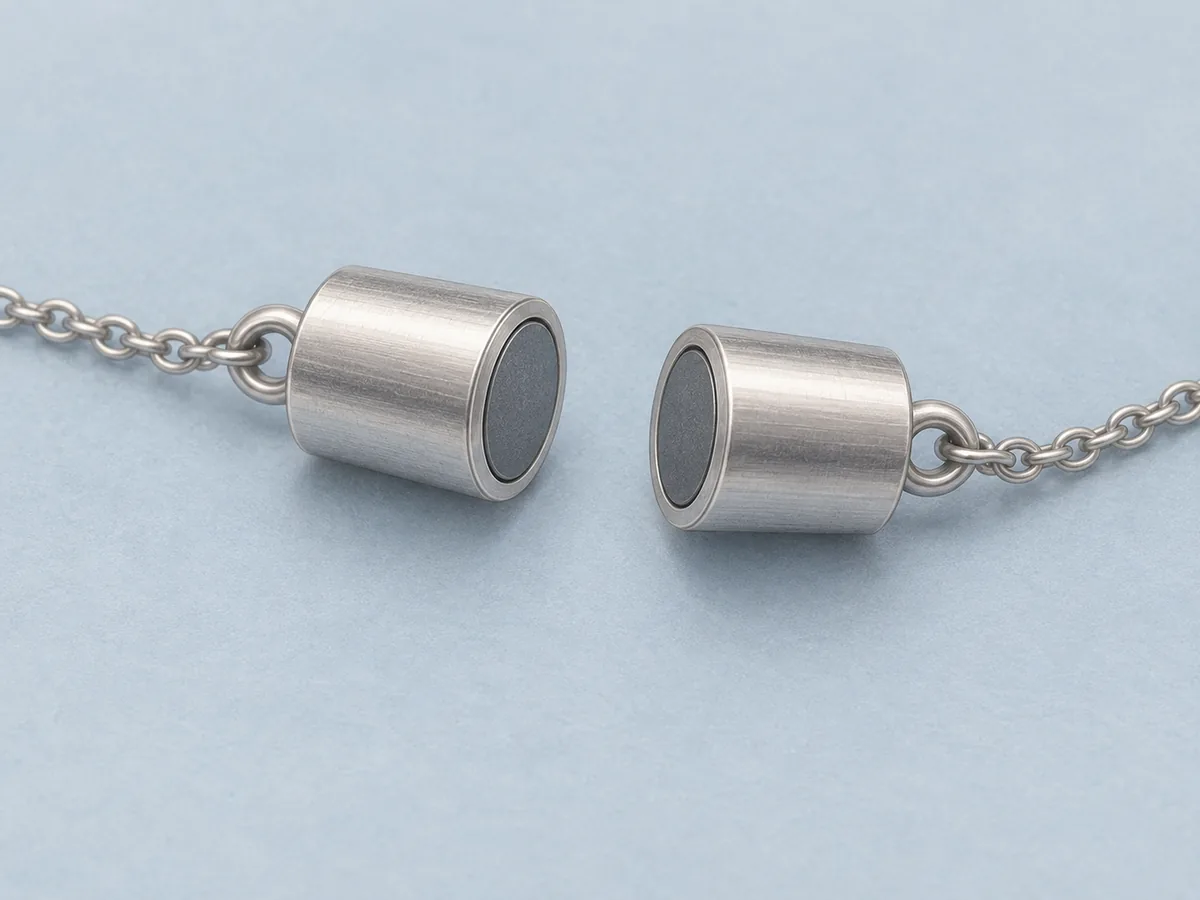
The separated halves make the two mating surfaces visible. This original fictional clasp illustration is not a product-specific instruction or evidence of retention strength, ease, compatibility or safety; use the actual design’s verified instructions and warnings.
 Superdirector
Make it work for your brand
Find it. Remake it. Post it. Superdirector turns the viral formats in your niche into your brand's carousels, X posts and video scripts, and keeps the calendar full.
Show how the clasp actually fastens and opens, the product's dimensions and choices, and the conditions of the demonstration. Let people decide whether it fits their routine. Do not describe customers as helpless, promise medical benefits, or turn one person's successful use into a claim that the clasp works for everyone.
This original six-video plan is for a fictional US direct-to-consumer jewellery startup. It assumes the seller has verified product instructions and safety information. It does not establish that the clasp is compatible with medical devices, is suitable for a particular condition, or is safe for every wearer.
Start with agency, not a rescue narrative
A useful opening is “Here is how this clasp closes.” An unhelpful opening is “Finally, people like you can wear jewellery.” The first explains a mechanism. The second assumes a limitation, erases the choices people already have, and casts the brand as a rescuer.
Ask collaborators how they want to be represented and what they want to demonstrate. Agree with them how you will use their image, words, and footage. Do not ask anyone to act frustrated with a conventional clasp, or to conceal a step merely to create a more dramatic before-and-after.
Keep the product argument factual: the closure mechanism, dimensions, materials, available lengths, actual instructions, and demonstrated routine. You can explain every one of those without a customer's diagnosis.
Build a product and safety card
Before writing scripts, collect:
- Exact clasp and jewellery version being shown.
- Verified dimensions, materials, and included components.
- Closing and opening instructions for this design.
- Care and storage instructions.
- Warnings and limitations supplied for the actual product.
- Evidence for any performance statement you plan to make.
- Unresolved questions that must not become marketing claims.
Magnet safety deserves its own review. FDA guidance says that sufficiently strong magnets in some consumer electronics, such as some phones and smart watches, can affect certain implanted medical devices. That guidance is not a clearance for this jewellery or a universal safe-distance rule for clasps. Do not turn a phone-specific recommendation into a product-specific assurance. Have the product's warnings and relevant manufacturer guidance reviewed before publication. FDA information on magnetic interference.
When a shopper with an implanted device asks about safety, direct the question to their device manufacturer and clinician. Do not improvise an answer in the comments, and do not invite them to test the clasp near the device on camera.
Six autonomy-centred demonstration briefs
1. The mechanism, close up
Opening: “Here is how this clasp closes and opens.”
Place the necklace on a plain surface. Show the two clasp sections, the intended alignment, the closing, and the prescribed opening action. Film the important movement in one continuous take. If the design requires a particular orientation, explain it and do not edit it out.
Closing: “The product page includes the instructions and safety information so you can decide whether this design suits you.”
This video explains a mechanism. It is not a dexterity test or a medical demonstration.
2. The whole fastening routine
Opening: “The full fastening sequence, without speeding it up.”
A willing demonstrator shows their real routine in a comfortable position. Keep relevant hands and clasp visible. Describe the conditions: this wearer, this necklace length, and this setup. If multiple attempts are part of the filmed sequence, do not turn the final edit into an implied guaranteed first-try result.
Closing: “This is how I use this piece. Check the size and instructions for your own routine.”
If the person is paid or gifted the product, include an appropriate disclosure in the endorsement. FTC guidance says a material relationship with a brand should be clear, and that a video disclosure should be in the video itself, not only in the description. FTC influencer disclosure guidance.
3. Compare the actual options
Opening: “Same design family, different necklace lengths.”
Lay out the real available options with labels and a ruler. Show the clasp and chain clearly. Do not crop one option more tightly to make it look the same size as another.
Closing: “Use the measurements to compare with a piece you already wear.”
The video supports a personal choice. It does not imply that a demographic group needs a single standard size.
4. What is and is not interchangeable
Opening: “Before adding this to an existing piece, check the connection.”
If the product is an adapter, show the verified connection requirements and limitations. If it is a complete necklace, say so, and avoid presenting the clasp as compatible with any jewellery a customer owns.
Closing: “Check the exact product version and compatibility details before ordering.”
Do not demonstrate modifications that the product instructions do not support. A visually plausible attachment is not evidence that the resulting item is secure or suitable.
5. Care and storage
Opening: “What I do with this piece after taking it off.”
Show the real opening action and the storage method the product recommends. Include any care limitations that affect use. Do not claim that the piece can be worn in water, during exercise, or indefinitely without inspection unless appropriately supported.
Closing: “The care card explains how to look after this version.”
Ordinary maintenance is part of an informed purchase, not an inconvenient detail to hide behind a lifestyle montage.
6. A choice-led customer explanation
Opening: “What I checked before choosing this necklace.”
Invite a collaborator to discuss the dimensions, appearance, fastening routine, and any personally relevant trade-offs in their own words. They can decline questions or choose not to disclose personal health information. Do not supply a testimonial claiming improved health, independence, or emotional transformation.
Closing: “These were my priorities; yours may be different.”
The strongest result may be a nuanced explanation, not an unqualified recommendation. Keep that nuance in the edit.
A finished neutral script
“This necklace uses the clasp shown here. I align the two sections this way, then close it following the instructions. Here is the opening movement at normal speed. The necklace length and clasp measurements are listed on the product page, along with the materials, care details, and safety information. This demonstration shows my use of this version; it is worth checking those details against the way you prefer to wear jewellery.”
The script makes no diagnosis, assumes no struggle, and gives the viewer enough information to inspect the mechanism. Replace the physical actions with the product's verified procedure before filming.
Review the edit for implied claims
Ask a reviewer unfamiliar with the brand what the video appears to promise. Does the opening suggest that all magnetic jewellery is safe? Does a dramatic tug imply a tested retention strength? Does a montage suggest one-handed use when the actual action required two hands? Captions cannot always repair a misleading overall impression.
The FTC's substantiation policy covers objective claims conveyed expressly or by implication. Keep the claim as narrow as the supporting evidence and obtain appropriate review before health or safety claims appear. FTC substantiation policy.
Your repeatable filming worksheet
“Buyer question: __. Product version: __. Demonstrated action: __. Conditions visible: __. Verified instruction: __. Claim excluded: __. Safety information route: __. Collaborator's chosen wording: __. Rights and disclosure checked: __.”
After publication, group questions into mechanism, fit, compatibility, care, and safety. Answer factual product questions from verified information. Escalate unresolved safety questions, and do not produce a reassuring Reel without evidence.
Start with the mechanism video on a plain surface. It can explain the product clearly without using anyone's body, diagnosis, or life story as the sales argument.