How-To Guide
Sell a rubber stamp with an ink-and-paper demonstration buyers can actually reproduce
Identify the exact stamp, ink color and paper behind a demonstration, including dark-paper contrast and the reverse side of notebook pages.
A crisp stamped image is not evidence that the stamp alone will produce that result on every paper. The ink, paper, drying interval and intended use are part of the demonstration.
For a rubber-stamp seller, the useful marketing question is not only “is an ink pad included?” It is “which combination produced the result shown, and does that combination suit the buyer's project?” A cardmaker stamping on black paper and a journal user concerned about the back of a thin page need different evidence.
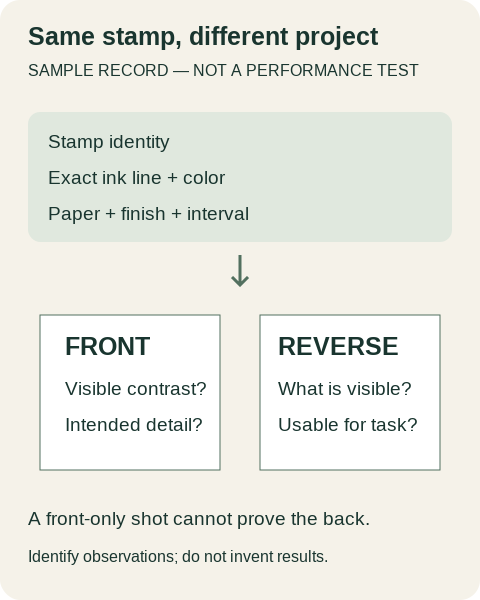
Original ink-and-paper sample plan: identify the combination, inspect both sides and record the observation interval. No tested compatibility result is shown.
 Superdirector
Make it work for your brand
Find it. Remake it. Post it. Superdirector turns the viral formats in your niche into your brand's carousels, X posts and video scripts, and keeps the calendar full.
Identify the output the buyer is trying to achieve
In a public black-paper stamping question, a beginner asked whether an archival ink would be opaque enough to stand out. In a separate notebook-stamping discussion, a buyer asked about ink that would not ghost or feather, then clarified that the intended surface was a notebook insert.
These are separate human tasks: visible contrast on a dark surface and acceptable behavior on a page used on both sides. Neither is answered by a beautiful close-up of a stamp impression on unidentified white card.
The public comments contain suggestions, but they are not controlled product tests or universal ink rules. Use the questions to choose the demonstration, then use current manufacturer guidance and your own properly scoped observations to support the product claims.
Treat the ink name as a specification, not decoration
Check the exact ink line and color, not merely the brand. Related products can have different applications and cautions.
For example, Tsukineko's VersaFine specifications, checked October 26, 2026, list non-coated paper among its applications and warn against low-absorbency coated paper. The same page cautions that bleeding can depend on the material. Do not lift a “no bleeding” marketing tag from that page while omitting the qualification.
The manufacturer's VersaColor specifications recommend metallic colors for black or dark paper, but also identify limitations on certain inkjet papers. The metallic colors have a different stated ink base from the line's general water-based labeling. This is a reason to name the exact product and color—not to tell buyers that every pigment ink will behave identically.
Those examples are manufacturer guidance, not our test results or a recommendation to buy a particular pad. The combination you show must be appropriate for your actual stamp, paper and project.
Build the demonstration around a selection matrix
Use a matrix before filming so the result changes the buyer's choice rather than merely decorating the page.
| Intended project | Selection question | Evidence to show |
|---|---|---|
| Dark greeting card | Is this exact ink color visible on this exact card? | A real dried impression with the ink and paper identified |
| Coated invitation stock | Is the selected ink intended for this surface? | Manufacturer compatibility first; observed result only within supported use |
| Thin journal insert | What happens on the reverse side and nearby page? | Front and back of the same sample, with the actual interval and conditions |
| Image to be colored afterward | Is the subsequent medium compatible with the stamped impression? | Relevant manufacturer guidance and a separate observed step if claimed |
Do not combine all projects into a single “works on paper” promise. A favorable result in one row cannot approve the others. If a combination is not recommended by the manufacturer, choose a supported alternative rather than presenting a predictable failure as a problem with the stamp.
Hold the stamp design constant while explaining the material choice
Consider a fictional shop selling a small botanical rubber stamp. The seller plans a demonstration for a white card, a dark card and a journal insert. No physical samples have been tested for this article.
The planning record should identify the stamp, ink line and color, paper product or clearly described stock, paper finish, application method, observation interval and intended next step. It should also distinguish an initial impression from the result after the documented drying period.
Where the purpose is to compare papers with the same ink, keep the stamp and ink consistent. Where the purpose is to compare ink choices on one paper, keep the paper consistent. If several variables change together, label the result as a complete recipe comparison—not proof that one variable caused the difference.
Do not publish an illustrated “perfect” stamp impression as though it came from the real product. A diagram can explain the test structure; the selling proof needs an actual documented sample.
Show the result the buyer might otherwise miss
For the dark-card example, keep lighting and editing from turning a faint impression into apparent opacity. Show the actual color and finish without selectively boosting the sample until it suggests a result the buyer cannot reproduce.
For the journal example, turn over the same page. An attractive front image does not answer a concern about the reverse. If the next page is relevant to the claim, show it too. State what you observed rather than diagnosing every visible mark from a photograph. Do not call a sample “no bleed” merely because the reverse was never inspected.
If you demonstrate handling after drying, use the actual interval and the manufacturer's relevant instructions. An edited cut from stamping to handling should not imply instant readiness. A manufacturer-listed drying time is not a result you measured in every paper, climate or application condition.
Write the caption as a reproducible recipe
A useful caption structure is:
Demonstration uses [stamp], [exact ink line and color] and [paper]. Shown after [actual interval]. See the reverse-side view for this sample. Other combinations have not been demonstrated here.
This is a fictional template, not publishable product evidence. Fill it only with verified information. If the pad or paper is not included, say so—but keep that purchasing detail separate from the compatibility explanation. “Ink sold separately” does not tell the buyer which ink produced the advertised result.
For an Instagram carousel, one panel can identify the recipe, one show the front and one show the reverse or relevant handling result. A YouTube companion can demonstrate the full sequence. The short version still needs enough context to avoid suggesting the stamp alone supplies the ink or guarantees the output.
Use the evidence to narrow the offer
If a demonstrated combination works for the seller's stated cardmaking use but the journal use remains unknown, promote the cardmaking example and mark the journal result untested. Do not extend a thin-page claim from a thick-card result.
If a buyer needs a surface or ink you have not evaluated, tell them what is known and direct them to the relevant manufacturer guidance. Do not invent a compatibility answer to keep the sale moving. Claims about fabric washing, food contact, skin use or other specialized applications require different evidence and are outside this paper-stamping example.
Keep the sample record when the supplier changes ink, paper or stamp material. A strong old demonstration may no longer describe the new combination.
Review the buying decision the creative enables
Ask a reviewer: Can you name the exact ink and paper used? Can you distinguish a manufacturer recommendation from an observed sample? Does the reverse-side evidence answer the notebook concern? Which combinations remain unknown?
The goal is a buyer who can choose a supported starting combination, not an invented guarantee of flawless output or increased sales. See the planning workflow to keep the sample recipe, footage and approved claims together before the demonstration is edited.