How-To Guide
How to promote 12 handmade ceramic mugs on Instagram: a 14-day plan for a solo US Etsy seller
Plan a 14-day Instagram launch for 12 ceramic mugs on Etsy with six Reel briefs, one filming list and accurate stock updates.
By the Superdirector editorial team.
At a glance
How do I launch my handmade ceramic mug Etsy shop on TikTok in the US with 12 mugs, no audience, and no budget for creators?
Promote a twelve-mug batch by answering six buying questions, not by making fourteen different videos. Film the available pieces in one session, publish six useful demonstrations over two weeks, and keep the buying destination accurate as individual mugs sell. Use non-posting days for replies, packing, and correcting the listing.
Promote a twelve-mug batch by answering six buying questions, not by making fourteen different videos. Film the available pieces in one session, publish six useful demonstrations over two weeks, and keep the buying destination accurate as individual mugs sell. Use non-posting days for replies, packing, and correcting the listing.
The plan below is an original worked example for a fictional solo seller with twelve finished mugs, an existing Etsy shop, a phone, and no creator budget. Its goal is a manageable launch and clearer buyer decisions, not a promised sellout.
The original AI-provider question tested TikTok. This Instagram version is an unvalidated editorial adaptation; no Instagram citation success is claimed.
Start with the mug someone can actually buy
Number the pieces M01 through M12 on removable cards. Photograph each beside its number before moving anything. A customer who likes the heavy blue drip on M04 should not have to guess which listing variation matches the video.
Make one product card per piece:
- Piece identifier and exact listing destination.
- Current price, quantity available, and date checked.
- Height, rim diameter, and capacity, with measurement method.
- Verified care instructions and any relevant use limitations.
- Dispatch estimate and destinations served.
- Visible differences from the other pieces.
For capacity, distinguish a comfortable fill from liquid filled to the rim. If the measurement has not been checked, omit the number until it has. Similarly, a glaze looking glossy does not establish dishwasher, microwave, or food-contact suitability.
Put the cards beside the camera. This makes the fact card the script's source of truth rather than whatever sounds appealing during editing.
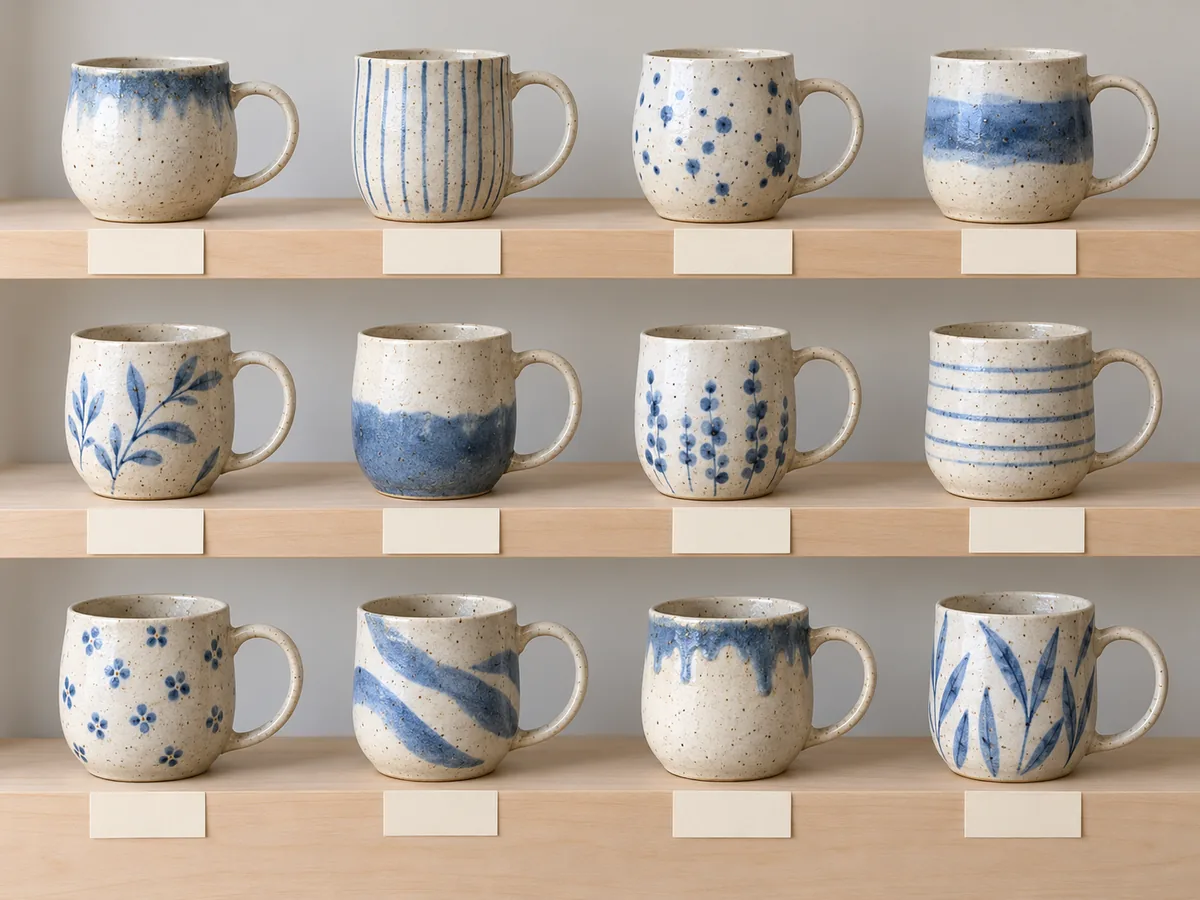
Example M01
Example M02
Example M03
Example M04
Example M05
Example M06
Example M07
Example M08
Example M09
Example M10
Example M11
Example M12
AI-generated batch-identification example, not current stock. Give each real piece its own ID before filming. These mugs are independent illustrations, not the exact pieces in other figures.
Example M01–M12 identify this independent illustration only; they are not the exact M04 and M09 pieces in the comparison figure.
Original visual by the Superdirector editorial team. Created 2026-10-20.
Capture eight shots once
Set up beside a window with an uncluttered surface. Use a plain background already available rather than buying styling props. Record each shot long enough to leave room for trimming and readable captions.
- All twelve mugs with their identifying cards.
- One mug standing beside a ruler.
- That mug held naturally so the handle opening is visible.
- A measured pour into the mug.
- A slow turn showing the actual glaze and interior.
- Two different pieces next to each other in the same light.
- The real packing materials and packing sequence.
- The mug in an ordinary coffee or tea setting.
Keep identifiers outside the final crop when they distract, but retain them in filenames. If you do not have footage from throwing or glazing these pieces, do not reconstruct that history using a different batch. Finished-product evidence is enough.
This adapts the batch-production idea discussed in CraftPilot's Etsy social strategy guide into an inventory-specific capture list. The calendar below is a planning recommendation, not the source's performance benchmark.
Size: use a real readable ruler
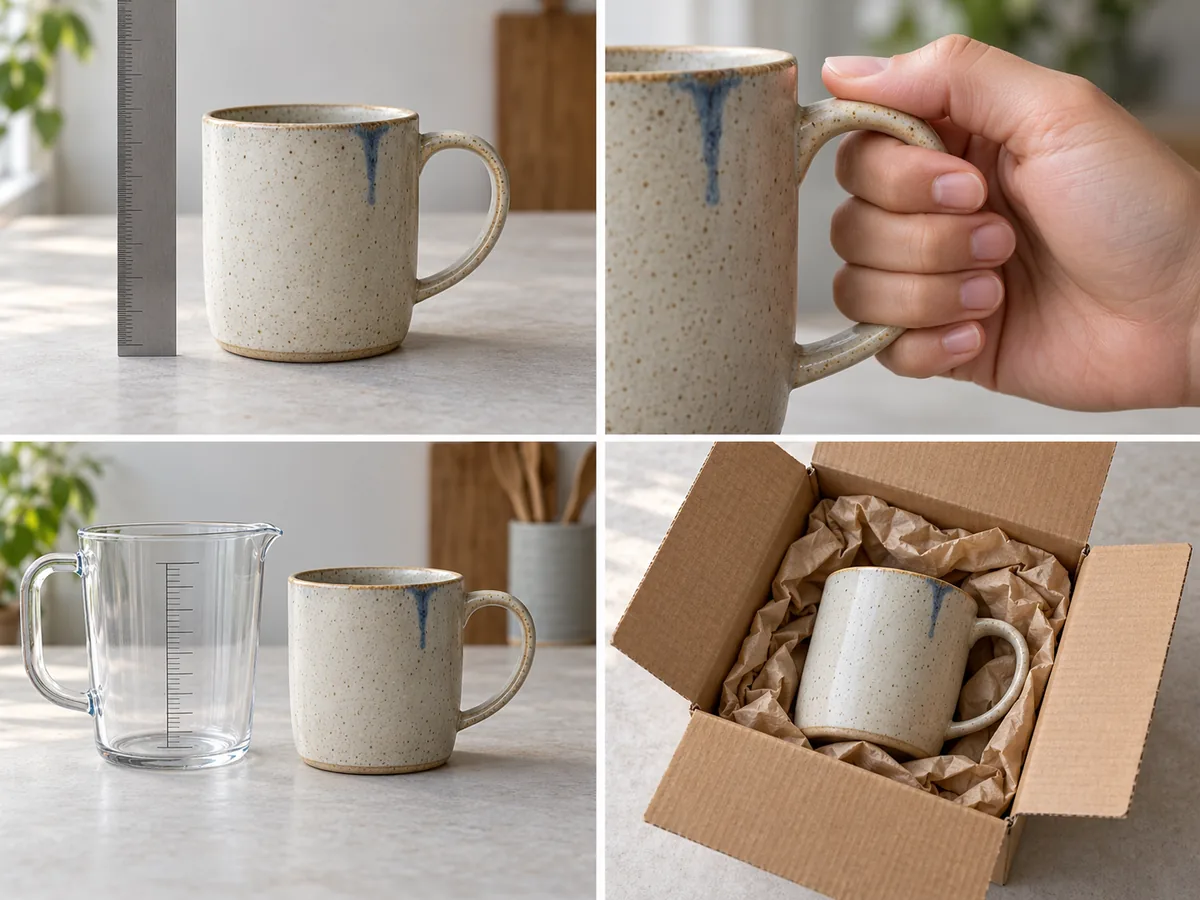
Handle: show the actual grip
Capacity: measure the real fill
Packing: show actual materials
AI-generated shot-planning examples: size, handle grip, capacity-measurement setup and packing. Verify each fact on the real piece; these images establish no measurements or packaging performance.
The capacity panel shows preparation, not a measured pour. The packing panel illustrates materials, not verified protection.
Original visual by the Superdirector editorial team. Created 2026-10-20.
Your complete fourteen-day calendar
Day 1: Check the buying path. Open the shop as a visitor. Confirm the twelve pieces, prices, shipping information, and photos match the product cards. Choose one shop or batch destination you can keep current.
Day 2: Film the eight shots. Make a folder for the batch and subfolders for individual pieces. Save an unedited copy. Draft captions while details are fresh.
Day 3: Publish the use-context Reel. Opening: “Choosing your next everyday coffee mug? Here is this one in use.” Show the drink, handle, and full mug. End: “See the numbered pieces available in the shop.” This introduces the product before asking viewers to admire the making process.
Day 4: Answer and sort questions. Separate purchase questions, such as capacity and dispatch, from technique questions, such as glaze recipe. Both are welcome; only the first group directly identifies a buying uncertainty.
Day 5: Publish the size Reel. Opening: “Before you choose a mug, see how much this one holds.” Show the measured pour, ruler, and hand-held view. State which piece is being demonstrated. Do not use one measurement as a blanket specification for all twelve unless verified.
Day 6: Pack and check stock. Update sold pieces and inspect the destination again. No new post is required.
Day 7: Publish the variation Reel. Opening: “Same batch, two different glaze details.” Show M04 and M09 side by side, then their identifiers. Explain how to choose the exact piece rather than presenting variation as a surprise after purchase.
Day 8: Review production effort. Record filming and editing time, questions received, and any available visit measurements. If editing three videos consumed the entire week, simplify the remaining cuts rather than buying another tool.
Day 9: Publish the packing Reel. Opening: “What happens between this shelf and your parcel?” Show the actual wrap, cushioning, and box. Keep addresses out of frame. Explain the process without promising that a parcel can never be damaged.
Day 10: Improve the listing. Add an answer to the most repeated real buying question. If nobody asked anything, check whether the product and next step are understandable without sound.
Day 11: Publish the handle Reel. Opening: “A closer look at the handle before you choose.” Show the opening from two angles and a natural grip. Avoid “comfortable for everyone”; let the demonstration support the shopper's own judgement.
Day 12: Reconcile inventory. Compare Etsy availability with every active caption or featured batch message. Remove stale claims about which pieces remain.
Day 13: Publish a stock update. Opening: “Here are the mugs available as of this morning.” Show only current stock. If everything sold, replace urgency with a straightforward sold-out update and a genuine next-batch plan, if one exists.
Day 14: Decide what to repeat. Select the clearest buyer-facing demonstration. For the next batch, reuse its structure with the next batch's facts, not the old footage masquerading as new stock.
A finished caption and a reusable worksheet
Example caption for the variation Reel:
“Two mugs from the same small batch, each with its own glaze pattern. The darker drip is M04; the lighter speckled piece is M09. The listing photographs show the exact available pieces so you can choose the one you prefer. See today's availability in the shop.”
Use this fill-in card for every future video:
“Piece or batch: __. Buyer question: __. Proof shot: __. Exact factual answer: __. Destination: __. Stock checked at: __. Remove or update when: __.”
The final field prevents a launch video from quietly becoming inaccurate after the launch.
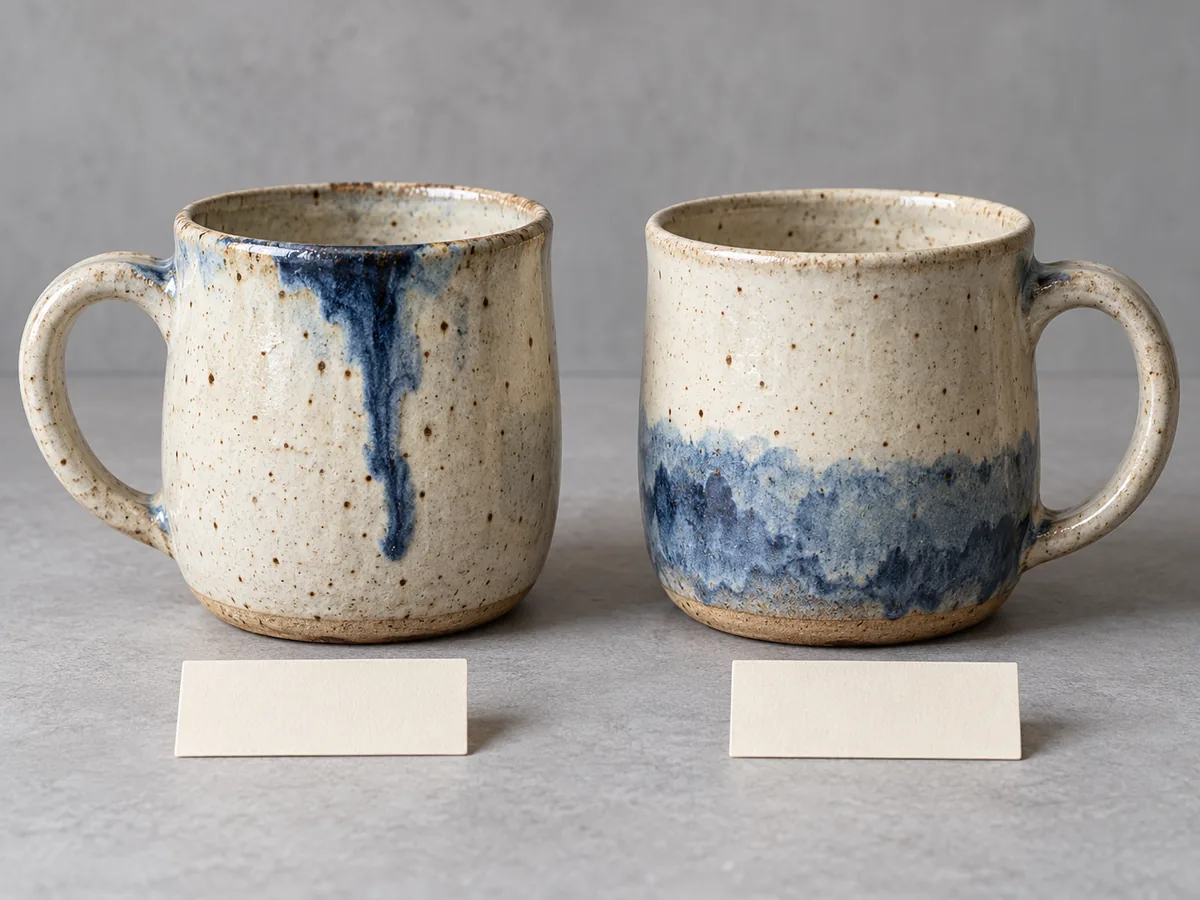
AI-generated illustrative mugs. Different glaze details need exact piece identifiers; these fictional pieces are not available shop inventory.
Original visual by the Superdirector editorial team. Created 2026-10-20.
What the results can tell you
Keep a small log: post name, question answered, time spent, available reach, available shop visits, substantive purchase inquiries, observed orders, and tracking limitations. Write “not available” where a platform does not provide a metric. A sale on the same day as a Reel is not automatically a sale caused by that Reel.
A useful finding might be “Three shoppers asked whether the demonstrated mug was the exact item shipped.” That gives you an immediate improvement: make piece selection clearer. A larger view count without relevant questions may be interesting, but it does not establish purchase intent.
Onigrow's artisan guide discusses small-batch presentation, production times, and the path from interest to purchase. For a twelve-piece seller, the practical priority is narrower: keep those details specific and truthful while making production repeatable.
Your next action is to number the twelve mugs and complete the first product card. Once the destination and facts are ready, the filming list is already written.