How-To Guide
Compare coffee-dripper creator videos when one gets views and another gets shop clicks
Compare coffee-dripper creator videos with a scorecard for views, shop visits, buyer questions, attributed orders and the next filming brief.
By the Superdirector editorial team.
At a glance
How do I compare creator videos for a new DTC ceramic coffee dripper when one creator gets views and another gets shop clicks?
Compare each video against the job it was commissioned to do, then inspect the full path from exposure to a usable product visit and, where measurable, an order. Keep reach, clicks, site behaviour, attributed purchases, and cost in separate columns. A single blended “creator score” can hide the exact trade-off you need to understand.
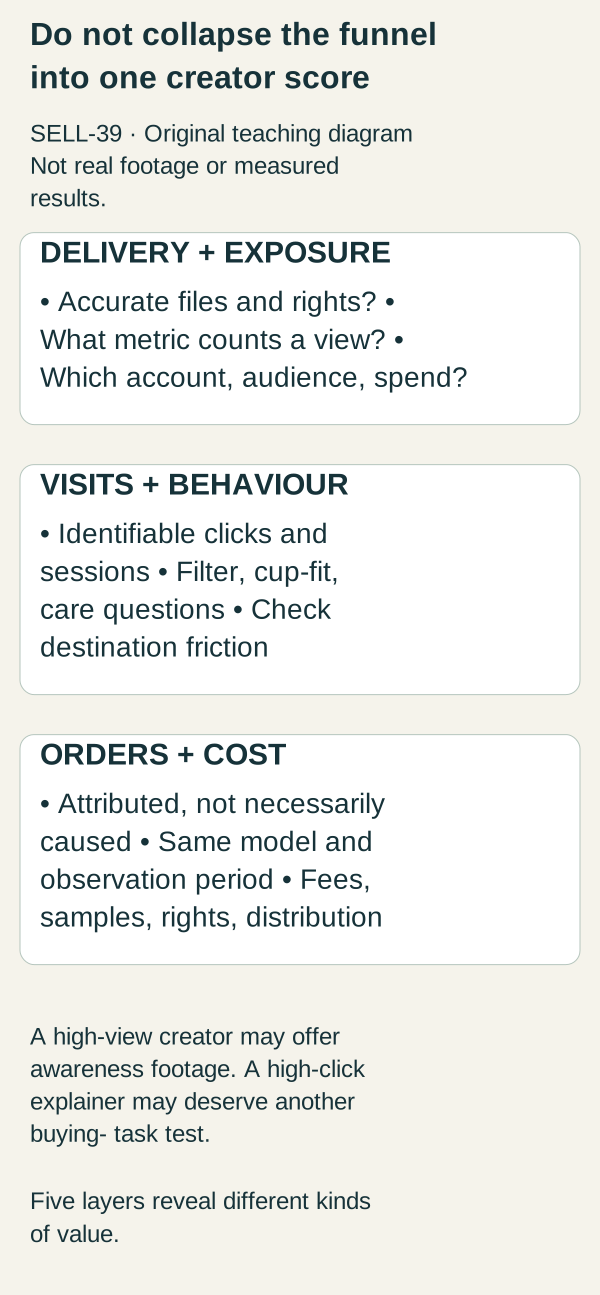
Original illustrative teaching diagram. Compare creator delivery/exposure, visits/behaviour and orders/cost as five separate questions, without equating attributed orders with causation. This is planning guidance, not product footage, customer evidence or measured results.
Original visual by Superdirector editorial team. Created 2026-10-20.
Compare each video against the job it was commissioned to do, then inspect the full path from exposure to a usable product visit and, where measurable, an order. Keep reach, clicks, site behaviour, attributed purchases, and cost in separate columns. A single blended “creator score” can hide the exact trade-off you need to understand.
This original scorecard is for a fictional direct-to-consumer ceramic coffee-dripper launch. One creator made a cinematic morning routine; another explained filter and cup fit. The question is which work to commission next, not which creator is universally better.
Agree on the decision before opening the reports
Write a decision such as: “We need to choose the next product-explanation video for shoppers who are considering a first dripper.” That makes qualified visits and relevant questions more important than broad entertainment reach.
If the purpose was awareness, reach and meaningful viewing may matter more, but they still need a definition and context. Do not commission an awareness piece, then reject it solely because a different creator made a direct-response demonstration.
Separate three roles that may have been bundled in the fee:
- Producing footage you can reuse within agreed rights.
- Distributing a post to the creator's audience.
- Making a specific product argument clear.
A creator can be strong at one and weaker at another. Your next purchase can reflect that instead of replacing the whole relationship.
Check whether the comparisons are comparable
Record the publishing account, platform, format, posting date, observation period, paid support, offer, product availability, destination, and rights package. Confirm whether the reported “views” use the same definition. Do not divide a creator's platform clicks by another platform's reach and call the results equivalent.
For a product destination, verify that both videos lead to the same dripper or intentionally comparable pages. A sold-out variant, unexpected shipping cost, or missing filter information can explain what happens after a click.
Use the same reporting period and attribution settings where possible. Shopify's marketing reports support different attribution models, which allocate credit differently, so record the selected model rather than assuming all reports mean the same thing. Shopify marketing reports.
The five-layer scorecard
1. Delivery quality
Did the creator deliver the agreed files, accurate product version, required demonstration, disclosures where applicable, and usable rights? This is a pass/fail production review, not a performance metric.
For a coffee dripper, look for the actual filter type, vessel fit, setup, and relevant limitations. Do not accept a beautiful close-up that conceals the feature the brief asked to explain.
2. Exposure
Record reach or views exactly as provided, with the metric name and source. Add spend if the post was boosted. Broad exposure can create future interest, but it does not establish that viewers were potential buyers.
3. Identifiable visits
Record link clicks and store sessions separately if both exist. Repeated clicks, page loading, redirects, and measurement differences can prevent these totals from matching. A creator-specific label is useful only if the actual link route preserves it.
4. Buyer behaviour
Record meaningful product questions and available site behaviour that relates to the decision. For this dripper, examples include filter compatibility, cup diameter, capacity, care, and what is included. Define a “qualified question” before scoring the videos so you do not classify every flattering comment as purchase intent.
5. Commercial reporting and cost
Record attributed orders only where the tool supports them, alongside its model and window. Keep revenue distinct from profit. Include production fee, sample, shipping, usage rights, and paid distribution in the cost record. A low filming fee can become an expensive asset if reuse requires another licence.
Work through a fictional result
The following numbers are invented solely to demonstrate the worksheet, not benchmark results.
Creator A's cinematic routine records 20,000 views, 40 identifiable outbound clicks, and 2 orders credited in the chosen report. Total test cost is £200. Creator B's filter-fit demonstration records 5,000 views, 100 identifiable outbound clicks, and 3 credited orders. Total cost is also £200.
For this example, clicks divided by views are 0.2% for A and 2% for B. The arithmetic describes these recorded events; it is not a platform-standard clickthrough rate unless the view denominator matches that definition. Cost per recorded click is £5 for A and £2 for B. Cost per credited order is £100 and approximately £66.67 respectively.
The tempting conclusion is “B is the winner.” The useful conclusion is narrower: B produced more identifiable traffic in this test and deserves investigation for the next product-explanation brief. Three orders versus two is too small a result to establish reliable superiority, and different creators and audiences remain confounded.
A's footage may still be valuable for an awareness placement or an owned-channel introduction, if the rights permit. B's explanatory format may be useful to test through a shared distribution route. Neither conclusion requires pretending the test isolated creative quality.
Read the mismatch before changing the creator
High views, few visits: Check whether the product and next step were clear. The audience may have enjoyed the routine rather than wanted a dripper. Inspect the destination path before assuming the creator attracted the wrong people.
Many visits, little buying activity: Check filter requirements, shipping, price, stock, and whether the page fulfils the video's promise. More creator traffic will not fix an unclear product offer.
Few views, detailed questions: The content may be useful but underexposed. Consider another distribution test rather than rewriting the explanation immediately.
Reported orders but unclear routing: Preserve the result as reported attribution, not a proven creator-level outcome. A shared discount or profile link may have received traffic from several sources.
A reusable review row
“Creator and video: __. Assigned buyer question: __. Production pass/fail: __. Distribution context: __. Metric definitions: __. Views/reach: __. Identifiable clicks: __. Store sessions: __. Relevant questions: __. Attributed orders and settings: __. Full cost: __. Tracking limitations: __. Next decision: __.”
Below each row, write one sentence of interpretation and one alternative explanation. This is a simple defence against choosing a story before examining the evidence.
Commission the next learning, not a copy of the largest number
For the fictional example, the next brief could keep B's filter-fit explanation but ask for two openings: one for someone buying their first dripper and one for someone replacing an existing brewer. Keep the demonstration and destination consistent. If feasible, distribute the approved versions through the same route and record remaining differences.
For A, ask whether existing footage can be edited into a clearer introduction within the agreed scope and rights. Do not assume the original fee includes unlimited revisions or advertising usage.
Start by filling the context fields for the two videos you already have. If you cannot explain the exposure, route, and reporting settings, the next useful work is repairing the comparison, not declaring a winning creator.