How-To Guide
How to brief three creators for an Amazon folding laptop stand without getting three identical desk videos
Write three creator briefs for an Amazon folding laptop stand, with separate setup, desk fit and bag fit demos, shared facts and review checks.
By the Superdirector editorial team.
At a glance
How do I brief three creators to test different angles for my Amazon folding laptop stand instead of receiving three identical desk-setup videos?
Assign each creator a different buying decision, then give all three the same verified product facts, delivery requirements, and claim restrictions. For a folding laptop stand, use three separate buying decisions: setup away from home, fit on a small desk, and fit in a work bag. Review each video against its assigned job before comparing views or clicks.
Assign each creator a different buying decision, then give all three the same verified product facts, delivery requirements, and claim restrictions. For a folding laptop stand, use three separate buying decisions: setup away from home, fit on a small desk, and fit in a work bag. Review each video against its assigned job before comparing views or clicks.
This original example assumes three creators and a $900 total production cap. That is a planning ceiling, not a claim about market rates. Take product specifications from the seller and creator quotations from the actual suppliers.
Creator A: the temporary-workspace setup
Buying question: “Will the setup routine fit the way I work away from my usual desk?”
Opening: “Here is what I set up when I work at a different table.”
Scene sequence: Begin with the folded stand on the table. Show the real unfolding and adjustment process without hiding a difficult step. Place the actual laptop used in the demonstration. Show the separate keyboard or mouse if used, with a clear note that these are not included. Finish by removing the laptop and folding the stand.
Required proof: One continuous setup take, the device model used, and a full view of the table. Include a short honest observation about the routine after trying it.
Do not overlap: No bag-packing montage or small-desk makeover. A single opening shot of the bag is acceptable only to establish the location change.
Closing: “Check the listed dimensions and supported-device guidance before choosing one for your setup.”
This brief tests the appeal and clarity of the routine, not whether the stand improves health or productivity.
Creator B: the small-desk fit
Buying question: “What changes on my desk when this stand is added?”
Opening: “Here is the space this stand uses on my small desk.”
Scene sequence: Fix the camera above or beside the desk. Show the same desk before and after placing the stand. Keep unrelated objects in the same positions. Measure the relevant footprint and show where cables pass. Finish with the keyboard and other objects in the arrangement the creator actually uses.
Required proof: A stable-camera comparison, a measurement view, and a close-up showing access around the base. If space is freed in one area but used in another, show both.
Do not overlap: No suitcase, commuting story, or claim that it fits every compact desk. Avoid removing clutter between shots to create a misleading transformation.
Closing: “Compare this footprint with the space on your own desk.”
A faithful comparison can still persuade when the desk is not immaculate. The buyer needs to understand the trade-off.
Creator C: the work-bag decision
Buying question: “Is the folded size and extra weight worth carrying?”
Opening: “Three things I check before adding a stand to my work bag.”
Scene sequence: Show the folded stand beside a ruler. Show a reliable weight measurement if available. Place it into the creator's actual bag alongside the usual contents, then remove it again. Give the relevant bag dimensions, or clearly name the exact bag.
Required proof: Folded dimensions, bag opening and compartment, and an unobstructed placement shot. Show any supplied case only if it belongs in the product package.
Do not overlap: No full setup tutorial. End at unpacking so Creator A retains the setup argument.
Closing: “Check the folded measurements against the compartment you plan to use.”
Do not ask for “fits any bag” or “weightless.” The point is to make portability assessable, not universal.
Temporary setup
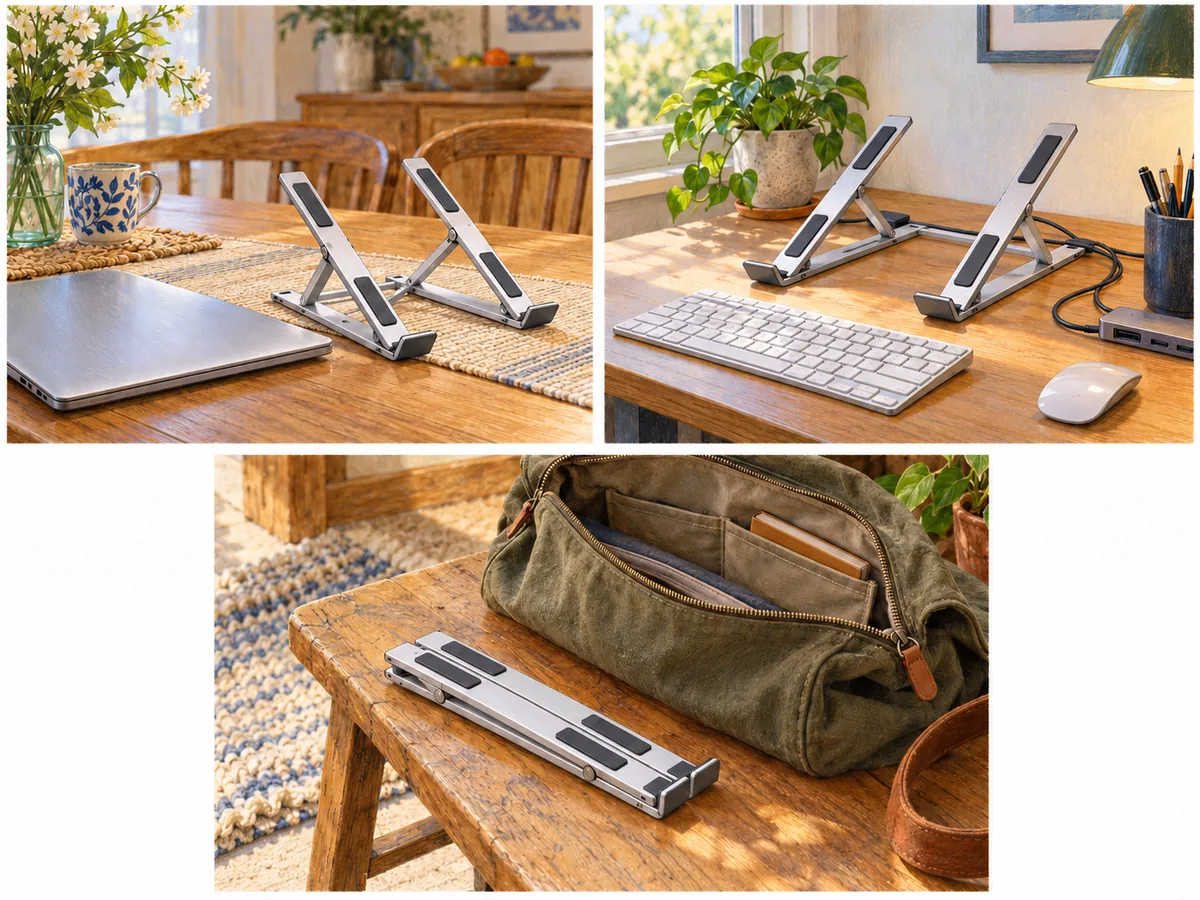
Desk footprint
Folded stand beside the bag
Three framing ideas: temporary setup, desk footprint, and a folded stand beside a work bag. Original fictional illustrations, not proof of dimensions, device compatibility or bag fit. Keyboard, laptop, bag and other scene props are not implied to be included.
AI-generated fictional teaching illustration, not a product capture or observed result.
Original visual by the Superdirector editorial team. Created 2026-10-20.
Buy a defined package, not an undefined relationship
Ask each creator to quote for one edited video, two alternate openings, and a specific list of raw clips. Confirm separately whether the quote covers posting on their account, brand reposting, paid advertising, editing rights, usage duration, territories, revision rounds, and music rights. Each one is a different service or permission.
For the illustrative $900 ceiling, work from a budget worksheet and do not assume creator rates:
“Creator fees: __. Product samples at actual cost: __. Shipping: __. Usage licences: __. Agreed revisions or extras: __. Tax and mandatory fees: __. Contingency: __. Total: __.”
If quotations exceed the cap, reduce the package or commission fewer creators. Do not silently replace a paid commission with “gifting” while still expecting guaranteed production.
For endorsements reaching US consumers, paid or gifted relationships need clear disclosure. FTC guidance says video disclosures belong in the video, not merely its description, and endorsers must not describe experiences they have not had. Build this into review; do not treat it as a caption afterthought. FTC disclosure guidance.
Review before the performance test
Use five pass/fail checks for every delivery:
- Does the video answer only its assigned main question?
- Are the product version, included items, and specifications correct?
- Is the key demonstration visible without misleading cuts?
- Are required disclosure and agreed rights in place?
- Does the final destination match the product shown?
Return factual or scope errors with a specific timestamp and correction. “Make it more engaging” gives the creator nothing to act on; “At 00:08, replace the universal laptop claim with the approved device guidance” does.
Compare without confusing the creator with the angle
Three creators posting to three audiences do not isolate the effect of three angles. Creator identity, distribution, timing, and audience can explain differences. If practical and permitted, compare the approved edits through the same brand distribution route, recording what still differs.
Keep an evaluation row for each: creator, angle, version, distribution, spend, available exposure, available clicks, product questions, reported purchases if supported, and limitations. Mark missing metrics as unavailable, not zero. First choose which demonstration makes its buying decision clearest; then decide what deserves another test.
Next, send the three assignments and the shared fact card out for quotation. Before you do, highlight every sentence that could appear in all three videos. Keep the common facts, and move duplicated storytelling back to the creator who owns that buying question.