Category Guide
AI Social Media Marketing Tool for Organic Growth
Plan social, UGC, and micro-influencer campaigns with an AI social media marketing tool that creates ideas, hooks, scripts, shot plans, and briefs.
By Bell Chen, founder of Superdirector — how the analysis works.
An AI social media marketing tool should help a team make better growth decisions, not only write more posts. For lean brands, the high-leverage workflow is deciding which organic campaign to test, grounding it in real niche signals, and turning it into a brief that a founder, creator, or social team can execute.
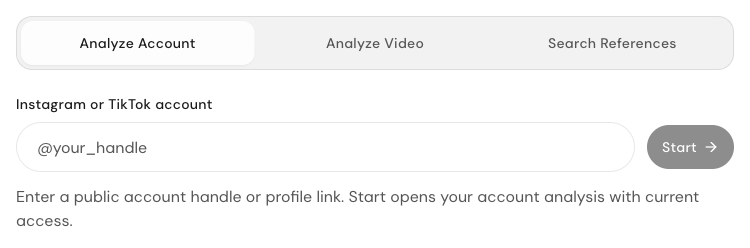
Superdirector. Public reference intake with account, video and reference-search tabs.
The workflow is bigger than post ideas
Post ideas are only useful when they connect to a campaign decision: which audience to reach, which proof to show, which hook to test, and who should film the asset. A useful AI social tool should preserve that path from signal to execution.
That is especially important for startups, ecommerce sellers, and founder-led brands that are comparing paid ads, organic social, UGC, creator partnerships, and SEO-supporting content as competing uses of limited budget.
What Superdirector generates
Use your own account context, a campaign goal and selected references to prepare the next content request in Canvas. Review the workflow and its usage before asking for analysis or a script draft, then check the result before handing it to someone filming.
The product does not need to replace every tool in the stack to be valuable. Its leverage is deciding what belongs in the campaign before the team buys traffic, books creators, or fills a posting calendar.
Prepare the creative direction before scheduling
Publishing tools organize approved content. Before that step, use selected references and brand context to decide the campaign angle, hook and script direction. Review the draft and agree the shot requirements with your production team before adding it to the calendar.
That division is the leverage. The publishing layer keeps its job; the creative layer stops being improvised.
Planning example: an ecommerce campaign
Planning example: an ecommerce seller compares a product page with two reference videos. The team lists the buyer question, product proof, possible hooks and a phone-shoot direction, then brings that context into a campaign-brief request.
Review the available work and usage before starting. Check the draft against the product evidence, choose the hook and agree the shots and review notes before handing the brief to a creator.