How-To Guide
Two choices must not become two promises for one physical item
A maker can offer two finishes for one unfinished object without owning two objects. The storefront must preserve that relationship.
A maker can offer two finishes for one unfinished object without owning two objects. The storefront must preserve that relationship. Otherwise, a launch can present two apparently purchasable paths while the workshop can fulfill only one.
Before promoting a small drop, map the physical resource behind every selectable offer. Decide whether the choice represents an independently stocked item, work performed on a shared item, or a combination of components. Do not start by copying a stock number into every option and hoping the names keep them synchronized.
This guide proposes a fulfillment-capacity review, not a Shopify implementation or an overselling guarantee. All examples are fictional. No inventory, checkout, app or order has been changed or tested.
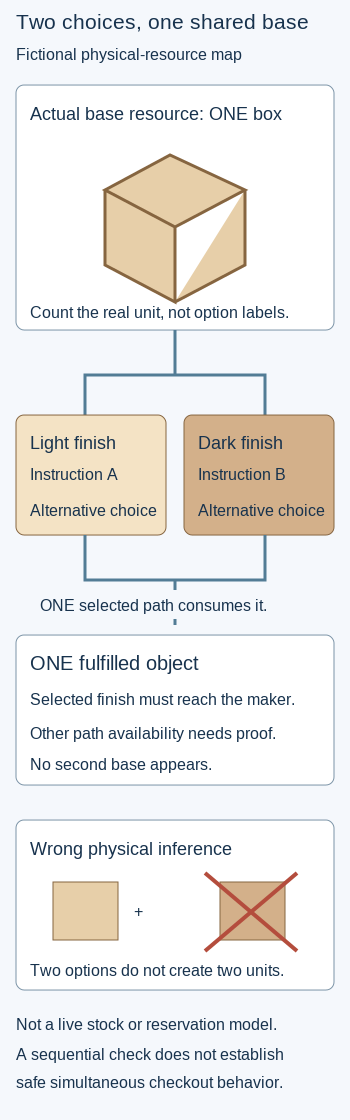
Original resource relationship, not a live stock screen or a demonstrated synchronization mechanism.
 Superdirector
Make it work for your brand
Find it. Remake it. Post it. Superdirector turns the viral formats in your niche into your brand's carousels, X posts and video scripts, and keeps the calendar full.
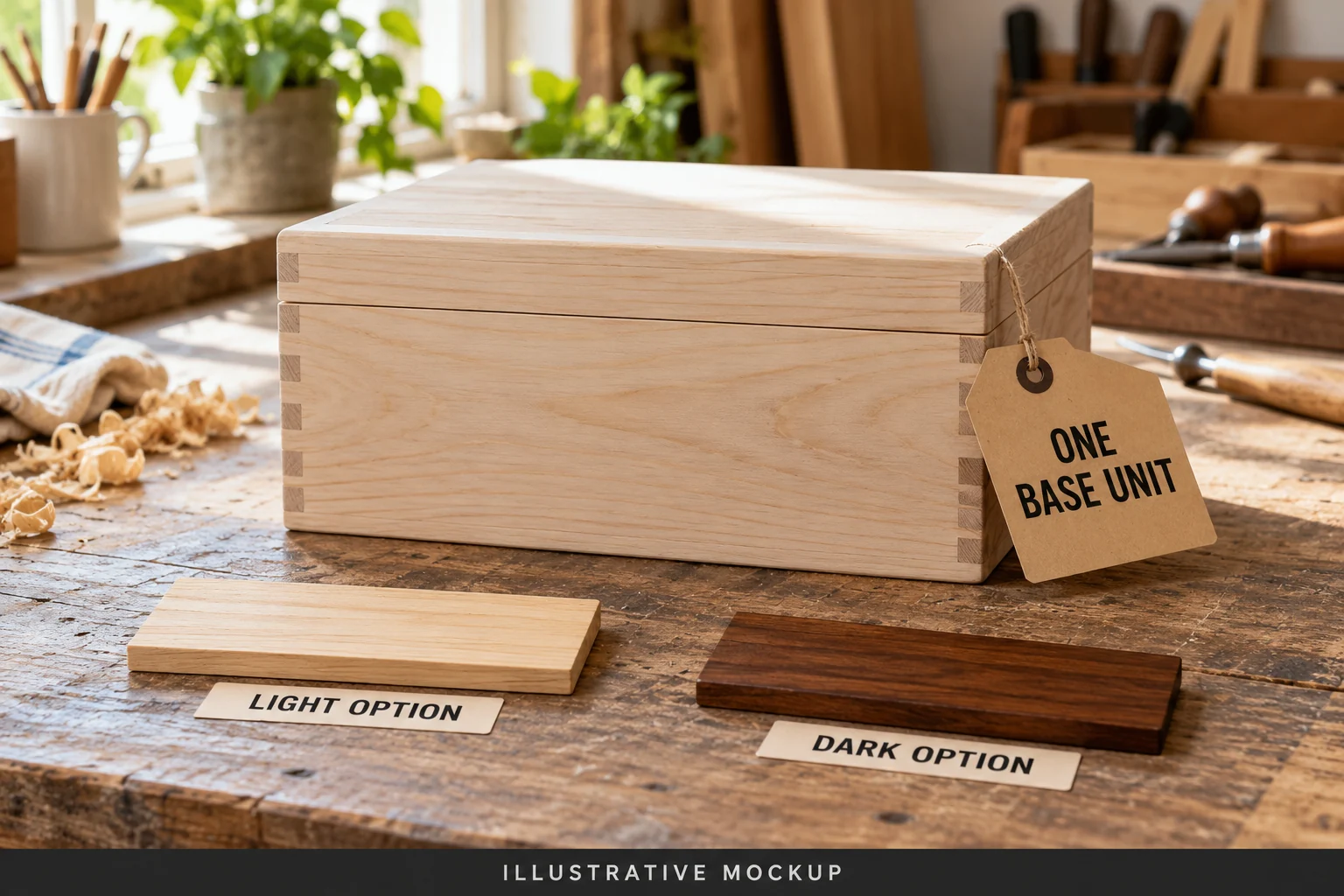
AI-generated illustrative mockup. Both fictional finish choices consume the same physical base. The image explains the constraint but does not prove any platform enforces shared stock or preserves the maker’s instruction.
Begin with the object on the shelf
Imagine a maker has one plain wooden keepsake box. The buyer can choose a light or dark finish. In this fictional offer, both finishes consume the same base box. Selecting a finish changes the work to be done; it does not create another physical base.
Now contrast a maker who already has one light-finished box and one dark-finished box. Those are two separate items. The same two labels could therefore describe either one shared physical unit or two independent units. The option names alone cannot tell the inventory owner which model applies.
Create a simple record before choosing the storefront mechanism:
- Identify the real item or component consumed by an order.
- List every purchasable path that can consume it.
- Identify which choices change instructions rather than physical stock.
- State which person can verify the actual available quantity and the intended fulfillment.
Do not use this record to conceal an unsupported setup. It specifies what the setup must demonstrate.
Preserve the buyer’s instruction as well as the quantity
Suppose a supported configuration keeps one base unit available and records the chosen finish as an instruction. The quantity relationship might be right while the fulfillment instruction is wrong or absent.
The review therefore needs both outcomes: the order consumes the correct physical resource, and the maker receives the selected finish unambiguously. A dropdown that looks correct on the product page does not prove the same instruction reaches the order or production record.
For the fictional box, a proposed evidence chain would connect the selected finish, the permitted order evidence, the base-unit record and the maker’s instruction. If only the product page has been inspected, stop the claim there. Do not describe an unexecuted order path as accepted.
This is not a recommendation to install an options app, alter theme code or place a live test order. Those actions require the relevant implementation review and authorization.
A component model is a different possibility, not a universal fix
Consider another fictional offer: one particular art print, sold either alone or with an available frame. The print is consumed by both paths. The framed path also needs the frame. This is a component relationship rather than merely two finish instructions.
Shopify’s bundle guidance explains availability based on component inventory and the quantities needed. It also sets eligibility and compatibility conditions. Components that are untracked or allowed to continue selling when out of stock are ignored in that availability calculation.
Those rules illustrate why the actual dependency configuration matters. They do not establish that any proposed pair of offers can be solved by a bundle, or that a particular merchant’s existing settings enforce the intended constraint. Inspect the supported mechanism and its exceptions before making the customer promise.
Do not convert a forum recipe into production instructions. A suggested bundle arrangement may depend on details absent from the discussion, and no such arrangement is tested here.
Define the evidence before a launch test
A useful authorized candidate test would begin with the known physical resource and list both offer paths. It would then inspect what happens to the other path after the first consumes that resource through the actual supported process. The test record should include the configuration version, inventory tracking state, selected instruction and observed remaining availability.
A cart selection is not evidence that a physical unit has been reserved. A completed sequential demonstration is also not evidence that two near-simultaneous attempts cannot exceed capacity. Keep those questions separate. If concurrency behavior matters to the launch, the implementation owner needs an appropriately authorized test and evidence for that behavior, not a stronger caption on a sequential recording.
Likewise, do not promise that a manual correction will always happen fast enough. A merchant’s one-of-one drop question describes exactly that concern: the seller previously adjusted stock manually but feared another purchase before the adjustment. The later report of finding an app is not an independent reliability test.
Choose a supportable offer while gaps remain
If the relationship cannot yet be verified, prepare a narrower offer for owner review rather than promoting multiple paths as if the constraint were solved. The correct narrowing depends on the real product and customer choice; it is not automatically “remove all options.”
The decision record should name the unresolved dependency and what evidence would allow the broader offer. For example: “Both finish paths rely on the same base unit. The selected finish reaches the maker, but the other path’s post-consumption availability is still unverified.” That is more useful than a general statement that the store passed testing.
Launch creative should follow the verified offer. A carousel can explain the available finishes without implying two stocked objects. A walkthrough should use actual evidence if it claims the storefront enforces a constraint. Keep a fictional diagram visibly separate from live product or order captures.
Research limits
The historical one-of-one merchant question and a separate shared-stock-across-product-pages question illustrate the dependency problem. They do not verify or endorse any app mentioned in the replies.
Sources were read on October 24, 2026. Actual inventory, configuration, concurrent checkout behavior and fulfillment remain unverified. The next useful result is a physical-resource map tied to one exact candidate offer, followed by the authorized evidence needed to support it.