How-To Guide
Launch before, during or after a genre Steam Fest? Compare feasible routes before choosing a date
The method below is a planning aid, not a forecast of sales or a claim about Steam’s ranking system.
A genre event creates a useful deadline for preparation. It does not automatically create the right release date. An indie team choosing between launching before the event, launching inside it or remaining an upcoming game needs to solve two problems separately: what players will actually receive, and which promotional plans are feasible.
The answer is not “always wait” or “always launch into the traffic.” Build a small decision sheet that removes impossible routes, exposes the cost of each remaining option and identifies what evidence would change the choice. The method below is a planning aid, not a forecast of sales or a claim about Steam’s ranking system.
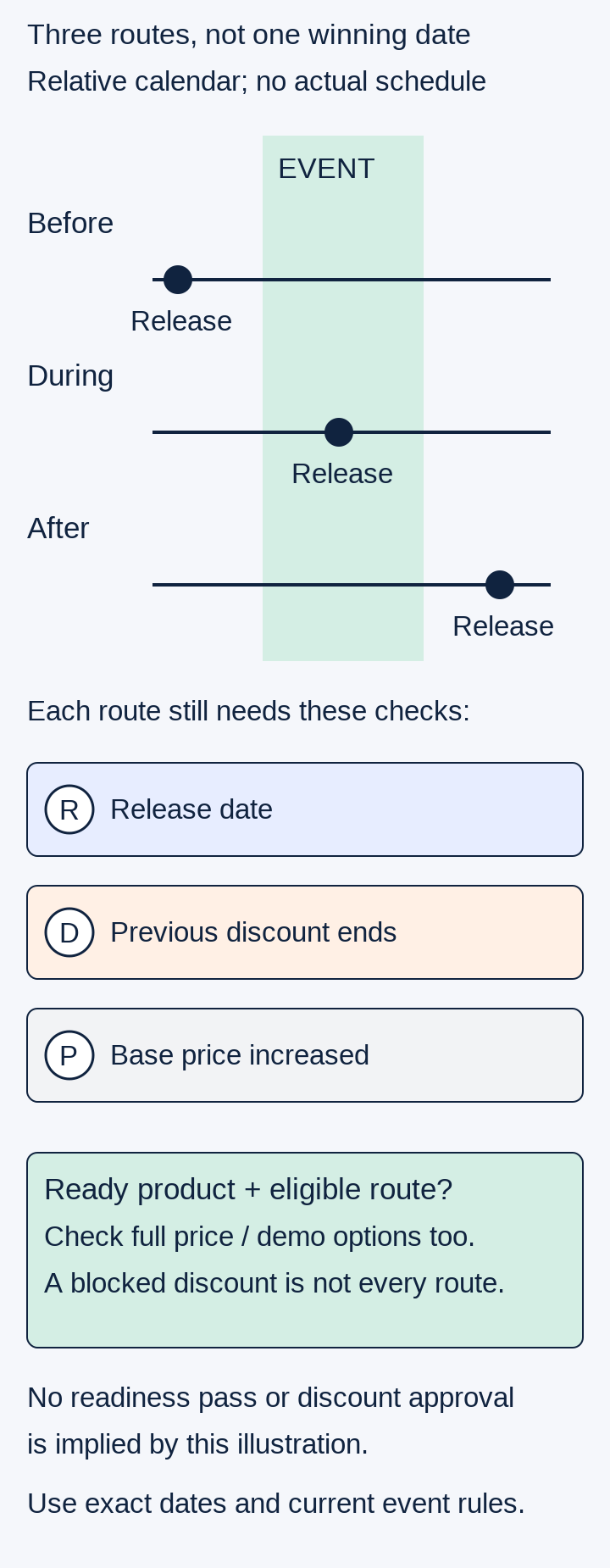
Original relative planning diagram. It is not an actual event schedule, discount approval or recommended launch date. The separate clocks require real dates and account-specific checks.
 Superdirector
Have your AI do this for your brand.
7 days free, then $29 a month.
Make the offer concrete before choosing the timing
For each route, write what a visitor could do during the event. Can they buy a ready full game, play a specific demo, or only inspect a Coming Soon page? What would the full game add to the demo? Which language, device and multiplayer promises have actually been checked? Who handles a broken purchase-to-play path while the team is also promoting the game?
These questions prevent a misleading comparison between “release now” and “collect wishlists.” Those labels hide very different amounts of production work. A reliable demo with a clear next step may be a stronger offer than a hurried full release. Conversely, a finished game with an available support owner may have no product reason to delay merely because someone online prefers another month.
An idle-autobattle developer asked this exact before/during/after question, comparing a launch offer against remaining unreleased with a demo. The thread contains conflicting advice and the author later leaned toward December. That is an authentic planning dilemma, not evidence that the chosen route produced better results. Read the original developer conversation.
Put three separate clocks on the calendar
Do not represent every pricing restriction with one “cooldown ends” cell. Record the release date, the end of any previous discount and the date of any base-price increase separately. Attach the actual evidence and current eligibility check to each.
Valve currently documents a 30-day release cooldown, with a launch discount arranged before release as the stated exception; a 30-day price-increase cooldown; and a separate 30-day discount cooldown. Seasonal-sale exceptions do not erase the release or price-increase restrictions. An ordinary themed Fest is not interchangeable with a Steam-wide seasonal sale. Check the current discounting rules.
The practical mistake is to see that a game released more than a month ago and assume another offer is therefore available. A later discount or price increase can introduce a different constraint. Review the actual dates and package state rather than inferring eligibility from the age of the release alone.
This is also why changing the base price to create a more impressive-looking offer is not a harmless design adjustment. It changes the commercial plan and can affect later eligibility. Do not change prices simply to make an event calendar fit.
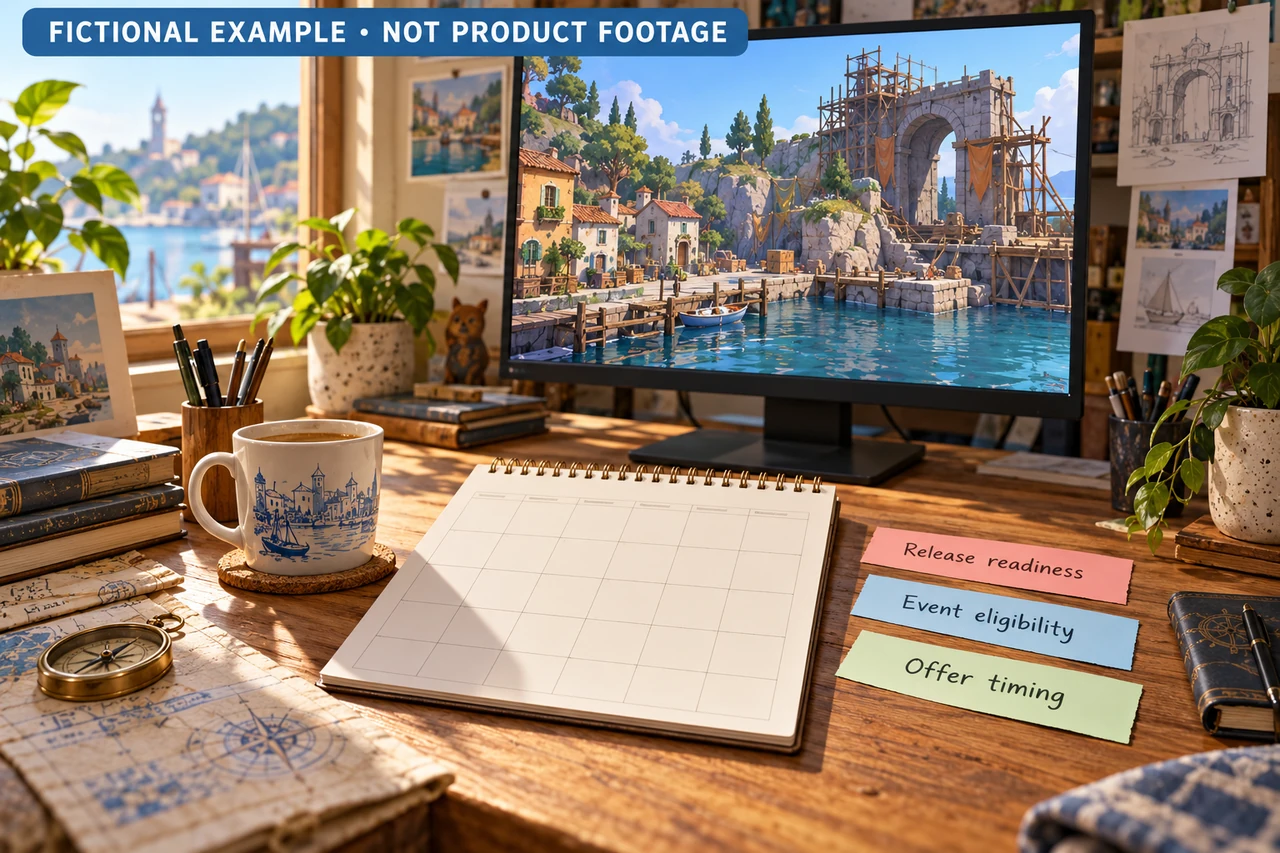
A fictional planning desk separates readiness, eligibility and offer timing before a launch date is chosen. It supplies no event deadline or discount recommendation. Original AI-generated editorial illustration.
Compare the three routes on the same terms
Release before the event. The event visitor can encounter an already released game. The team may have a little time to observe real purchase-to-play problems before event traffic arrives. The tradeoff is that release support and event preparation compete for capacity, and a hoped-for event offer may not fit the separate clocks. Record whether the planned offer is actually available, not merely desirable.
Release during the event. The launch and event become one concentrated communications beat. That also concentrates operational demands: final release checks, support, store messaging and creative changes. This route needs a named fallback if a readiness gate fails. “We will fix it during the event” is not a substitute for that gate.
Remain upcoming during the event, then release later. The team can offer a ready demo or an appropriate upcoming-game destination while preserving a later release decision. The work does not disappear: the demo must make the intended task understandable, the full-game difference must be clear, and the team needs time to inspect feedback rather than treating every wishlist as a promise to buy.
Compare these routes using the same fields: playable offer, unresolved product defects, required assets, support owner, feasible price plan, time needed and the option given up. Do not assign invented revenue scores to make the sheet look decisive.
Keep a no-discount route in the comparison
A blocked discount does not necessarily mean the entire event opportunity is unavailable. Valve’s general themed-event guidance says a discount is not required to participate, while discounted games are featured more prominently. It also describes upcoming-game and demo sections, subject to event-specific rules. That is a reason to evaluate a permitted full-price or demo route, not a promise that every game will qualify or receive equal exposure. Read the themed-event participation guidance.
Consider a fictional game whose launch offer ends shortly before a relevant Fest. The owner checks both the release and discount histories. If another discount is unavailable, the comparison becomes: keep the launch plan and assess permitted full-price participation; use an appropriate demo/upcoming route if that is the actual product state; or reconsider future commitments before making them. None of these options should be selected solely because a discounted tile sounds more visible.
A different fictional team has a usable demo but an unfinished full game. Its next reversible action is to prepare and test the demo’s event destination, not announce a paid release it cannot yet support. The team preserves a later readiness decision without claiming that waiting guarantees more wishlists or revenue.
Read the exact edition, including awkward details
Genre fit, registration, promotional assets and timing belong to a specific event edition. Use its current official rules to check the primary game mechanic, permitted game states, registration deadlines and available store-page sections. The general themed-event guidance is a starting point; it does not establish acceptance of a particular title. Read Steam’s themed-event guidance.
Confirm the deadline and time zone against the event’s current registration or account information before converting it to another time zone. Keep the original deadline source in the decision sheet instead of inferring a precise commitment from an ambiguous label.
Record the verified edition, eligibility status, registration status, asset availability and exact deadline source. Keep “we appear to fit” separate from “we are registered.” A public article cannot substitute for those account-specific observations.
Choose one preparation step and a change-of-plan trigger
The decision sheet should end with a small action, an owner and a condition that could overturn the plan. For the demo-first team: test the demo-to-store path and identify the full-game difference; reopen the release decision only after the product gates are met. For the release-ready team: verify actual offer eligibility and support coverage before committing creative to a discount.
Write the abandoned alternative down too. “We did not choose launch-during because support coverage was unassigned” is useful later. “The algorithm likes December” is not an evidence-backed explanation.
After the event, compare what happened with what the sheet assumed. Separate event-origin visits, demo use, useful feedback, purchases and support problems using available evidence. Mark attribution gaps rather than crediting all sales to timing. Another developer’s reported post-launch success and later discount intentions can supply a question to investigate, not a forecast for your title. See that independent operator account.
The goal is a release sequence the team can actually deliver, with its tradeoffs visible before money, dates and player expectations are committed.
Frequently asked questions
Is Release Now versus Collect Wishlists a sufficient comparison for festival timing?
SuperdirectorHave your AI do this for your brand.
7 days free, then $29 a month.