How-To Guide
Free update or paid expansion? Sort the game work before naming the offer
For a small studio with a released game, start with a content-boundary exercise.
A backlog can mix three very different jobs: repairing the experience already sold, completing something previously represented as included, and creating a genuinely additional way to play. Calling the whole list “DLC” does not decide which work belongs where.
For a small studio with a released game, start with a content-boundary exercise. Describe the base-only experience after the proposed work, then describe the additional playable experience separately. The useful outcome is a defensible internal offer proposal, not a price, profit forecast or instruction to create a store product.
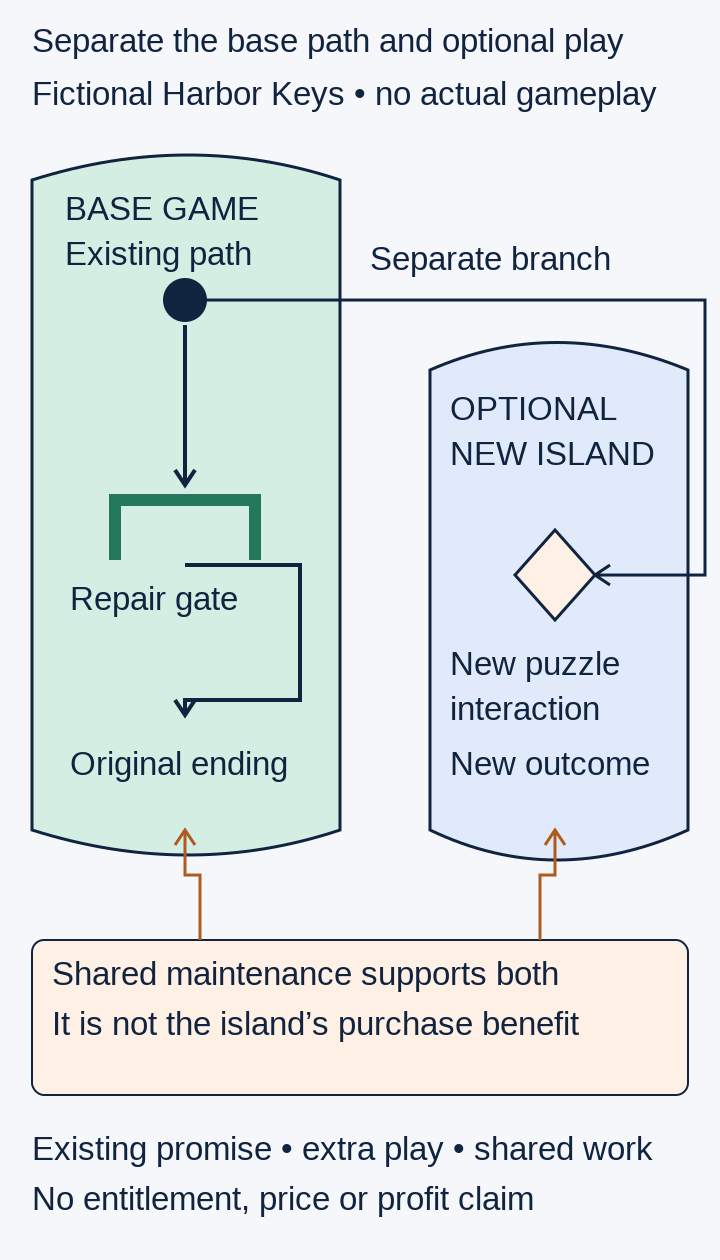
Original fictional content map, not gameplay footage, tested entitlement behavior or a commercial forecast.
 Superdirector
Make it work for your brand
Find it. Remake it. Post it. Superdirector turns the viral formats in your niche into your brand's carousels, X posts and video scripts, and keeps the calendar full.
Classify the player-facing work, not just development hours
Take one proposed change at a time. What does the player do differently? Is it a repair to an existing interaction, a previously described part of the current game, a shared technical improvement, or a new optional activity?
Use the actual offer history and product evidence. A feature's internal label, the time spent building it or the enthusiasm of its designer does not establish that it is additional. If the historical scope is unclear, keep that question unresolved rather than silently changing the promise. This is product and editorial planning, not a legal determination about a particular customer's rights.
Consider a fictional puzzle game, Harbor Keys. The released game includes a final gate and an ending, but the gate interaction is broken. The studio also proposes a separate island with a new puzzle grammar. Restoring the existing ending and building the new island are different jobs. The expansion should not become the reason a player can finally complete the original path.
A useful first action is to split that combined backlog item. One record addresses the gate defect in the base experience. Another describes what the island adds, the work it requires and the unanswered question about whether players want it. Neither record says the work is already finished.
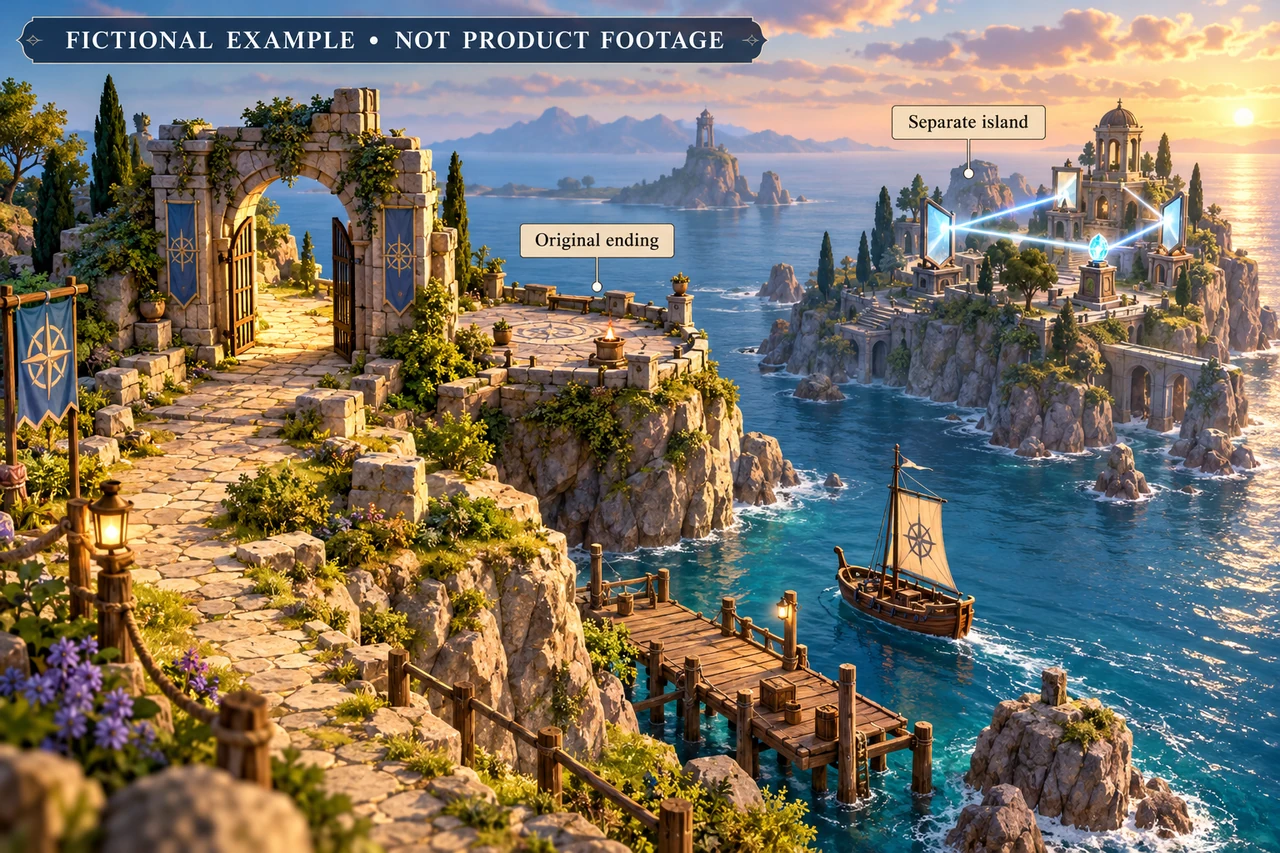
The fictional Harbor Keys scene separates repair of the original ending from a distinct island experience. It is not a purchase offer or tested entitlement path. Original AI-generated editorial illustration.
Describe two coherent choices
Write the base-only proposition without mentioning the expansion: the actual activities, supported progression and endpoint available to that player. Then describe the proposed additional experience without relying on “more content” as the explanation.
For Harbor Keys, the island might introduce puzzles in which a choice changes the route through the environment. That is an invented design example, not a claim about a real game. Its value would need to come from that additional play, not from repairing the base game's gate or making the original ending intelligible.
The base experience need not contain every possible future idea. Equally, an item is not meaningfully optional just because a separate purchase button can be attached to it. Ask what a base-only player would lose, what an expansion player would gain, and which shared work both need.
Use platform guidance without treating it as approval
Steam's DLC documentation supports free and paid additional content. It also warns that day-one paid DLC can create a perception that material was removed from the main release. That is a platform-described consideration, not a universal ban, an accusation about a particular studio or a measured prediction of customer response.
Valve's update guidance suggests including free additions in the base game and using DLC for substantial paid additions such as maps or modes. These are distribution suggestions, not a rule that all new work must be free or that any large feature automatically deserves a separate price.
Decide the player offer before using those distribution mechanisms. An app ID, depot or ownership check implements a chosen boundary; it does not establish whether the boundary makes sense. Actual configuration and account-to-content validation are later, separately authorized work.
Learn from disagreement without copying its conclusion
In one historical developer discussion, Rotorist describes adding RPG systems to an originally non-RPG game, changing the base price and later moving part of the new system into the base game after criticism. A follow-up clarifies the earlier price-change timing. The account is useful because a cheaper combined total did not, in the developer's description, settle how customers understood the content boundary.
That does not establish which features another studio should sell separately. The game's actual history and reported outcomes have not been independently validated here. Do not borrow the post's numbers, assume that every complaint is justified, or expect a price change to make an unclear proposition self-explanatory.
A second developer discussion asks about the value of producing DLC. The author clarifies that free updates continued alongside the paid mode and describes the mode's persistent progression. Those clarifications matter: the discussion is not simply an example of replacing all maintenance with paid work. Its effort, sales and profitability claims are not reliable benchmarks for another project.
A real example of free and paid work coexisting
Factorio's October 21, 2024 release post describes the paid Space Age expansion and the simultaneous free 2.0 update under separate headings. That historical first-party example shows a clear distinction in the announcement. It does not prove that the same allocation, scope or business result would suit another game.
Use the example to challenge a false either-or: a team can consider maintenance and free improvements alongside an additional paid experience. Then return to its actual capacity. Both paths create testing, compatibility, explanation and support work. A short implementation estimate for the new mode is not a complete account of the work it creates.
Finish with a partition, not a launch decision
For each backlog item, record its player job, relevant existing promise, dependency, proposed destination and unresolved evidence. Keep shared maintenance visible rather than hiding it inside the expansion estimate. Hold ambiguous items until the product owner can explain the actual boundary.
Then review the two propositions: what remains coherent for the base-only player, and what distinct experience the optional purchase would add. If the answer to the second is merely “the original game works now,” revisit the partition. If the new experience is genuinely additional but demand or feasibility is uncertain, retain it as a proposal rather than a promised release.
No DLC, price, access policy or update has been changed for this guide. A clear internal partition is preparation. Actual playable evidence, customer understanding, purchases and continuing useful play would remain separate outcomes after authorized work.