How-To Guide
Explain creator commissions without making a sale look like a payout
A creator sees an attributed sale and asks when the commission arrives. A merchant sees a payment item and assumes the creator has received it.
By the Superdirector editorial team.
A creator sees an attributed sale and asks when the commission arrives. A merchant sees a payment item and assumes the creator has received it. Both can be looking at real information while describing different stages.
For a Shopify Collabs offer, a useful onboarding asset separates attribution, pending commission, merchant billing, scheduled payout and payment evidence. It should also show where cancellation, refunds or incomplete payout setup change the path. The aim is clarity about the actual offer, not an earnings promise.
This article covers operational communication, not tax, legal or investment advice. Provider documentation was checked on October 24, 2026. The merchant's live configuration and any actual payment still need separate verification.
Start with the terms the creator will actually receive
Collect the current offer, eligible products, commission terms, tracking link or code, holding period, responsible contact and relevant exceptions. Ask the owner to verify these details before a creator-facing script is finalized.
Do not substitute a platform default for the configured offer. A default is useful for understanding documentation; it is not proof of what a particular creator accepted. Keep a capture date and revision identifier with the terms sheet so the editor does not combine screenshots from different versions.
The same distinction applies to tracking. A valid link in a brief establishes which link was supplied. It does not establish that every future click will produce a purchase or commission.
Read the documented payment stages together
Shopify's merchant payment guide describes a default 30-day holding period, adjustable between 1 and 90 days. After the applicable hold, commission reaches merchant billing. Creator auto-payout activation is a separate prerequisite; an incomplete setup can leave a waiting-for-creator state.
Shopify's creator payment guide distinguishes pending commission from Next payout after merchant payment. Automatic payouts are scheduled twice monthly and require a Next payout balance of at least $25 USD. A canceled or fully refunded order during the hold removes the pending commission. Creator analytics cover the lifetime of the relationship rather than a selectable date range.
At the time of review, open creator signups are unavailable. Existing partnerships remain usable, and the documented merchant-invitation and application routes are separate; onboarding copy should not promise unrestricted creator signup.
These are current documented behaviors, not a guarantee of a specific payment arrival date. They also describe Collabs merchant partnerships, not every program that uses the word “Shopify affiliate.”
Draw a state map before writing the promise
Use five labels in the production worksheet:
- Attributed order: the relevant report associates an order with the creator's link or code.
- Pending commission: an amount is still in the applicable holding stage.
- Merchant billing: the commission has reached the merchant's payment process.
- Next payout: the creator sees an amount eligible for the applicable payout process and conditions.
- Paid or received: confirm the exact evidence needed to support the statement being made.
Treat the last distinction carefully. A platform record marked paid and the creator's confirmed receipt may be different pieces of evidence. Label the one you actually have rather than presenting a bank-receipt claim based on an earlier dashboard state.
The state names in this editorial model are for explanation. Use the actual interface labels when recording the real workflow, and do not manufacture a screen to make the labels appear native.
Give exceptions their own branch
An illustrative order might appear as pending and later be fully refunded during the hold. In the explanation, show that as a branch to canceled commission, not as an unexplained subtraction from money already described as received. No actual order or refund was processed to create this example.
Similarly, incomplete creator payout activation is not the same problem as the merchant not having paid an invoice. The owner investigating a question needs to identify the state before recommending the next action.
Do not add allegations, accuse a creator or merchant, or imply a dispute has occurred without evidence. If an actual dispute exists, use the authorized support process and the specific facts. This article's diagram is not a reason to initiate one.
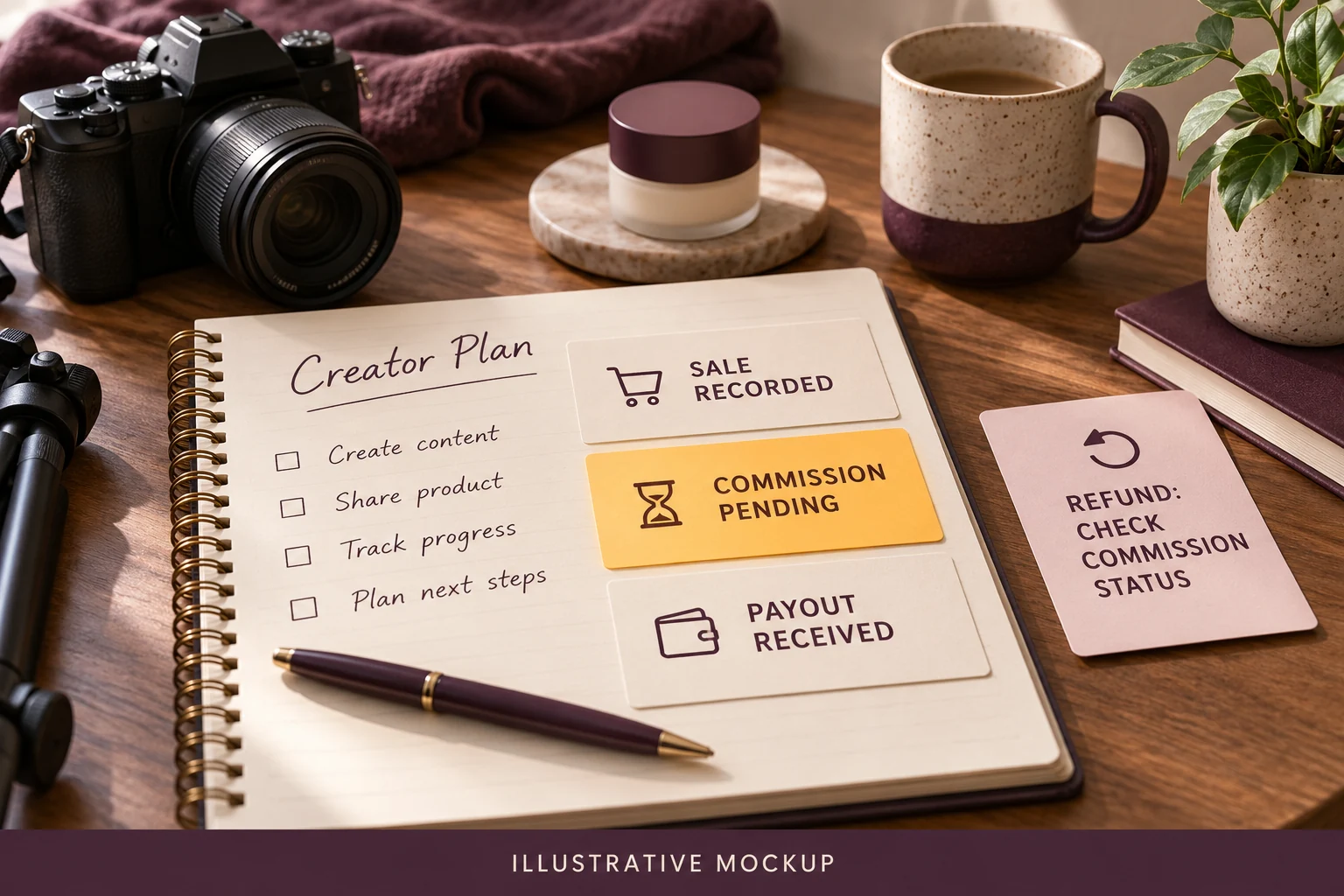
AI-generated illustrative mockup. The status cards are conceptual, not account evidence. A sale is not a payout, and refund or hold conditions must be explained from the actual program terms.
Illustrative mockup by OpenAI image generation, editorial direction for this article. Created 2026-10-24.
Build a creator-facing explanation from redacted evidence
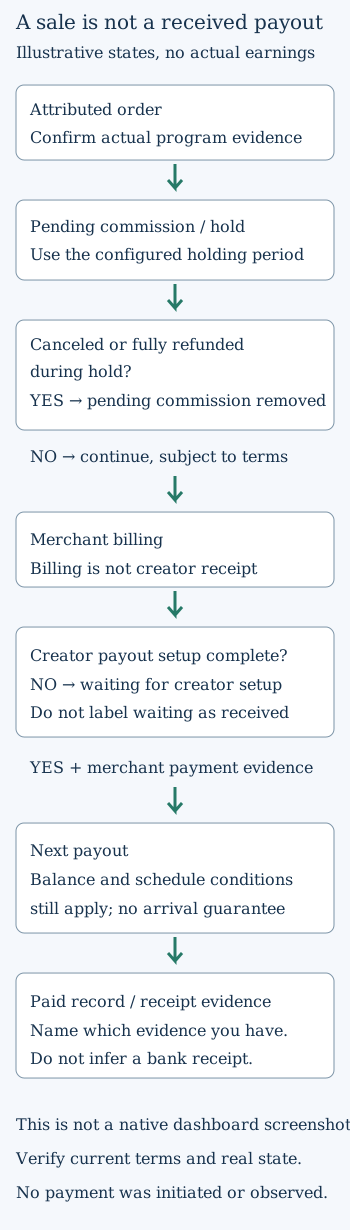
The schematic is not a real creator account, earnings statement or payment receipt. It intentionally contains no invented revenue amounts.
Original visual by the Superdirector editorial team. Creation date not recorded.
A short onboarding video can show the offer terms, where the current state is visible and where a question should go. Redact account details and any unrelated creator information. Do not display a dashboard balance merely because a large number makes the program look attractive.
For a one-page brief, use a small state map plus a plain-language explanation of the actual hold. Avoid “earn today, paid today” unless that exact claim is supported, which this research does not establish. Also avoid presenting the $25 USD threshold as the amount a creator will earn. It is a documented processing condition, not a forecast.
Keep campaign evidence separate from payment evidence
A campaign review may need visits, attributed orders, pending commission, paid commission and repeat purchases. Each answers a different question. Do not add pending and paid amounts together without checking whether they represent distinct transactions or different views of the same commission.
Because the documented creator analytics are lifetime totals, do not label a captured lifetime number “this week's campaign.” Obtain a genuinely time-bounded report through authorized access or label the available period honestly.
Attribution also does not establish incrementality. A report connecting an order to a code does not by itself show that the order would not have occurred otherwise. Keep causal claims out of the recruitment copy unless supported by a suitable analysis.
Validate understanding before sending the offer
Ask an internal reviewer which state means commission is pending, which prerequisites remain before payout and what would change after a refund. Then have the responsible program owner compare the answers with the actual offer and current configuration.
If a creator review is useful, prepare the exact asset for approved outreach rather than contacting someone without authorization. No creator contact, payout setup, settings change or payment occurred.
Verify one real offer's terms and state map before turning it into creator onboarding or a tutorial. Keep pending commission, payout eligibility and receipt of payment distinct.