How-To Guide
Explain a Steam bundle before filming one price for everyone
This guide is for an indie publisher preparing bundle messaging.
A launch video can show a real Steam price and still leave an existing owner with the wrong expectation. Before recording a bundle offer, identify what is being sold, which ownership state the displayed offer represents and whether returning players have the same purchase route.
This guide is for an indie publisher preparing bundle messaging. It is not a pricing recommendation or a claim that a particular bundle configuration will sell better.
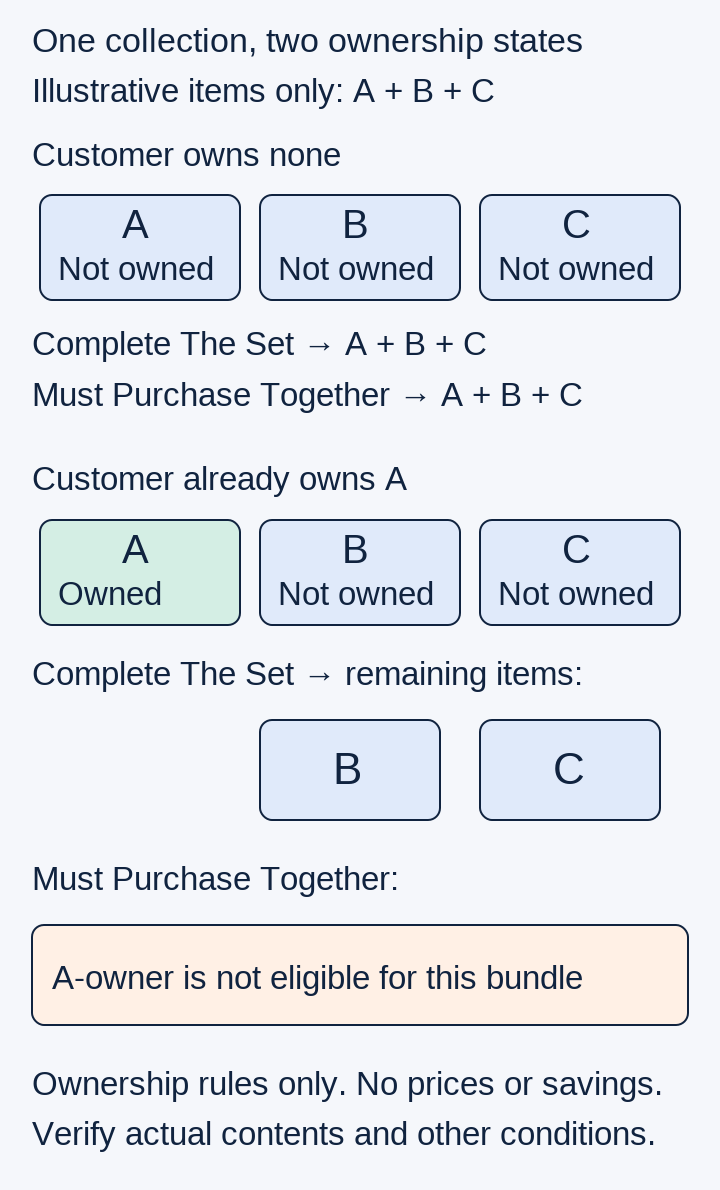
Original schematic. Confirm the actual bundle configuration and observed purchase option before using it in customer messaging.
 Superdirector
Make it work for your brand
Find it. Remake it. Post it. Superdirector turns the viral formats in your niche into your brand's carousels, X posts and video scripts, and keeps the calendar full.
First identify the object, not its marketing name
An edition name does not tell you how the offer works. Steam describes a package as a collection of applications and depots that grants download and launch entitlements. A package and a bundle are not interchangeable configuration objects. Steam packages
Record the actual store destination, bundle or package identifier, included products and intended customer. Use those facts as the source for your content. Do not assume “deluxe,” “complete” or “collector” guarantees a particular ownership rule.
For bundles, Steam distinguishes two types. Complete The Set charges for and supplies the included items the recipient does not already own. Must Purchase Together is available only when the recipient owns none of its products. Current documentation also allows Complete The Set gifting based on the recipient’s ownership, so older blanket no-gifting advice is stale. Steam bundles
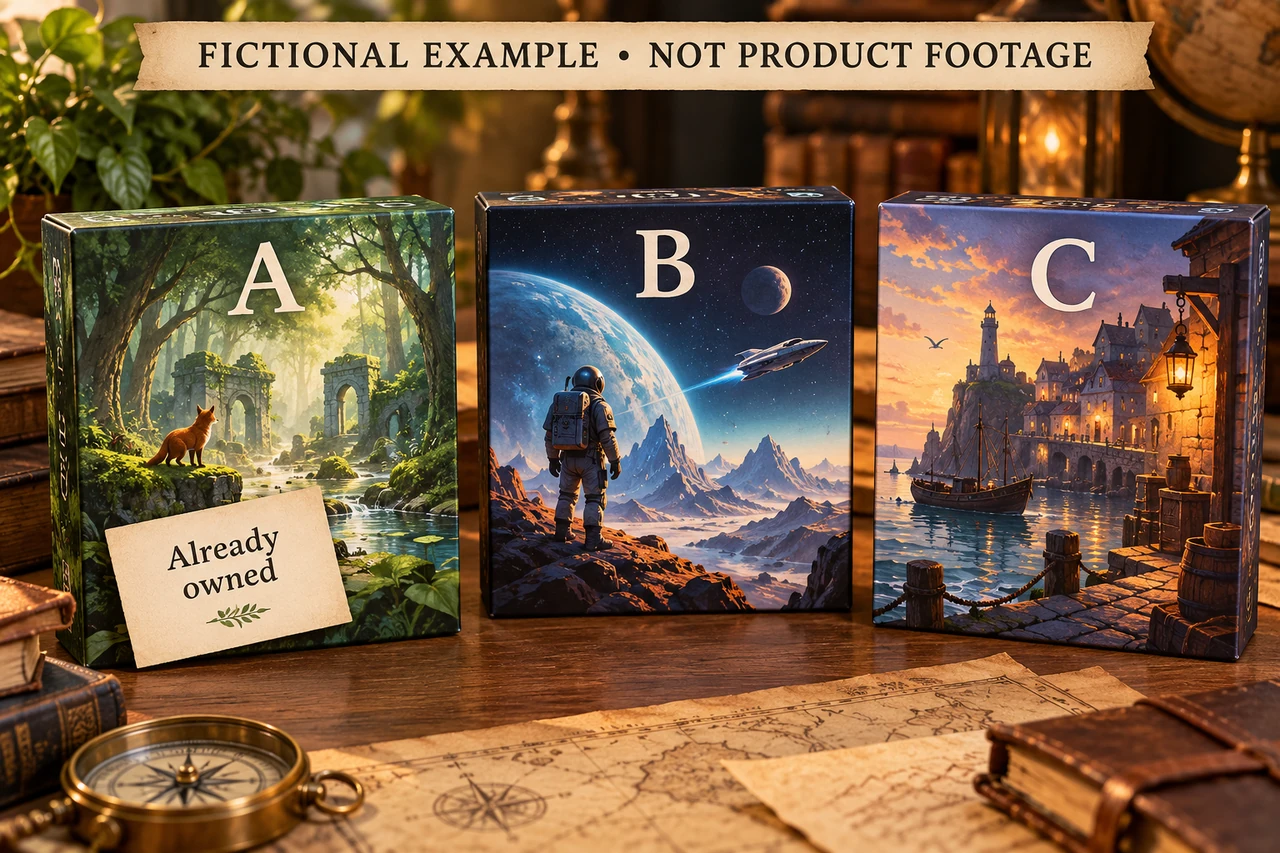
The fictional A/B/C collection makes ownership context visible before anyone claims a bundle price or saving. Original AI-generated editorial illustration.
Work the ownership example before writing the headline
Consider a fictional collection containing games A, B and C. No prices or real customer results are implied here.
A customer who owns none of them and a customer who already owns A are different test cases. For a Complete The Set offer, the latter’s remaining items are B and C. For a Must Purchase Together offer containing the same products, ownership of A changes eligibility rather than simply producing the same offer with A removed.
That difference belongs in your explanation. A single capture from a non-owner account cannot prove what an A-owner will see. Nor does a developer account with broad product access necessarily represent either ordinary customer state.
Capture a price with its conditions
If you include a price in a video, image or article, record the currency, observation time, ownership state and exact included items alongside the capture. Make clear whether it is a displayed example or the currently applicable offer for the audience you are addressing.
This proposed evidence record is especially useful when the same creative may be seen after a sale ends or by someone who already owns part of the collection. Instead of putting an unconditional total in the headline, explain what the bundle contains and direct customers to their actual store purchase option.
Do not invent an upgrade route when the current configuration does not provide one. If a separate DLC or other offer is a legitimate alternative, verify that destination and its contents before suggesting it. “Get the rest here” is misleading if the linked offer includes a different set of items.
Test the handoff without buying anything
Use available authorized preview or account states to inspect the offer; this checklist does not require making purchases, removing licenses or changing package contents. Record untested states as untested.
For each observed state, ask:
- Does the linked page describe the same collection as the creative?
- Are the included products identifiable?
- Does the displayed purchase option match the customer state you intended?
- Is an existing owner being promised an option that is not available to them?
- If the message concerns a gift, have you checked the recipient-dependent conditions rather than your own library alone?
If you cannot inspect a relevant state, qualify the message and leave that check open. Do not simulate ownership by editing someone’s account or recommend that a customer remove an owned game to force eligibility.
Keep the explanation stable when the offer changes
Suppose you later add a product to the collection or change its discount. The old creative may still show the previous contents or total. Treat that as a versioning problem: update the content record, identify affected assets and recheck their destinations before reuse.
Keep a small change log with the offer identifier, included-product list, observation date and creative revision. Store approval of a graphic does not establish that its price is still current. Likewise, a correct list of games does not prove that every regional or ownership-specific purchase option was tested.
Measure whether people understood the offer
Before release, ask a reviewer who has not seen the configuration to explain what a new customer and an existing owner would receive. If the answer is wrong, repair the wording or visual before expanding distribution.
After publication, where authorized reporting exists, keep offer comprehension, visits and purchases separate. Fewer confused questions can be useful operational feedback, but it is not a controlled conversion result. Do not attribute a sales change solely to a clearer bundle caption without evidence that separates other changes.
The immediate deliverable is an ownership-aware content record: exact offer, included items, tested states, qualified wording and remaining checks. That gives you a defensible launch explanation without pretending one account’s total is the price for everyone.