How-To Guide
Explain a product warranty without making it sound like unlimited returns
A badge with a number cannot carry all of those distinctions by itself.
A long warranty headline can dominate a product page while the buyer's actual question remains unanswered: does it cover this component, for this issue, in this market? A badge with a number cannot carry all of those distinctions by itself.
For a niche DTC seller, the creative task is to explain the existing promise accurately. It is not to invent more generous terms, decide a customer's claim or turn a warranty into a return-anytime policy. Start with the actual policy revision and connect it to the product being shown.
This guide is a communication workflow, not legal advice or a policy template. Sources were read on October 24, 2026. Published merchant wording does not establish enforceability, current claim eligibility or customer satisfaction.
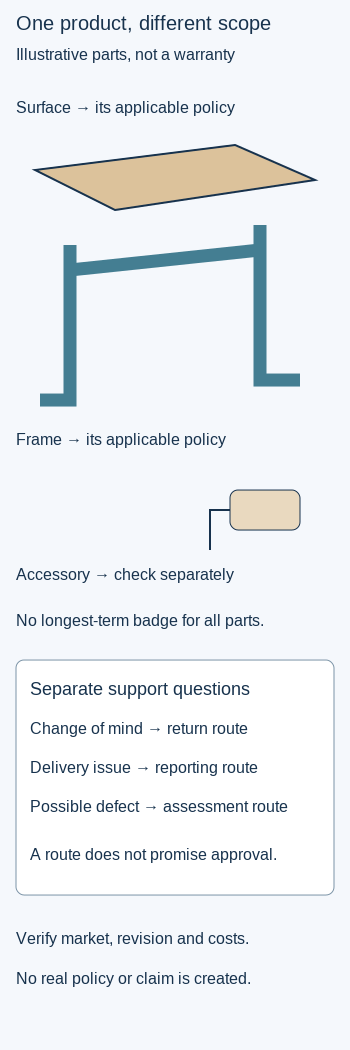
This schematic is not a seller's actual product, a certificate or a claim decision. It shows where an explanation needs evidence.
 Superdirector
Make it work for your brand
Find it. Remake it. Post it. Superdirector turns the viral formats in your niche into your brand's carousels, X posts and video scripts, and keeps the calendar full.
Bind the explanation to the actual offer
Record the seller, product identifier, included components, intended market and applicable policy source. If a policy changed, establish which version applies to the offer or purchase being discussed. Do not assume that today's page automatically answers a question about an older order.
Keep the return information and warranty information separately identifiable. Also locate the merchant's delivery-issue route where one exists. These are useful communication distinctions, not a universal legal classification that resolves every case.
The actual support owner should decide how ambiguous situations are handled. A content designer's job is to prevent a short headline from silently merging different promises.
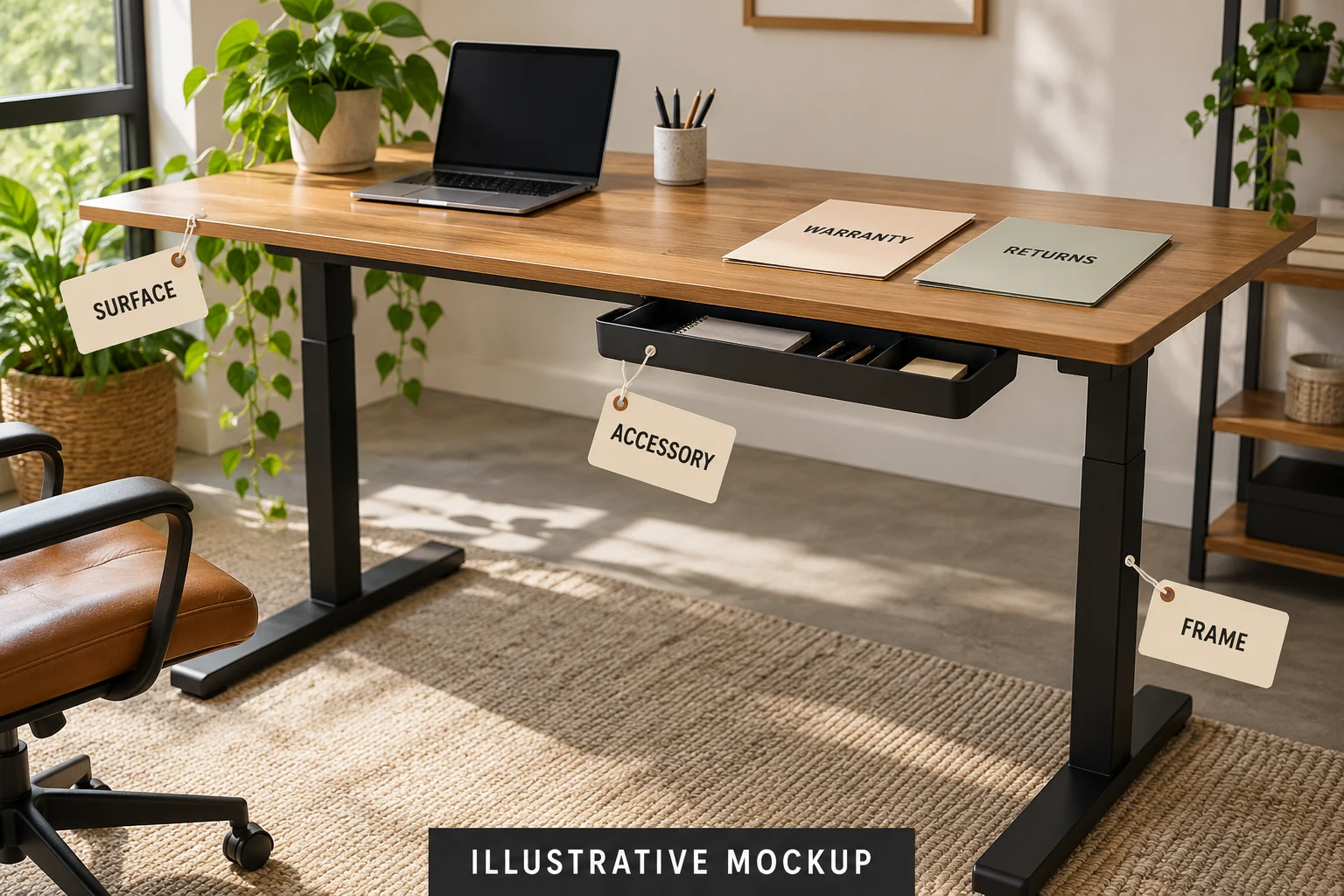
AI-generated illustrative mockup. The fictional product shows where component-specific policy evidence is needed. No duration, coverage, remedy or claim decision is asserted, and a warranty is not unlimited returns.
Draw the product into components before writing the badge
A desk is an intuitive example because its surface, frame and accessories are visibly different parts. DeskHaus's published FAQ, updated January 31, 2026, separates return information from its limited warranty and assigns different coverage periods to specified components. It also distinguishes shipping-related issues from manufacturing-defect coverage.
That is a named merchant example, not a term another seller can copy. The useful editorial pattern is a component map. Link each claim to the exact part and source that supports it, instead of applying the longest visible period to the entire pictured product.
Imagine a fictional desk seller whose actual policy has different scope for the frame and surface. In a product video, an outline around the frame can accompany the frame-specific explanation. The surface receives its own label. An accessory shown in the scene needs its own check rather than inheriting coverage because it appears beside the desk.
Do not fill these labels with guessed durations. If the responsible owner cannot identify the applicable source, leave the statement out until resolved. The example describes a production method, not a new warranty.
Separate the service from the costs around it
A covered component does not automatically mean every service cost is covered. Read the actual wording for parts, labor, shipping, geography and any other material limits before using a broad phrase such as “free support.”
DeskHaus's published policy describes parts-only coverage and its own service conditions. Do not stretch that into included labor or universal replacement. The merchant's stated remedies also do not let a video promise the customer their preferred outcome automatically.
UPLIFT's visible warranty page provides another concrete distinction: warranty-related shipping costs vary by location and time since purchase. The returned page did not expose all exception details, so its headline is not sufficient for a complete coverage summary. Consult the full applicable terms before making a product-specific statement.
For a second fictional seller, the planning record might say that a replacement-part shipping statement needs a destination and purchase-date check. That record is useful even before public copy is ready. It identifies the missing fact rather than converting “warranty service available” into “shipping is always free.”
Give the buyer a route without promising the result
A product-page explanation should help a buyer find the relevant information. Someone asking about a change of mind needs the actual return route. Someone reporting a delivery issue needs the merchant's applicable instructions. Someone asking about a possible defect needs the warranty or support process and its required evidence.
Do not decide which outcome they deserve from a photograph or a short comment. A visible scratch, an unexpected behavior and a preference mismatch can require different investigation. The public explanation should direct the question to the responsible process without prejudging it.
A useful support card can identify the relevant policy link, product or component, information the merchant asks for and where to begin. Keep personal order details in the authorized support channel, not in a public tutorial. Do not encourage someone to send a product before following the actual merchant instructions.
This is not a recommendation to create three new forms or buy a support app. Reuse the existing approved routes and make their purposes understandable.
Keep important scope attached to the headline
If the main frame says “covered,” a distant caption should not be the only place identifying what is covered. Place the component or material qualifier where the viewer can connect it to the image. Keep the route to full terms accessible, without pretending that a short card reproduces them completely.
For an Instagram cutdown, inspect whether the crop removes the relevant component label. For a YouTube demonstration, avoid a transition that moves from the covered frame to a separate accessory while the same claim remains on screen.
Show only what the evidence supports. A polished replacement animation can imply an automatic new product even when the actual process requires assessment and offers different remedies. If the purpose is simply to explain how to ask for help, a clear route is more accurate than a fictional approval sequence.
Test the inference with a reviewer
Show the proposed product page or creative without first explaining the policy. Ask the reviewer which component the statement concerns, where they would look for a change-of-mind return and what costs or conditions they still need to check.
Compare the answers with the source record. If they infer unlimited returns, universal free shipping or guaranteed replacement, revise the presentation. A disclaimer added after a misleading main promise is not enough if the overall inference stays wrong.
This comprehension check is separate from policy approval and actual support performance. It does not establish that a real claim will be accepted, that the product is durable or that support questions will decrease.
Keep the explanation current without rewriting history
Store the approved creative with its policy reference, capture date, product revision and market scope. When the policy owner changes something material, review the affected assets. Preserve older versions as history rather than relabeling them as if they described the new offer all along.
The motivating sources are a merchant asking about component and claim-history management and a historical buyer discussion about an overlooked return condition. The latter includes disputed later descriptions of market-specific policy. It is evidence of confusion, not a finding against the merchant or a statement of its current terms. Neither thread establishes measured popularity.
Map one actual product's components to the applicable policy, have the policy owner check that explanation, and review what a buyer infers from the headline.