How-To Guide
Explain a limited print edition without manufacturing scarcity
A numbered print, a small stack in the studio and a low-stock banner can describe three different things. The number identifies an example within an edition.
A numbered print, a small stack in the studio and a low-stock banner can describe three different things. The number identifies an example within an edition. The stack describes what has been physically produced. The banner may describe what is currently available through a particular sales channel. A launch asset should not make them look interchangeable.
For an artist selling a new print release, begin with an edition register and a plainly stated policy. Then use the creative to explain the actual scope of the limit. Do not use attractive numbering as a substitute for inventory evidence or a promise of future value.
This is a proposed documentation and communication workflow, not authentication, appraisal or investment advice. References were checked on October 24, 2026.
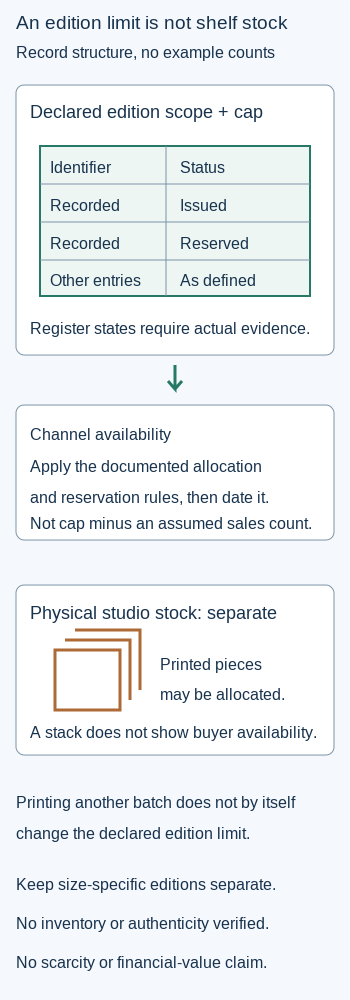
The schematic contains no invented sales figures. It is a record structure, not evidence that an edition exists or that a particular quantity remains.
 Superdirector
Make it work for your brand
Find it. Remake it. Post it. Superdirector turns the viral formats in your niche into your brand's carousels, X posts and video scripts, and keeps the calendar full.
Define what the edition covers
Before filming a signed example, record the artwork, medium, dimensions and scope of the edition. Is the cap shared across sizes, or does each size have a separate edition? How are proof designations handled? Which record governs the numbered examples?
Do not leave these questions for the caption writer to infer from the product title. “Limited edition” alone cannot tell a buyer whether a larger size belongs to the same cap or a different one.
An illustrative artist might sell the same image in two sizes under separate declared limits. That is a fictional planning example, not a recommendation to adopt a particular policy. If that is the real arrangement, the launch explanation should make it visible rather than implying one combined total.
Use reference policies as examples, not universal rules
Ritushka's limited-print policy explicitly describes separate numbered editions by size, with caps set before production and not quietly expanded. Its signature and certificate practices are the artist's stated approach, not a universal standard for every print seller.
Sotheby's print-collecting guide distinguishes numbered editions from proof designations and notes the importance of information such as medium, dimensions and inscriptions when examining a work. It cautions against confirming authenticity from a photograph alone.
The useful editorial pattern is explicit scope plus linked records. Neither source proves the authenticity, remaining quantity or future financial value of another artist's release.
Keep edition capacity and physical stock separate
Create distinct fields for the declared cap, issued numbers, reservations, available allocation and physically printed pieces. Define each status so the same print does not appear in several totals without explanation.
A print made to order may not be physically present in the studio even though an edition number remains available. Conversely, a studio may hold already allocated pieces awaiting dispatch. Counting the stack cannot reliably answer the question “How many can a new buyer purchase?”
Do not turn a small production batch into an edition-scarcity claim. If only a few prints are ready to ship but more remain within the declared edition, describe the ready-to-ship status accurately rather than implying the edition is nearly exhausted.
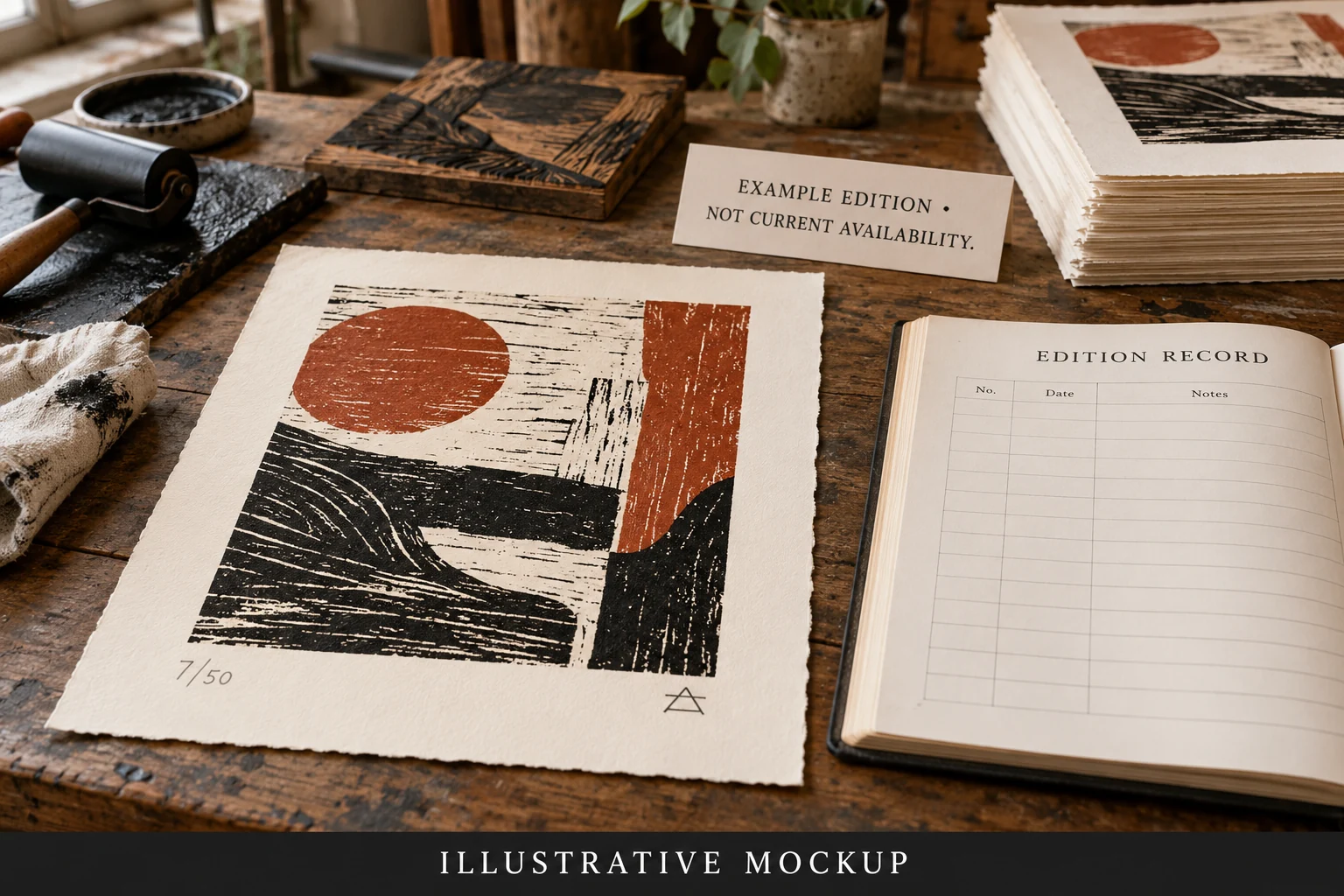
AI-generated illustrative mockup. The fictional 7/50 marking illustrates an edition identifier, not available stock, current scarcity, a real artist’s edition or proof of a completed sale.
Show one numbered example with its context
Film the real print's identifying details and connect them to the correct register entry. Where a signature or number is shown, ensure the asset depicts the actual item or is clearly labeled as an example from the edition.
A close-up of a fraction can be visually compelling, but it needs explanation. It does not by itself tell the viewer how many remain unsold, whether the depicted number is available or how other sizes are handled.
Do not digitally add a number to an unnumbered photograph and present it as the physical item's inscription. If an editorial diagram explains numbering, label it as a diagram and keep it separate from the actual-product photographs.
Date every availability statement
Link a stock statement to the observation that supports it: the register version, channel and time checked. A video can remain online long after its original inventory statement becomes stale.
For durable educational content, explain where current availability is checked instead of embedding a fragile countdown. For a time-sensitive launch asset, have an owner responsible for revising or withdrawing claims when the underlying state changes.
A canceled reservation should follow the documented inventory policy. Do not automatically treat it as a reason to restart an urgency campaign or announce a new edition. Record the actual transition and keep the wording consistent with the original promise.
Give the editor a claim checklist
The brief should specify which edition the asset covers, what the number means, whether the pictured item is selectable and which current record supports availability. Include approved product descriptions and any uncertainty that must remain visible.
Keep authenticity, materials and investment language out of the script unless separately supported. A certificate can document the seller's stated information, but its presence should not become a blanket claim that an independent authority has authenticated the work.
For an Instagram carousel, one card can explain the edition scope while another shows the real print detail. A longer studio tutorial can walk through the artist's recordkeeping without revealing customer information. Neither format needs a manufactured countdown to make the release understandable.
Test whether the buyer confuses the counts
Ask a reviewer to explain the difference between edition size, current availability and pieces physically printed. Then show a hypothetical change, such as a reservation being canceled, and ask which field changes under the documented policy.
If they think the edition cap grows whenever another batch is printed, the explanation needs work. If they assume every size shares one cap when the policy says otherwise, move that distinction into the main asset rather than a remote FAQ.
This is a proposed comprehension test, not a completed buyer study. Define one real edition's scope and inventory fields before making a scarcity statement.