How-To Guide
Cross-border checkout creative: explain the displayed costs without promising a guaranteed landed price
A checkout total is evidence of what the store displayed for a particular order configuration. It is not automatically proof that every possible…
By the Superdirector editorial team.
A checkout total is evidence of what the store displayed for a particular order configuration. It is not automatically proof that every possible delivery charge is covered. Before using it in a cross-border offer, separate product price, shipping, displayed duties or taxes, and any known exclusions.
This article is an operational content-review method, not tax, customs or legal advice. It does not determine tariff rates, product classification or treaty eligibility. Those questions belong with the merchant's qualified owner or adviser.
Start with one specific route and offer
Choose the product, quantity, fulfillment origin, destination and shipping service for the example you intend to explain. Keep private addresses and customer information out of public creative.
Do not use a domestic checkout screenshot to support an international cost promise. Do not assume one country pair represents every market in a campaign. If your creative targets several markets, the supporting evidence needs to match the claims made to each audience.
Write down the actual display mode before looking for an error. Shopify allows duties to be added as a line item or included in the price. The absence of a separate added duty line is therefore not sufficient evidence that calculation failed. Shopify checkout duty display.
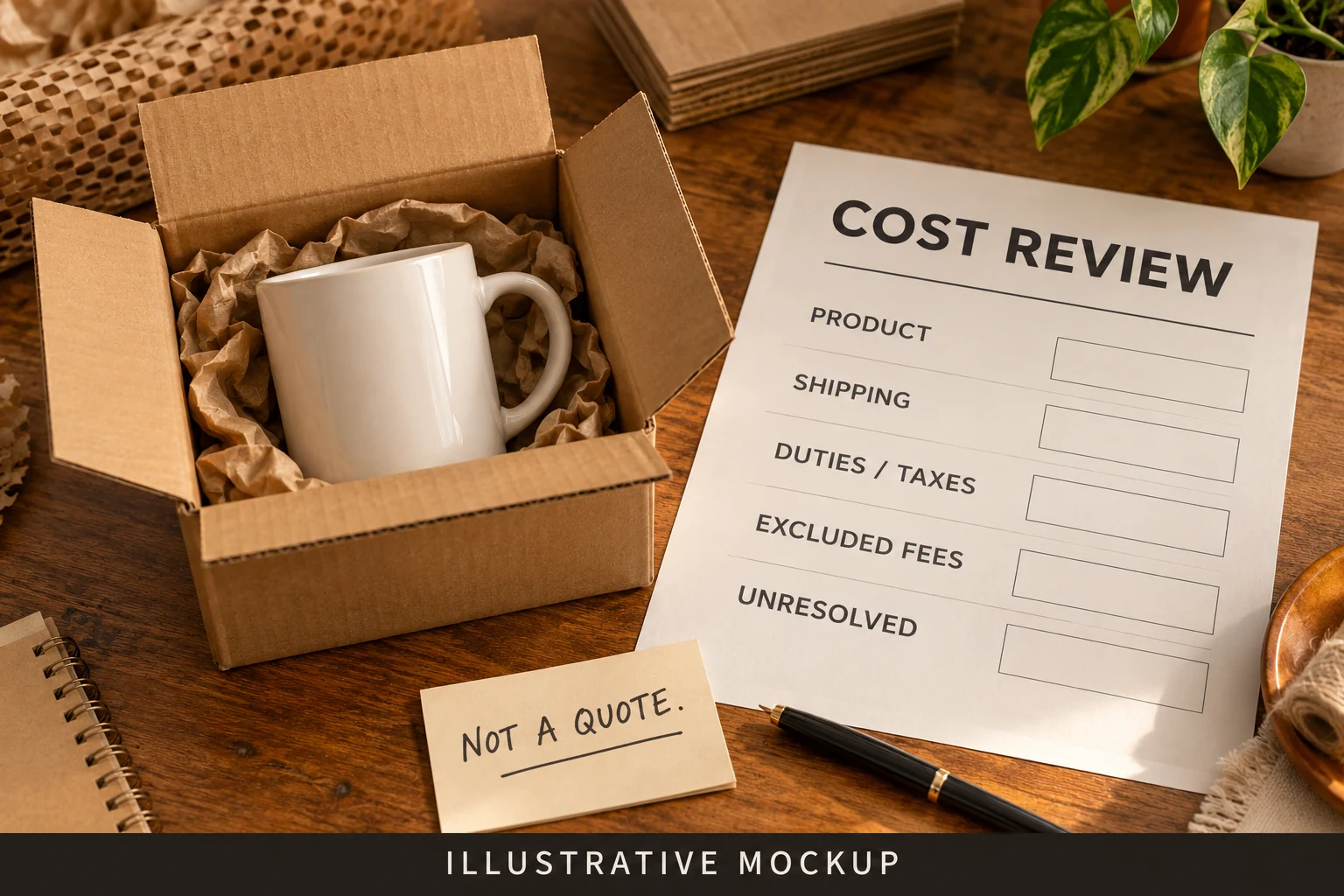
AI-generated illustrative mockup. This is a disclosure structure, not a shipment, quotation, customs assessment or guaranteed landed cost. Populate it only from the applicable verified route and offer.
Illustrative mockup by OpenAI image generation, editorial direction for this article. Created 2026-10-24.
Build a cost-disclosure card, not a fictional quote
For an illustrative mug shipment, prepare five rows with no invented rates:
- Product amount: copy from the verified selected offer.
- Shipping: identify the service and the amount actually displayed.
- Duties or import taxes: record the actual wording and whether included or separate.
- Known excluded fees: identify what is supported by the carrier or fulfillment information.
- Unresolved amounts: name the question and responsible owner instead of guessing.
The example is a structure for collecting evidence, not an actual shipment or cost estimate. Do not insert a round number merely to make a graphic look complete.
Shopify says its checkout duty and import-tax amounts are estimates based on the information available at order time. Its considerations page says handling, brokerage and disbursement fees are not included in those calculations. Calculation considerations.
That is why “duties displayed” and “all possible charges guaranteed” are different promises. Use wording no broader than the evidence you have.
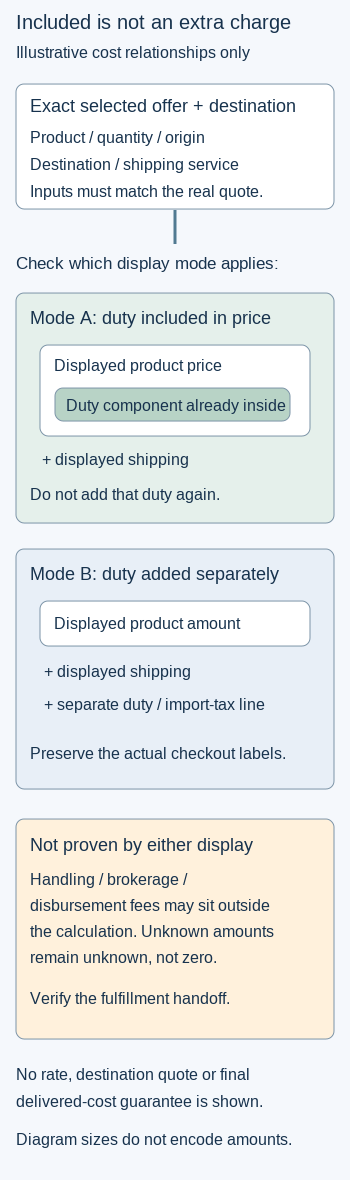
This original diagram contains no quoted rates and is not a customs assessment or a receipt.
Original visual by the Superdirector editorial team. Creation date not recorded.
Make the visual match the actual display
If the checkout adds duties as a separate line, preserve that distinction in the explainer. If the offer includes duties in the price, show the verified included-price wording rather than drawing an invented extra charge below the total.
Do not use a dramatic “no surprise fees” headline while a small note admits the relevant fees are unknown. Resolve the unknown or narrow the claim. The point of the creative is to clarify the offer, not to hide the operational questions from the buyer.
A short video can walk through the selected product, destination context and cost labels without displaying a customer's full address. Use the actual current flow if authorized, or clearly label a schematic. Never combine a real total with invented fulfillment evidence to make the demonstration appear complete.
Check the fulfillment handoff with the owner
Shopify's guidance says orders with duties and import taxes paid at checkout need the appropriate delivery-duty-paid shipping label, and carrier support can vary by destination. That is an operational handoff to verify, not something a marketing screenshot establishes. Shipping requirements.
Ask the responsible shipping owner to confirm that the selected service and actual fulfillment process match the intended prepaid-duty arrangement. Do not purchase a label, change tax settings or contact a carrier merely as a side effect of producing an article or graphic.
If the checkout evidence and fulfillment plan disagree, keep the creative unapproved until the owners resolve it. A plausible label mockup is not a substitute for an actual supported service.
Keep classification questions outside the copywriter's guesswork
If the amount seems surprising, record the exact observed configuration and escalate it rather than choosing a tariff classification from a product photograph. Shopify identifies product information as an input to its estimates, but that does not make a general help page a ruling on your product.
Do not reuse an old duty-free threshold from a forum, assume a treaty applies because two countries are involved, or interpret a zero displayed amount as a guarantee that nothing can be charged later. The article's task is to make the evidence and unknowns visible, not to settle those questions.
A useful review record states what was observed, when it was observed, what remains unresolved and who can resolve it. Keep sensitive shipment details in the appropriate private record, not in a public example.
Accept the explanation in stages
First, have a reviewer explain which amounts are included, which are estimates and which remain unknown based only on the creative. If they read a guarantee that you did not intend, revise the headline or cost card.
Second, verify the actual store display for the intended route within authorized access. Third, use a genuine fulfilled order, when available and permitted, to compare the displayed promise with the fulfillment and charge evidence. These are separate stages; a prepared graphic passes none of them by itself.
Prepare one narrowly supported cost explanation, with unresolved tax and shipping questions assigned rather than concealed.