Category Guide
UGC Campaign Planning Tool for Lean Brands
Plan UGC campaigns with brand context, campaign angles, hooks, scripts, shot plans, proof requirements, and creator-ready briefs before spending on creators.
By Bell Chen, founder of Superdirector — how the analysis works.
UGC campaigns fail when brands treat creator output like a volume problem instead of a briefing problem. Before a team hires creators, ships samples, or boosts clips, it needs to decide what story the product can credibly tell and what evidence the creator should capture.
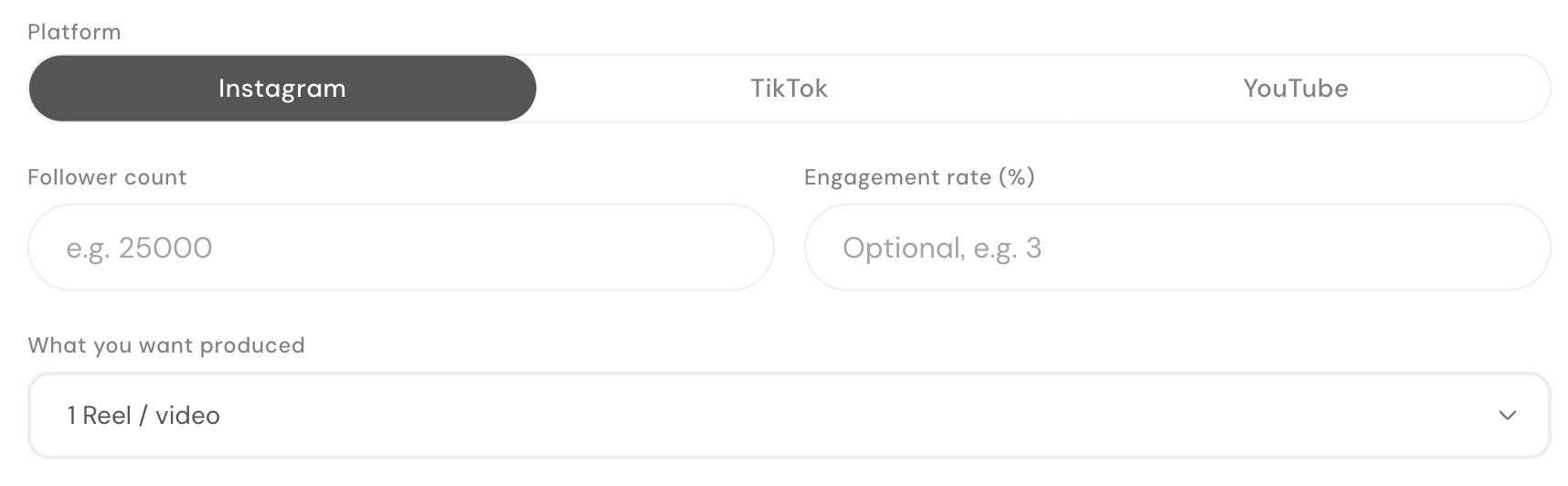
Superdirector. Public budget-calculator inputs; no estimate has been run.
Plan the campaign before sourcing creators
Creator marketplaces and UGC platforms help with supply, approvals, payments, and tracking. The missing step for many lean brands is the strategy before that work starts: which angle should be tested, what product proof should be visible, and how the creator should structure the video.
Use the selected brand context and references to prepare a brief with your team before choosing creator supply or production.
What belongs in a UGC planning flow
A strong UGC plan should define the target viewer, purchase barrier, proof moment, hook, script beats, visual sequence, deliverables, usage notes, and examples of references to adapt without copying.
Bring the selected evidence and campaign goal into setup, review the available research or script work, and use its result to prepare the brief. Confirm the claims, deliverables and production requirements with the people doing the work.
What Superdirector does and does not do
Superdirector is not a UGC marketplace, product seeding tool, creator payment platform, or automatic deployment system. Those jobs happen after the campaign direction is clear.
Its role is to help teams turn brand context and social examples into UGC-ready creative direction before they spend on creator supply or paid amplification.
Example: from product page to UGC brief
Planning example: a lean brand lists the product proof, audience question and reference format before asking for a script draft. The team then reviews that draft, the required shots and creator instructions before assigning production.
That is more useful than asking for “three fun videos.” It gives creators a real assignment while still leaving them space to speak in their own voice.