Category Guide
Micro-Influencer Campaign Briefs for Organic Growth
Create micro-influencer campaign briefs with product proof, audience angle, hooks, scripts, shot plans, deliverables, and review notes before outreach.
By Bell Chen, founder of Superdirector — how the analysis works.
Micro-influencer campaigns work best when the creator receives a clear point of view, not a vague product description. The brief should explain the audience, product proof, story angle, hook, required shots, and boundaries while leaving enough room for the creator to sound natural.
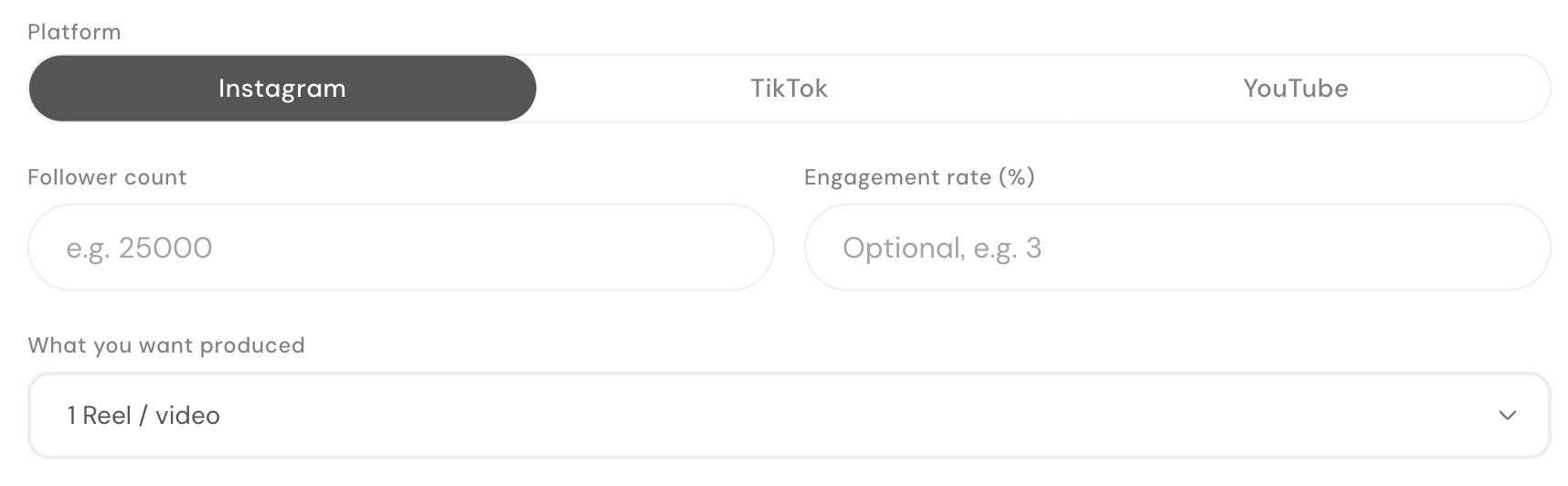
Superdirector. Public budget-calculator inputs; no estimate has been run.
Brief quality determines creator quality
Small creator campaigns often look affordable until the output is too generic to use. The problem is rarely only creator selection; it is also the creative direction the brand gives before filming begins.
A stronger brief gives the creator a clear scenario, proof moment, hook, key message, visual sequence, and review standard. That improves the chance that the asset can be used organically or as a later paid test.
How Superdirector supports the briefing layer
Keep the brand context, selected references and creative goal with the task. Review the available research or script work, then use the result when agreeing the hook, product proof and filming requirements for the creator brief.
The workspace also helps preserve references and past work, so a team can brief creators with concrete adaptation cues instead of abstract adjectives.
Use before outreach, marketplace, or product seeding
Review the campaign direction alongside the creator evidence and production requirements. Use the available research and script work to prepare that decision before arranging contact or making a commitment.
That keeps the promise practical. The value is a better brief and a clearer campaign, not the idea that the entire influencer workflow is automated.
Keep the creator voice intact
Micro-influencer content usually works because it feels personal. A good brief should protect that. It should clarify the product proof, offer a few hook directions, explain the required shots, and name the review standards without forcing the creator to read a script word for word.
The practical goal is alignment, not control. The brand knows what needs to be communicated; the creator still knows how to make it feel native to their audience.