How-To Guide
Which Steam Next Fest should your game use? Compare what the one participation needs to accomplish
“Join the last festival before launch” sounds decisive. So does “join early and learn.” Neither sentence tells a team with an unfinished demo whether…
By the Superdirector editorial team.
“Join the last festival before launch” sounds decisive. So does “join early and learn.” Neither sentence tells a team with an unfinished demo whether its next available edition is the right use of a limited opportunity.
Decide before you take part what the one participation is for: what you need to learn or communicate, what players can actually experience, and whether the team can use the result. Compare two feasible editions against those questions. Do not guess which month will deliver more wishlists.
Establish whether both options really exist
Valve currently limits a title to one Next Fest participation. The base game must remain unreleased through the relevant edition, have a public store page and offer a publicly playable demo by the event’s start, alongside the other eligibility conditions. Valve explicitly allows either earlier learning or participation closer to release; it does not name one universal winner. Read the current Next Fest eligibility guidance.
Record your actual participation history, release commitments and account eligibility before comparing dates. A proposed later edition is not a real option if the game will already have launched. Equally, an earlier date does not become feasible because the team wants exposure while its demo still cannot complete the intended player task.
Do not assume that changing the game’s name, submitting a different edition or withdrawing after participation creates a second opportunity. If you are unsure of your own history, settle it through the authorized account process before you commit.
Choose the job: actionable learning or a near-launch introduction
An early-learning route asks a narrow question the team still has time and capacity to act on. Can unfamiliar players understand the central choice? Does the first session communicate the intended pace? Which misunderstanding would change the next development decision?
A launch-near route shows a more representative offer shortly before the planned release. It still needs observation and support, but the team may have less room to redesign the core experience afterward. Ask whether the demo honestly represents what the full game will offer. Whether every optional effect is polished matters less.
These purposes can coexist, but pick a primary one. A team cannot honestly call an unresolved core interaction “useful early learning” and also present the same build as a finished launch promise. Write down which decisions are still open and which promises are already fixed.
Replace “needs polish” with specific evidence
Split outstanding work into three groups:
- Blocking task failures: a player cannot start, understand or complete the central interaction, or the offered build differs materially from the promise.
- Important learning questions: the interaction works, but its explanation, pacing or appeal still needs observation from appropriate players.
- Optional refinements: improvements that do not change the player’s understanding of the offer or prevent the intended task.
These are editorial planning categories with no numerical score behind them. A cosmetic flaw can still block a player if it makes essential information unreadable. An unfinished decorative effect does not, by itself, justify postponing every player test.
In one developer thread, the author weighed June against October while the demo still needed work. A later reply said that testing had mostly involved the developer and a few friends. That testing gap is the useful evidence. The thread’s speculative wishlist multiplier and its general advice to delay are not. Read the developer’s question and follow-up.
Build two workbacks, not two hopeful dates
For each candidate edition, record the registration and review deadlines from that edition’s own Valve page, the demo build to submit, time for corrections, representative player checks, support coverage and the release constraint. Mark unverified dates as unknown. Do not copy a general workback onto an edition without checking that edition’s own instructions.
The October 2026 page shows why each edition needs its own check. It lists an August 31 registration deadline and a September 28 review submission deadline before the October 19 start. Both had passed by the time of this article’s October 24, 2026 research. They show that preparation gates are separate and dated. They are not an invitation to register now, and they say nothing about future editions’ dates. October 2026 edition details.
Keep platform review separate from your own testing. Valve says its build review is not full QA. A reviewed build can still leave your intended player task broken or confusing, and a later update still needs your own checks. Demo preparation and review scope.
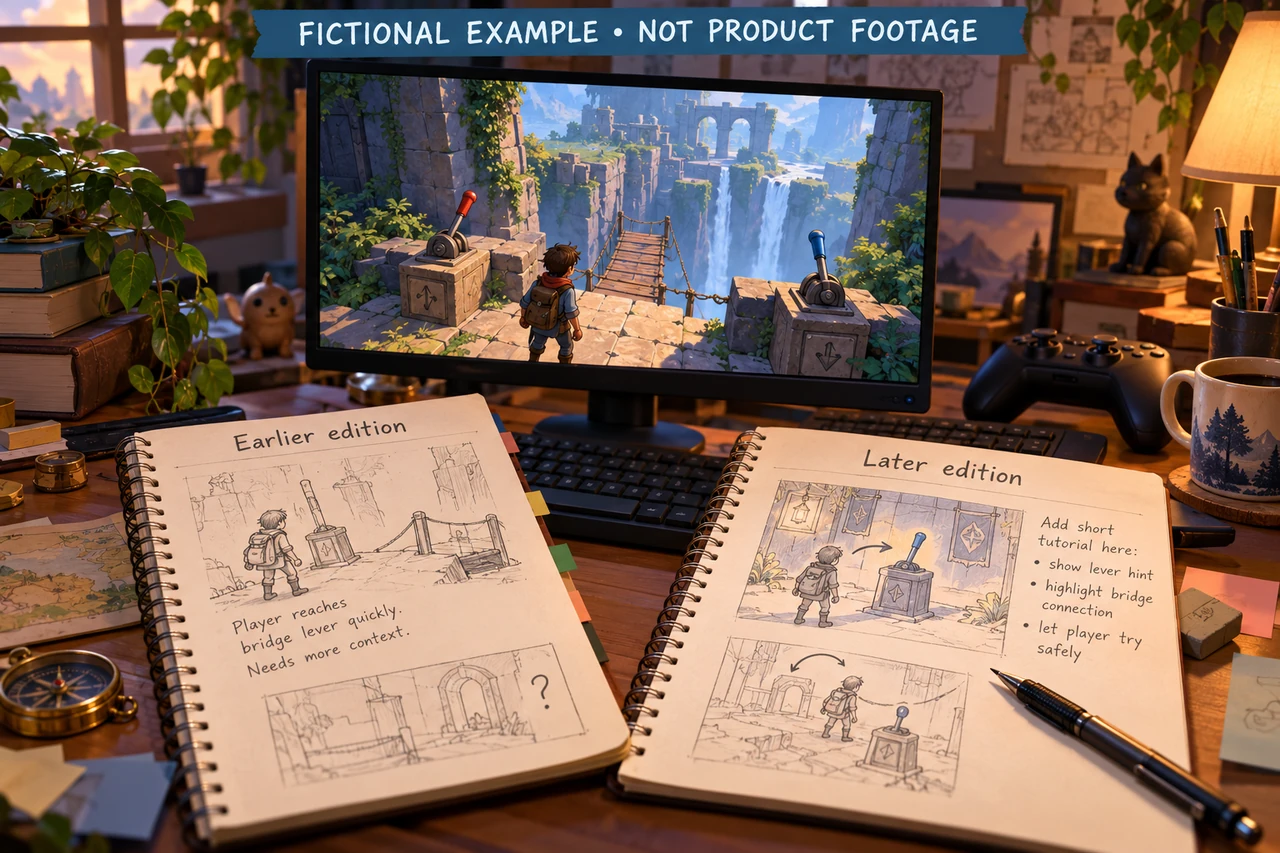
A fictional workback comparison asks what an extra development window would change in the demo. It does not predict traffic or select an eligible edition. Original AI-generated editorial illustration.
Original visual by Original editorial illustration generated with OpenAI’s built-in image tool. Created 2026-10-24.
Ask what waiting would actually buy
Consider a fictional puzzle team with a working central mechanic but repeated confusion during the first meaningful choice. An earlier edition might produce useful learning, but only if the team can support the demo and act on observations. Before committing, it runs a small focused check of that choice. If the task is still unusable or the review workback cannot be met, the team has a concrete reason to look at a later eligible edition, and “We might have more wishlists later” is not its only argument.
Now take a fictional horror team with a representative demo and a planned paid release. It weighs what the later edition would offer as an introduction against its real release and support commitments. Waiting pays off only if the extra time allows specific work or a useful timing relationship. A prediction of a less crowded month does not make it the better choice.
A real developer asked a similar October-versus-February question for a horror game, then corrected the release quarter in the replies. Replies in the thread offer conflicting predictions about season and competition. Those are opinions, not measurements, and should not set another game’s calendar. Read the original edition-choice discussion.
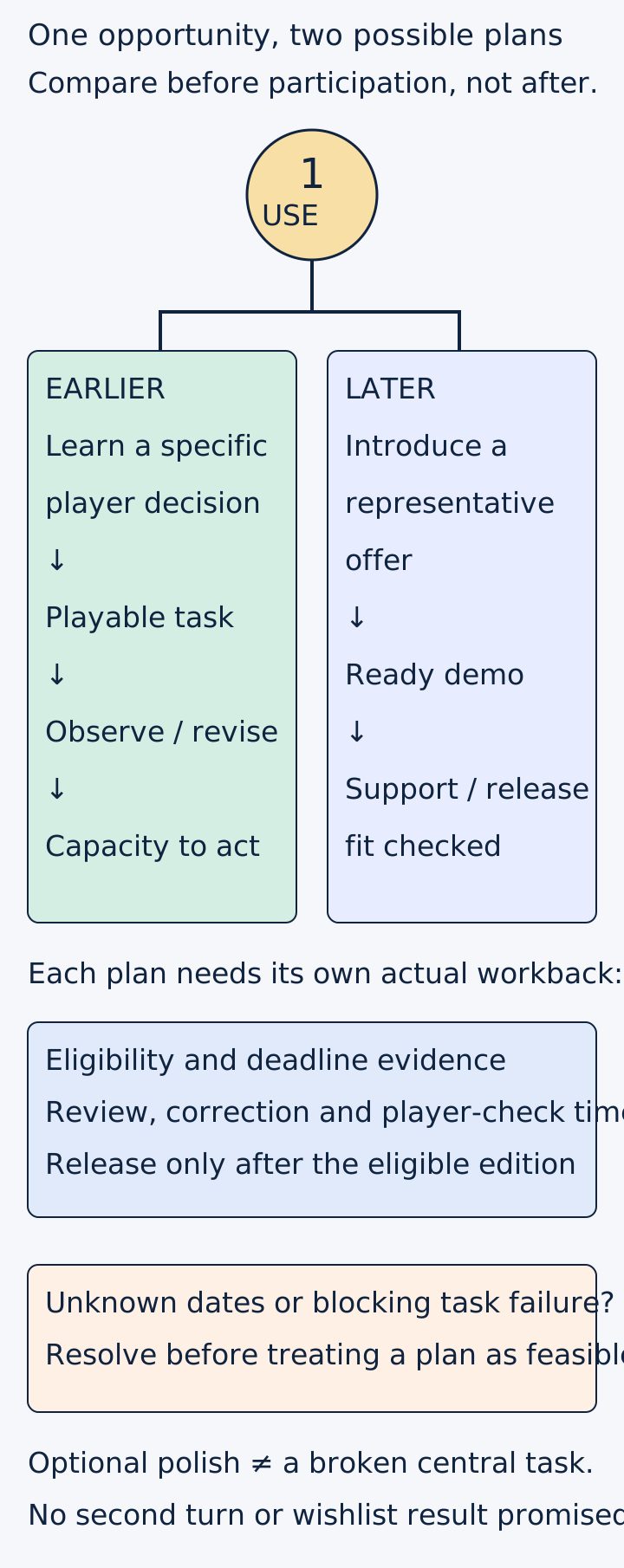
Original planning diagram. These are alternatives before participation, not a reservation, recommended edition or promise of a second chance.
Original visual by the Superdirector editorial team. Creation date not recorded.
Record the decision and what would change it
Use a short record: chosen purpose; candidate edition; actual eligibility evidence; blocking issues; learning question; preparation owner; support capacity; unresolved dates; next check; and the condition that would change the plan before participation.
A good change trigger is concrete: “If an unfamiliar player still cannot complete the first puzzle after the planned revision, reassess readiness before the applicable commitment.” A weak one is “wait until the game feels 99% ready,” which hides both the defect and the decision deadline.
After participation, track demo use, useful observations, wishlists and eventual paid purchases separately, because each answers a different question. Keep the original learning goal in view, so that a large audience cannot hide an unanswered product question and a modest one cannot erase a specific insight that improved the game.
Your next step is to compare two real preparation plans and run one missing readiness check. Do not look for a best month for every game. Use the opportunity for a purpose the game and team can support.