Brand Identity: Guide for Short-Form Video Teams
Brand Identity, explained with the examples that make the rule obvious.
By Bell Chen, founder of Superdirector — how the analysis works.
Recognition Arrives Before the Name
Marty Neumeier's definition cuts cleanest: a brand is a person's gut feeling about a company, not a logo. For a video creator it arrives in the first second of a clip, before the handle registers, built from cues decided on purpose and repeated until they are yours.
The Two-Part Asset Test
Romaniuk and Sharp call the material distinctive brand assets. Their test is strict: many people recognize it, and it points to one brand only. A repeatable color grade passes; so do a home-base framing, a lighting register, a signature opening line. A grade a hundred other accounts use fails the second clause.
Content Identity Is the Equity
Trends rent attention; content identity is what you own. Commit to three to five pillars you could make fifty pieces for, hold one register of voice, and rotate two or three story shapes. Sound belongs on the same list: a signature spoken opener fires before the picture does.
A Stable Core, Bent Per Execution
Ramp ran the Brian Baumgartner glass-box conceit unchanged through teasers, livestreams, and cutdowns; the executions moved, the identity held. A fixed cadence trains both audience and platform, and steady performance beats a spike that fades by the weekend. Consistency is also speed: fewer decisions per video lets an editor follow the throughline.
What brand identity actually is
Marty Neumeier, in his book "The Brand Gap," cuts the definition to its core: "A brand is not a logo. A brand is not a corporate identity system. It's a person's gut feeling about a product, service, or company," per Neumeier. For a creator the principle is identical. Your brand is not your logo or your bio; it is the feeling a viewer gets in the first second of your video, before they have read your name.
What produces that instant recognition has a name in marketing science. Jenni Romaniuk and Byron Sharp of the Ehrenberg-Bass Institute call them distinctive brand assets: the colors, sounds, characters, and patterns that, through repetition, become "learned associations that help us to notice, recognise, remember and think of a brand," per Romaniuk. Her test is two-part: an asset works when many people recognize it and it points uniquely to one brand. A color grade a hundred other creators also use is not distinctive. The opening line only you say is.
So brand identity for a video creator is the deliberate, repeated set of cues, visual, sonic, and structural, that make your content recognizable on sight and consistent enough to trust. The sections ahead take those layers one at a time — the visual signature, the sonic signature, the production patterns — and what controlling each one asks of you.
Your visual signature
Visual style is the asset viewers register first, before a single word. Treat each visible choice as a candidate distinctive asset and ask Romaniuk's question of it: is it recognizably yours?
Color is the strongest of these, because the brain processes it pre-attentively. A consistent palette across backgrounds, wardrobe, and overlays, plus a repeatable grade (warm or cool, saturated or muted), turns a scroll into a flicker of recognition. Framing is the next layer: most durable creator brands have a "home base" shot they return to, a default distance and composition, and use other framings only for emphasis. Lighting sets the emotional register, soft and natural reads approachable, hard and high-contrast reads dramatic, and it should stay constant enough that two random videos of yours feel lit by the same hand. Editing pace is the rhythm signature: fast jump-cuts signal energy, longer holds signal authority, and whichever you choose becomes part of what the audience expects the moment your video starts.
None of this requires identical frames every time. It requires a recognizable range. The goal is that a viewer who sees three seconds with the sound off and your name hidden still knows it is you.
Content identity: pillars, voice, and the patterns you repeat
If visual style is how you look, content identity is what you say and how you say it, and it is where brand equity is actually built. The failure mode of skipping this work is familiar: every post starts to look the same, trends perform but do not build brand equity, and strategies that used to work begin to fall flat. Trends rent attention; content identity is what you own.
It has three parts. Pillars are the three to five topics you commit to, so the audience knows what they signed up for. Voice is your consistent register, casual or precise, warm or deadpan, the thing that makes a returning viewer feel they are back with someone they know rather than a stranger. Narrative patterns are the story shapes you reuse: hook-demo-CTA, problem-solution, the chronological day-in-the-life. Most creators settle into two or three default shapes and rotate them. That repetition is not a failure of imagination; it is the structure that lets an audience recognize you across hundreds of posts.
Your sonic signature
Sound is a distinctive asset most creators leave to chance, which is exactly why it is an opportunity. Romaniuk's list of brand assets includes audio devices for a reason: a sonic cue can trigger recognition before the picture even registers. For a creator that cue can be a signature opening phrase, a recurring sound effect, a consistent music genre, or the underrated choice of always speaking in the same cadence.
The decisions worth making on purpose: whether you are direct-to-camera or voiceover (each builds a different relationship with the viewer), whether you caption narration (which aids both accessibility and retention), and what your audio "feels" like, voice-forward and intimate, or music-forward and energetic. Even silence is a choice; some of the strongest brands run entirely on visuals and one signature track. Pick a sound and keep it long enough to become yours.
Production patterns: the contract with your audience
Your operational rhythms become promises. Video length trains the viewer in how much time to invest and trains the platform in what kind of attention your content attracts; a feed of tight 20-second clips and a feed of 90-second explainers build different audiences. Posting cadence is the other half of that contract: daily posting builds a habit, three to five times a week is sustainable for most, and anything less frequent has to clear a higher quality bar per post to hold the relationship.
The practical move is to find the format that consistently works for your audience and treat it as a home base rather than a cage. Knowing your reliable shape lets you produce faster, because you are not redesigning the wheel each time, and it gives you a stable baseline to measure experiments against. Consistency here is not monotony; it is the predictability that makes the occasional swing feel intentional instead of random.
Who receives it: reading the real feedback
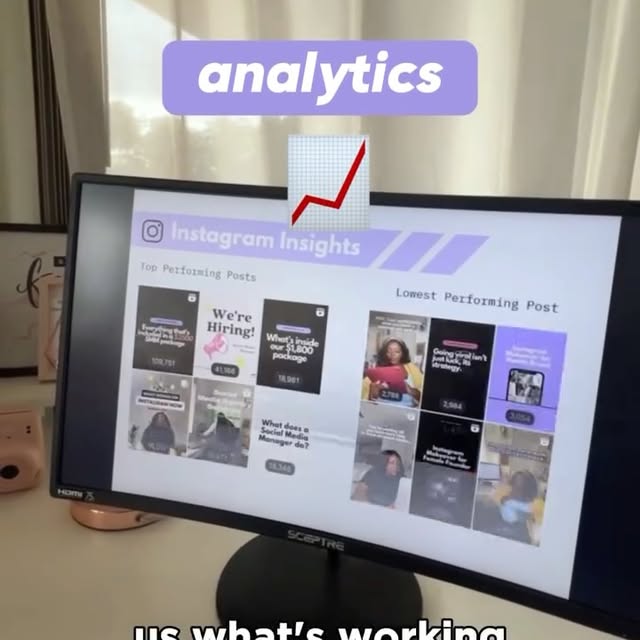
A brand is only half yours; the other half is the audience that receives it, and their behavior is the most honest read on whether your identity is landing. Demographics shape what resonates (pacing that lands with Gen Z may need air for an older audience, and regional references travel unevenly), but the sharper signal is in how people engage.
Be selective about which numbers you trust. Adam Mosseri, who runs Instagram, told creators in his January 21, 2025 ranking explainer to pay close attention to average watch time, likes per reach, and sends per reach, the top three signals he named for ranking. Read against your brand, those three answer different questions: watch time tells you whether your pacing and structure hold, likes per reach whether the content resonates emotionally, and sends per reach whether it is worth passing to a friend, the truest test of a brand people identify with. View counts are the vanity layer; the per-reach signals are the feedback that tells you whether the right people are finding you.
Signature story and script logic
Underneath the visible style sits the deepest brand layer: the storytelling patterns you reach for by instinct. Creators with a strong identity have signature hooks, a question opener, a bold-claim opener, a withheld-detail opener that runs an open loop, and they lean on the one or two that fit their voice rather than chasing every format.
The same goes for structure. Whether you default to a tight three-beat (hook, value, call to action) or a fuller arc, a consistent beat shape and pacing give your content a rhythm the audience can feel even when they cannot name it. (The companion guide on beat structure goes deep on this.) The point for brand identity is narrower: pick the story logic that is recognizably yours and repeat it until it reads as a style rather than a habit.
Your camera and location signature
The most sophisticated layer of a creator brand lives in camera work and setting, the choices an audience absorbs without consciously noticing. How you move the camera carries meaning: static shots feel stable and authoritative, handheld feels immediate and unpolished, a slow push-in creates intimacy and emphasis. Pick a default that matches your voice and let any deviation mean something.
Location works the same way. A consistent background becomes a "set" the audience recognizes the way a sitcom's living room is instantly familiar; rotating between two or three known locations adds variety without dissolving the brand. Production audio is the quiet finisher, close-mic intimacy versus room sound, voice-forward versus music-forward mixing, all of it adding up to a texture viewers come to associate with you. These are small, repeated decisions, and their consistency is what separates a recognizable creator from someone who simply posts.
Why it compounds, and where a tool fits
Brand identity compounds because consistency is what the feed and the audience both repay with trust. Buffer's State of Social Media Engagement in 2026, built on 52 million posts from more than 200,000 accounts across ten platforms, found engagement has gotten harder to win on several major platforms. In a market where the baseline keeps dropping, the creators who hold attention are the ones whose audience already knows and trusts what they make, and steady performance beats the occasional viral spike that fades by the weekend.
The hard part is staying consistent without going stale, and the cleanest answer comes from Ramp, the finance startup whose Brian Baumgartner glass-box livestream became a marketing case study. The conceit never moved — a man in a glass box surrounded by paper receipts — while the executions around it kept changing: teaser, livestream, guest appearances, cutdowns. That is the whole discipline: a stable identity bent to each new execution, never abandoned for it. A defined brand also makes you faster, fewer decisions per video, and easier to scale to editors or collaborators who can now follow the throughline.
Disclosure: I am Bell Chen, founder of Superdirector, the tool listed in the related features above; it extracts these patterns from a brand's own videos as a starting profile. None of it is required to do the work on this page, which is why every source here (Neumeier, Romaniuk and Sharp, Mosseri, Buffer, and Ramp via Marketing Brew) is linked inline. Brand identity is not about being polished or rigid. It is about being intentionally, recognizably you.
FAQ
What is brand identity for a creator, concretely?
Which brand element matters most?
Does sound really count as brand?
Do posting cadence and video length count as identity?
How do I tell whether my identity is landing?
Turn the technique into a plan
Paste your Instagram or TikTok profile URL to get a niche reference feed, then turn the strongest signal into scripts and shot plans built for your next video.
Continue Learning
The Complete Guide to Video Hooks
Hook frameworks anchored to verified named-creator examples (Hormozi, Hoyos, MrBeast, Mosseri, Ramp, Cluely) with view counts, permalinks, and what moves retention.
Short-Form Video Strategy for 2026
Platform-specific strategies for TikTok, YouTube Shorts, and Instagram Reels, including algorithm insights, optimal formats, and cross-platform repurposing.