E-Commerce & DTC
E-Commerce Social Video Strategy
The formats that hold up in E-Commerce, and what a small team can film this week.
By Bell Chen, founder of Superdirector — how the analysis works.
Production context. Phone-mounted recording setup. Context photo from the licensed site library.
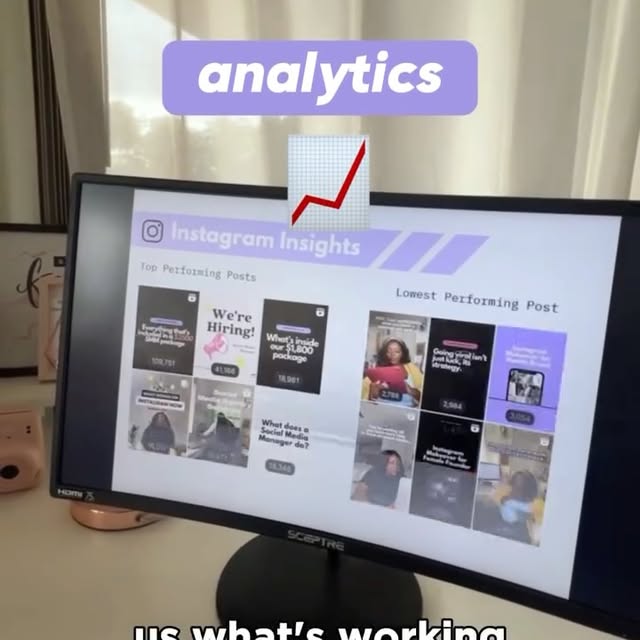
Best Platforms
Mike Cessario, the founder of Liquid Death, gave members.asicentral.com the cleanest single sentence published on DTC content in 2026. Cessario said, “The way I think about our business model is that we’re an entertainment company that monetizes via beverage.” That sentence is the entire content thesis behind a brand that built a 7.2 million-follower TikTok account around a canned-water product (account metadata at @liquiddeath) and a 2024 valuation reportedly above $1.4 billion. Dan Murphy, Liquid Death’s SVP of Marketing, named the operating constraint in a January 12, 2026 Marketing Brew interview. Murphy said, “We’re competing with the feed. We’re trying to be the funniest thing in your feed that day.” Read both quotes together and the implication for any DTC operator running short-form video in 2026 is unsentimental. The brand is not competing with other beverage ads. It is competing with the cat video that comes one swipe before the can shows up. Most DTC short-form content fails because it never absorbs that.
This page is the operator playbook for the DTC founder, CMO, or solo brand-side video producer running short-form in 2026. Every named brand, every reach number, every verbatim quote below is sourced.
What is working in DTC short-form right now
The category looks compressed. Mid-market DTC operators have been pulling back on agency-produced TikTok spend and reallocating to in-house creators or paid creator partnerships. The motivation is performance-attribution honesty rather than budget cuts in absolute terms. Brands are reading the data and concluding that a $40,000 produced cut underperforms a $400 founder-on-camera Reel often enough that the production model itself is the problem.
Marketing Brew’s February 2026 DTC creative trend piece added the inverse half. Brands that ship founder-on-camera or employee-on-camera content consistently are pulling materially more reach than brands running studio-produced product-shot content, in roughly the same ad spend bracket. The compression is not about Reels reach falling overall (it is, across the platform). The compression is about identity-attached content holding up while polished brand video collapses.
The other shift that operators are absorbing: TikTok Shop sits inside the workflow now, not next to it. Per Modern Retail’s coverage of Pop Mart, Pop Mart’s TikTok Shop did $4.8 million in April 2025 sales alone, up 89 percent month-over-month and 1,000 percent year-over-year. Nisenzon, a Pop Mart-adjacent operator quoted in the same Modern Retail piece, captured the demand asymmetry: “There’s this organic demand from consumers for these products, versus that need to penetrate the audience in a way that other brands are doing. People are coming and actively seeking these products.” The brands posting toward TikTok Shop are not running ads to live videos. They are running organic content that pre-warms a demand signal Shop captures inside the same surface.
The third question is creative: how content earns audience trust. Adam Mosseri’s December 31, 2025 year-end memo on @mosseri, said that “we’ll need to shift our focus to who says something instead of what is being said” and that “rawness isn’t just aesthetic preference anymore—it’s proof.” Our editorial test for DTC is to compare an overhead product clip with a founder explaining one decision on a phone. Keep the message comparable and evaluate actual retention, shares and product interest.
The named-brand DTC playbook
Liquid Death, entertainment first, can second
7.2M followers, 23.2M likes; Tony Hawk stunt cleared 21B social impressions
Account metadata at @liquiddeath. Cessario and VP Creative Andy Pearson built the brand on stunts that read as entertainment before they read as advertising. The 2024 Tony Hawk skateboard stunt (the Hawk-blood limited-edition deck) sold 100 boards at $500 each in roughly 20 minutes and generated 21 billion social impressions across platforms per the Adweek campaign coverage (the impression count is Liquid Death’s self-reported figure that Adweek published).
Pearson framed the stunt math to Adweek with no marketing varnish. Pearson said, “With Tony, we knew he loved Liquid Death, so we made him put his money where his mouth is and pony up his own blood for us.” Cessario, in the same Adweek piece, said, “If we would have used a video of Tony Hawk doing a cool trick, it would have got 5,000 views on our social. No one would care because everybody has seen Tony Hawk do a cool trick a hundred times.”
The Liquid Death pattern is the most-imitated and least-replicable DTC pattern of the decade because the stunts cost real production budget and assume the brand can absorb a flop. Watch the pattern; do not copy the budget if your unit economics will not survive a swing.
Olipop, in-house creator on a five-year contract
563.2K followers, 3.9M likes; 1.3B views at $0.61 CPM via Ad Age
Olipop’s TikTok at @drinkolipop is built around Sara Crane, an in-house creator. Crane told Ad Age, “TikTok is literally our entire strategy right now. And the last few months have been our best ever as a business after shutting off all of those other platforms.”
The Ad Age piece quantified the engine: 1.3 billion views at a $0.61 CPM, 30 to 40 outside creator partnerships per month layered onto Crane’s in-house feed. Crane’s three pieces of advice in the same interview translate directly into a DTC playbook. She told Ad Age, “Just get started without worrying about curation or aesthetic, consistency is key with a recognizable face on the page, and let outside creators make whatever they want rather than handing them scripts with talking points.”
The brand operating principle: one face, daily-ish cadence, and a paid creator network that fills the rest of the calendar without scripts.
Pop Mart US, blind-box scarcity over product shots
1M followers, 8.8M likes; $4.8M April 2025 TikTok Shop sales, up 1,000% YoY
Account at @popmart_us. Pop Mart’s Labubu collectible figures ran the year’s cleanest TikTok Shop story. The April 2025 livestream teaser at @popmart_us/video/7493845372511489287 earned 71.2K likes and 466 comments, opening on the closed blind-box itself.
The hook is scarcity and curiosity, not the figure inside. The Modern Retail coverage above quantifies the result: $4.8M in TikTok Shop sales in April 2025, up 89 percent month-over-month and 1,000 percent year-over-year. The brand never opens a video with a product close-up. It opens on the box.
Glossier, community as the cold open
1.1M followers, 16.5M likes
Account at @glossier. The May 17, 2024 Balm Dotcom cut at @glossier/video/7369697777741204779 is a five-second clinic in what a DTC brand can do with an inbox. The opening frame is a Glossier employee reading actual customer comments demanding the original Balm Dotcom formula return. The verbatim caption: “Hit play to watch The Comment Section, as told by Glossier HQ. Balm Dotcom returns in its original formula tomorrow, 5.17.24.”
The hook is the audience’s own voice. The viewer reads the format (comments performed aloud) in two seconds and the brand’s product news lands as the payoff to a community conversation, not as an announcement. Glossier earned this format by spending four years on Emily Weiss’s Into the Gloss blog interviewing customers about what they used (200,000-plus monthly visitors by early 2012, per Indigo9Digital). The Balm Dotcom Reel is the four-year customer-listening payoff compressed into ten seconds.
Ridge, product as the hero, no face
62.6K followers, 685.4K likes; MagSafe cut hard-opens on magnetic snap
Account at @ridge. Ridge is the counter-example to the founder-on-camera rule. Its short-form opens on the product, hard-cuts on specs (RFID-blocking, MagSafe snap, leather finish), and never features a recurring face. The MagSafe cut at @ridge/video/7465444887450733867 opens on a phone snapping onto the wallet with a magnetic click before any voiceover lands.
The pattern works because the product is engineered enough that the buyer (everyday-carry enthusiasts) reads the polish as quality, not as corporate distance. Use only when the product itself is the differentiator and the buyer is technical or aesthetic enough to care.
Allbirds, the cautionary tale
IPO November 2021 at $4.1B; sub-$1 share price by late 2024
Allbirds, the wool-shoe DTC that IPO’d at a $4.1 billion valuation in November 2021, traded below $1 a share by late 2024 and announced retail-channel and product retrenchments through 2025 per Retail Dive’s coverage and Modern Retail.
The content lesson is narrower than the financial one. Allbirds spent a half-decade running the high-production, founder-as-mission category leader playbook (Tim Brown explaining sustainability to camera, sleek product hero shots, founder essays). That playbook compounded equity at the IPO peak and stopped compounding around the time short-form video became the primary distribution layer. The brand never made the shift Liquid Death and Glossier made into native short-form storytelling. The 2025 retreat is one signal of what happens when a DTC brand under-invests in the content surface its category buyers actually use.
What pre-production looks like in DTC
The unglamorous half. The named-brand examples above all run a production discipline most DTC operators underrate.
Shot list before any camera comes on. Liquid Death’s stunt cuts are pre-planned to the frame. Pearson’s team builds a shot board for each campaign that names which beat lands the joke, which beat shows the can, and which beat earns the share. Olipop’s Crane runs a lighter version: a 12-to-15-post calendar drafted on a Monday for the week, with the daily concept written in one sentence. Both brands ship lower production-value content than the calendar suggests because the planning compresses the on-camera time, not the polish.
Talent and rights before the post. The Tony Hawk stunt required a signed talent release, a product liability review for the blood-infusion process, and a coordinated press embargo. The Glossier Balm Dotcom Reel required HR clearance for the employee who read the comments aloud. Most DTC brands skip both steps until a video performs, then scramble to retrofit consent. The retrofit is the moment a brand’s content engine breaks. Build the talent-rights workflow before the first viral video, not after.
Location and prop continuity. Olipop’s recurring kitchen and store-aisle locations let Crane shoot a week of content in two sessions. Liquid Death’s kitchen-counter and ad-set studios serve the same compression function. The DTC brands that ship three locations a week burn through production budget. The brands that compound visit one or two locations weekly, set a regular shoot schedule, and treat continuity as a saving.
Brand-voice guardrails on paper. Cessario has named in multiple interviews that Liquid Death’s writer’s room runs a list of jokes the brand will and will not tell. The list is the brand-voice guardrail. Olipop’s similar guardrail (per the Ad Age interview) is what Crane was hired to embody. The brand without an explicit guardrail eventually ships a video that breaks the brand. The DTC brands that compound write the guardrail down before they hire the first creator.
Legal review for the regulated half. DTC categories adjacent to FDA-monitored claims (anything that touches health, ingestion, or therapeutic positioning) need legal review on every script before filming, not after editing. A skincare brand cannot post a TikTok claiming a product cures acne and walk it back later. A beverage brand cannot ship a functional-ingredient claim without language counsel. Pre-production is the cheap moment to find the problem; post-production is the expensive one.
What goes wrong
- 1The polished founder video. If a produced founder clip is not earning the intended response, test a phone-shot explanation of the same decision. The memo is a perspective on authenticity and trust; use comparable posts and account metrics to choose the treatment.
- 2The catalog dump. A brand with 80 SKUs tries to feature each one, ends up posting a daily product-of-the-day Reel, and ships nothing memorable. The mid-market production pullback described above flagged this pattern directly. Brands trying to cover the catalog on social end up with the catalog’s flatness on every video. The fix is to pick two or three hero SKUs per month and run three to five hook angles each, then loop. Repetition is the DTC content compounding mechanism, not coverage.
- 3The discount-led cold open. A Reel opens with a code in slide one. The audience reads the post as an ad in the first frame and flicks past. Glossier’s Balm Dotcom Reel buries the launch news behind the community moment, which is why it landed as content and not as a promo. The DTC brands shipping discount-first opens are the brands that fall hardest in the saves-per-reach numbers this page uses as an editorial measure of usefulness.
- 4The deeper failure pattern under all three: treating short-form video as a paid channel rather than a content product. The brands that compound treat it as a product they ship daily and measure on attention, not on attributable spend.
What to track week-to-week
- Saves per reach (Instagram) or shares per view (TikTok)
- The non-trivial intent metric. Correlates with purchase intent within 7 to 14 days for DTC brands in the under-$100 product range.
- Profile visits per reach
- Whether the post drove brand investigation or just registered as a scroll.
- Comments per reach with question-marks
- The cleanest proxy for buyer-question demand. Track separately from total comments.
- Follower growth from the post
- The hardest unconditional commitment.
- TikTok Shop or website click-through (if a Shop sticker or link-in-bio post)
- Direct conversion read.
A metric that does not change what you do next does not belong in the report. What to skip: total likes, total views, total impressions reported on a brand-level dashboard. The aggregate hides the cluster signal that lets a DTC operator decide what to ship next. Hand-cluster the week’s posts against hook, format, SKU, and production effort, find the 3x outliers, and write next week’s calendar against the winners.
Where Superdirector research and pre-outreach workflows fit
Supported Instagram and TikTok public references can supply visible hook, pacing, and proof patterns for DTC research. Superdirector can combine those observations with reviewed brand context to draft ideas, scripts, and reusable shot-plan inputs. Private performance and back-catalog analytics remain in the brand’s native tools, and the operator chooses the hypothesis.
Example Ideas
Comment-section cold open
Instagram Reels"Hit play to watch The Comment Section, as told by Glossier HQ"
Angle: Audience voice as the opening frame, product news as the payoff
Why it works: The viewer reads the format (comments performed aloud) in two seconds and the brand news lands as the payoff to a community conversation, not as an announcement. Earned by genuinely listening to the audience over months, not weeks.
Founder one-decision explainer
TikTok"Why we changed the bottle from glass to aluminum this quarter"
Angle: Founder on phone explaining a single sourcing or product decision
Why it works: Test a polished founder clip against a phone-shot explanation of one decision. The audience-trust framing is editorial guidance, not a guaranteed ranking result.
Blind-box scarcity reveal
TikTok"Drop in 3, 2, 1" with the closed box still on camera
Angle: Open on the package, not the product
Why it works: The Pop Mart pattern: the hook is the scarcity and the curiosity, not the figure inside. Works when the SKU has any element of variation, limited edition, or anticipated reveal.
More tips and examples
Go deeper on the parts that matter to your next project.
Narrow Enough to Judge
A store publishing only general showcases learns nothing for weeks. The workable unit is one SKU, one buyer friction, one visible proof shot: the drawer everyone avoids opening, the install, the finished result. A claim narrow enough to judge lets the comment section confirm it within a posting cycle.
Prove Something Before Asking
Content has to show the use case, the quality difference, or the objection answered before it asks for a purchase. Comparison proof works when the side-by-side is close enough to rule on without an adjective. The healthiest signal lands when comments shift from arguing the claim to asking better questions.
Formats That Buy Learning
Each format is chosen by the question it answers:
- Problem-solution demos when the question is whether buyers recognize the friction.
- Unboxing and first use when packaging, setup, or size affects trust.
- Customer use cases when proof must come from outside the team, consent and disclosure kept clear.
Organic Learns First
Saves, comments, qualified clicks, and repeat questions name the hook and proof shot worth a creator brief or a paid test, so organic runs before spend increases. Founder context and production process carry more signal than polish. Turn the winning organic scene into the next production instruction; Superdirector builds creator-ready briefs from this proof.
Frequently asked questions
Should a DTC brand under $5M ARR be on TikTok Shop yet?
How do you film founder content without making the founder cringe?
How many hero SKUs should a DTC brand feature per quarter?
Is a $40,000 produced spot ever worth it for DTC short-form?
What about regulated DTC categories (supplements, CBD, kids products)?
Does TikTok Shop replace a brand's own website?
How should a DTC brand handle creator partnerships in 2026?
Other Industries
Related Content
By Bell Chen, founder. The named-brand examples above were reverse-engineered from public posts, named-publication coverage, and verbatim quotes attributed inline. Where I have a first-person take from running brand-profile workflows against live URLs across the last six months, I name it inline. The Superdirector research and pre-outreach workflow layer I run can surface visible hook patterns from supported public Instagram and TikTok references; it does not inspect private back-catalog analytics, film, post, or buy media.