SaaS Product Demo Videos: The Pain-First Method for Short-Form That Converts
How B2B teams compress feature demos into 30 to 90 second short-form that leads with user pain, not feature names. Anchored to Ramp and Kendall Hope Tucker (Marketing Brew), Cluely (TechCrunch), Vidico demo-length data, the Metricool 2026 study, and Buffer 2026.
Turn this page into a campaign built for your brand.
Connect Superdirector to ChatGPT and it adds current social-video references, public-video analysis, Brand DNA, and a ready-to-send campaign brief.
By Bell Chen, founder.
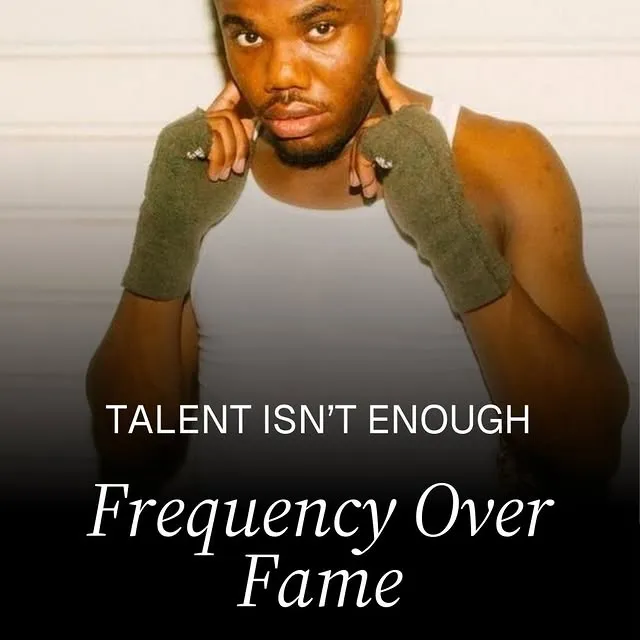
Ramp sells expense-management software, which is roughly the least viral product category imaginable, and in October 2025 it ran a campaign that Marketing Brew documented at an estimated "at least 85 million" views across platforms (marketingbrew.com). The campaign did not demo a single feature. It dramatized a pain. Kendall Tucker, Ramp's Head of Creative Experimentation, told Marketing Brew the entire challenge was that buyers do not know they have a problem, so the question became: "How do we make that pain feel visceral?" The answer was an actor from The Office buried in paper receipts in a glass box. The pain was the product; the software was the relief.
That is the principle most SaaS demos invert. The default demo opens with "here is a cool feature," which is the fastest possible way to lose a viewer who has no prior reason to care. On a landing page that opening survives because the visitor chose to be there. On a recommendation feed, where the first second decides whether the viewer stays, opening with the product instead of the pain forfeits the watch. And the watch is the whole game: reach is scarce, with organic reach on Instagram Reels tightening year over year as feed overcrowding intensifies.
What this page documents is the pain-first method I use to plan SaaS feature demos that work as short-form. Every claim about the four-beat structure, demo length, the talking-head hybrid, or measurement is attributed to a named operator, a named report, or rendered as a clearly disclosed fictional worked example. The method runs in a spreadsheet plus a screen-recording shot list. Which tool transcribes the demos does not matter; the judgment belongs to the planner.
Why feature-first demos lose and pain-first demos convert
A feature-first demo answers a question the viewer never asked. It opens with "this is the new dashboard" to a person who does not know they need a dashboard, and the recommendation feed reads the opening as a product ad and caps the reach in the first second. A pain-first demo opens with a friction the viewer recognizes from their own workday ("you know how you re-type the same data into two tools every morning"), and the recognition is what earns the watch. The product then appears as the relief, which is the only context in which a feature is interesting.
The four-beat structure that holds this is pain, mechanism, proof, next step. Beat one (the first three seconds): the visceral pain, fronted by a talking head, no product yet. Beat two (10 to 20 seconds): the mechanism, screen capture with zoom on the exact UI that removes the pain. Beat three: the proof, the result or the time saved, ideally a number. Beat four (the last two seconds): the next step, a trial link or a comment prompt. Tucker's framing of the Ramp challenge — "how do we make that pain feel visceral" — is beat one at campaign scale; the demo version just compresses it into three seconds of screen-fronted recognition.
The talking-head hybrid is what makes the structure work on B2B specifically. Pure screen recordings feel impersonal and get scrolled, because B2B buying runs on trust in the team behind the product. A two to three second talking-head hook opens the human door; the screen capture delivers the proof; a talking-head close re-establishes the human. Cluely's launch leaned entirely on a human-fronted provocation before any product appeared, which TechCrunch covered at its $5.3 million raise (techcrunch.com). The face earns the watch; the screen earns the belief.
Length is the other lever, and the data is clear. Vidico, which has produced 2,000-plus campaigns for SaaS and tech brands including Square and Spotify, reports that best-performing demos run 60 to 120 seconds for top-of-funnel use (vidico.com), with deeper walkthroughs reserved for viewers who already expressed interest. On a recommendation feed the shorter end of that range is the safer bet, because watch-through decides reach and a 90-second demo has to earn the full watch from a cold viewer. The discipline is one feature, one pain, 30 to 90 seconds, not the whole product in one tour.
Step-by-step: the pain-first demo library
| Stage | When / duration | Tools | Deliverable |
|---|---|---|---|
| 1. Identify five to eight reference accounts in your software category | 2 to 3 focused hours | spreadsheet, browser, public SaaS and B2B-creator accounts | a reference set of five to eight accounts producing high-engagement short-form in your category |
| 2. Break down the pain framing and the beat structure | 8 to 15 minutes per video | the reference set, a frame-scrub habit | one breakdown per demo (the first-two-second pain framing, the problem-demo-payoff beats, the talking-head/screen split) |
| 3. Map your top five features to user pains | 2 focused hours | your feature list, a blank two-column sheet | a table mapping each of five features to a specific, visceral user pain (not a feature name) |
| 4. Generate four-beat scripts, 30 to 90 seconds each | 3 to 4 focused hours | the pain map, a script template | one script per feature on the pain-mechanism-proof-next-step structure, each 30 to 90 seconds |
| 5. Build screen-recording shot lists and release one feature per video | 3 focused hours plus a recording block | the scripts, a screen recorder, a release calendar | per-script screen-recording shot lists (exact UI, cursor moves, zoom points) and a one-feature-per-video release sequence |
Identify five to eight reference accounts in your software category
Pick SaaS companies and B2B creators whose short-form actually earns engagement in your category. The Ramp and Cluely playbooks (marketingbrew.com) are the campaign-scale references; for feature-level demos, find the accounts in your specific software niche that get saves and comments on screen-capture content, not just views on entertainment.
Note which accounts lead with pain and which lead with features. The pain-first accounts are the ones to break down; the feature-first ones are the cautionary examples.
Break down the pain framing and the beat structure
For each reference demo, write down how the pain is framed in the first two seconds before any product appears, how the problem-demo-payoff beats progress, and how the video splits between talking head and screen capture. The pain framing is the load-bearing decision; capture exactly how the strong demos make a dull pain feel recognizable.
This is the director-level step. A bookmark captures that the demo was good; the breakdown captures why, at the level of which pain was named and when the product was allowed to appear.
Map your top five features to user pains
For each of your top five features, write the user pain it removes in the user's own words, not the feature name. "Bulk export" becomes "you rebuild the same report by hand every Monday." "SSO" becomes "your team resets passwords four times a week." The pain is the hook; the feature is the relief. If you cannot name a visceral pain for a feature, it does not get a demo yet.
This mapping is the entire difference between a feature-first and a pain-first library. The features are the same; the framing is inverted.
Generate four-beat scripts, 30 to 90 seconds each
Write each script on the four beats. Beat one: the talking-head pain hook, three seconds, no product. Beat two: the screen-capture mechanism, 10 to 20 seconds, zoom on the key UI. Beat three: the proof, the result or the number. Beat four: the next step. Keep each under 90 seconds, leaning toward the shorter end for cold-feed distribution per the Vidico length data (vidico.com).
Attach a hypothesis to each: the feature pain, the expected trial-signup lift, and the date to read it. A demo without a hypothesis cannot tell you whether the pain was real.
Build screen-recording shot lists and release one feature per video
For each script, specify exactly which UI elements to show, what cursor movements to make, and where to add zoom effects on the key interaction. The shot list is the document the recording session runs on. Record the screen captures in a block, then pair each with its talking-head hook.
Release one feature per video on a sequence that builds a searchable library over time. Read trial signups and profile visits against each demo's window, not the view count, so you learn which feature pain actually drove action.
What good looks like (a worked sample demo library)
The numbers below are a clearly disclosed fictional worked example, calibrated against the Vidico length data and publicly reported 2026 reach trends. The product, the features, and the cluster results are invented. Treat this as an illustration of the method, not a case study.
Brand: Threadline (fictional sample project-management SaaS, founder plus a part-time editor, a five-feature library to build). The pain map: the bulk-status-update feature became "you click into 20 tickets every standup to update status by hand," the integrations feature became "you alt-tab between five tools to assemble one update," and so on. Five features, five pains, in the user's words.
The library: five demos, each on the four-beat structure, each 45 to 75 seconds. The bulk-status demo opens on a talking-head founder saying the standup-clicking line, cuts to a 15-second screen capture of the bulk update with a zoom on the multi-select, lands on the proof ("that was 20 minutes, now it is 20 seconds"), and closes on a trial link. One feature, one pain, under 75 seconds.
Three hypotheses, written before release. Hypothesis one: the bulk-status demo (the most visceral pain) drives the highest trial-signup lift of the five. Hypothesis two: the integrations demo earns the most profile visits, because alt-tabbing is a pain everyone recognizes even if they do not need this specific tool. Hypothesis three: the demos under 60 seconds out-perform the ones over 60 seconds on watch-through. The read confirmed all three: the bulk-status demo drove the signup lift, the integrations demo drove discovery, and the shorter demos held more watch-through. The next batch weights toward sub-60-second demos on the most visceral pains and re-records the two longest demos shorter. The library compounded into a ranked, pain-tested pipeline.
Where SaaS demo libraries break
Failure mode one: leading with the feature. The demo opens with "here is the new dashboard" and the cold-feed viewer scrolls in the first second. The fix is the pain map enforced at the script stage: if the product appears before the pain is named, the script goes back. The face and the pain open; the product is the relief.
Failure mode two: cramming the whole product into one demo. The team tries to tour five features in 60 seconds and demonstrates nothing memorable. The fix is one feature per video, each on one pain, building a searchable library. The recommendation feed matches a specific-pain demo to a specific-pain prospect; a generic tour matches no one precisely.
Failure mode three: pure screen recording with no human. The demo is a faceless screen capture that feels impersonal and earns no trust, which B2B buying requires. The fix is the talking-head hybrid: a human hook opens the door before the screen delivers the proof. Cluely and Ramp both fronted a human before the product (techcrunch.com), and the human is what made dull software watchable.
Failure mode four: measuring views instead of signups. The team celebrates a demo with a million views and never notices it drove no trial signups, which means it entertained but found no real pain. The fix is to track only the two or three numbers that would actually change your next move. For a demo those numbers are trial signups attributable to the window and profile visits per reach, never the view count alone.
A counter-perspective worth flagging
Some B2B marketers I respect argue that short-form demos are the wrong channel for SaaS entirely, that the real buying happens in sales calls and product-led trials, and that chasing feed virality for a serious B2B tool produces vanity views and unqualified signups rather than pipeline. Their honest version: a viral demo brings in a flood of free-trial tire-kickers who never convert, and the team mistakes the view count for traction.
There is real truth in the warning. A demo optimized for entertainment can absolutely produce unqualified signups, which is exactly why the measurement discipline in this method reads signups and profile visits rather than views. Ramp's own framing, via Tucker, was about making a buyer aware of a pain they did not know they had, which is a top-of-funnel awareness job, not a closing job. Short-form demos do awareness, not closing.
I think the resolution is to be honest about the job. Short-form feature demos are an awareness and qualification layer that feeds the trial and the sales motion; they are not the closing motion themselves. A team that expects a feed demo to close enterprise deals will be disappointed. A team that uses it to make a hidden pain visceral and route the right prospect into a trial is using it for the job it actually does.
Metrics to track across the demo library
Four metrics, with thresholds set as house rules-of-thumb rather than published study figures plus the Vidico length data. The signup numbers are the outcome; the watch and reach numbers are the leading indicators.
Watch-through rate (the reach gate): the percentage of viewers who watch to the proof beat. For a 60-second demo, the house floor is 40 percent watch-through (a house rule-of-thumb, not a published study figure); below 25 percent the pain hook is not landing and the first three seconds need a sharper pain.
Trial signups attributable to the window (the outcome): the lift in trial signups during and just after a demo's release window versus baseline. This is the only metric that proves the feature pain was real. A demo with views and no signup lift entertained; it did not find a pain.
Profile visits per reach (the discovery signal): the percentage who tap through to the brand profile. House floor: 1.0 percent for B2B (a house rule-of-thumb, not a published study figure). This isolates the discovery-driving demos (universally recognized pains) from the conversion-driving ones (the specific pain your buyer has).
Demo length versus watch-through (the calibration loop): track watch-through against each demo's runtime so you can find your own length ceiling. The Vidico data (vidico.com) puts the top-of-funnel window at 60 to 120 seconds, but your feed audience may cap lower; let your own watch-through curve set the ceiling.
Where a planning-first tool fits
The pain map, the four-beat scripts, and the screen-recording shot lists run in a spreadsheet and a doc. The one place a planning-first tool earns its slot is the reference breakdown, where analyzing five to eight competitors' demos by hand costs three to four hours. Tools that index public SaaS short-form and surface the pain-framing and beat patterns compress that to one or two hours, and can turn the pain map into per-feature scripts and screen-recording shot plans you export to your own recording and editing process. Superdirector is one option for that research-and-scripting layer; it does not record the screen, edit the cut, schedule the post, or publish, which are all your production process. The judgment about which pain is visceral and which feature earns a demo is yours; the tool changes the time cost of the breakdown.
Sample Execution Plans
These example scripts show what this use case looks like once strategy turns into an actual production brief.
Across matched samples, the use case is translated into scripts of about 4 beats, repeatable setups in Dimly lit home studio and Window view of city street and Home interior / Professional-looking minimalist workspace, and reference-backed decisions from meshtimes and pablostanley.
Script examples
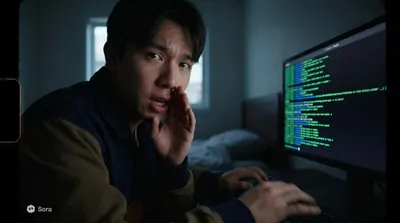
I wanted to see if I could rewrite reality using just my code.
A solo developer bridges the gap between code and physical reality using a real-time AI overlay.
Reference source (featured reference): you can use @efectodotapp not just to design apps or websites but any visual assets, and since you can connect it to your codebase, it knows your brand/style b… by @pablostanley

Project Neon: Visualizing the Bass
Most people just hear the music at a rave. I wanted to see it.
A solo creator unveils a custom generative AI app that maps SF nightlife soundscapes in real-time using a unique tactile interface.
Reference source (featured reference): most things are designed to be consumed passively. i wanted to design something that asks for interaction. something more mindful and intimate. comment "HEAR… by @meshtimes
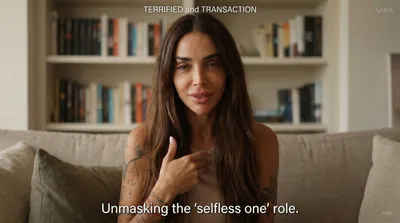
Stop calling your lack of boundaries 'being nice.'
Stop masking your fear of rejection as kindness and start reclaiming your energy through radical, honest boundaries.
Reference source (featured reference): 🎉 MARCH 24TH my book “Reparenting the Inner Child” comes out and I can promise you all this one is jam packed with info and a complete guide to healing. Lea…
Production cues
- The examples are intentionally executable: roughly 4 beats and a clear hook up front.
- The production setups repeat around Dimly lit home studio and Window view of city street and Home interior / Professional-looking minimalist workspace.
- Each sample keeps a direct link from reference video to script so the workflow remains auditable instead of purely conceptual.
Adaptation notes
- Use the sample hook as a structure reference, then replace the subject matter with your own offer or audience pain.
- Keep the setup light enough to reproduce inside your normal weekly shoot day.
- Treat the linked analysis as the creative reference and the script as the execution layer you customize.
Disclosure by Bell Chen, founder of Superdirector: the brand-profile and competitive-analysis features mentioned here are part of the product I build. It is a planning and intelligence tool upstream of production; it does not record, edit, schedule, or publish video. The examples and benchmarks are sourced from the named reports and operators cited inline.
Frequently asked questions
How do you make a SaaS demo work in 30 to 90 seconds?
Should SaaS demo videos use a talking head or just screen recording?
Does B2B short-form actually reach buyers, or is it just for consumers?
How many features should one demo video cover?
How do I know which feature demo is actually driving signups?
Why does pain-first matter more on a recommendation feed than on a landing page?
Get a campaign brief built for your brand in 30 seconds
Plan your feature-demo library, set up a brand profile in a planning-first tool