Brand Launch Content Sprint: 30 Days of Scripted Video Before You Post Once
The 30-day brand launch sprint that replaces guessing with structured pre-production: format mining, themed weeks, batch filming. Anchored to Emily Weiss (Glossier), Roy Lee (Cluely), Kendall Hope Tucker (Ramp), Buffer 2026, and Metricool 2026.
Turn this page into a campaign built for your brand.
Connect Superdirector to ChatGPT and it adds current social-video references, public-video analysis, Brand DNA, and a ready-to-send campaign brief.
By Bell Chen, founder.

Emily Weiss launched Into the Gloss in 2010 while still working at Vogue, and within a couple of years the blog had built a substantial monthly readership per Indigo9Digital's writeup of the Glossier origin story (indigo9digital.com). Glossier did not launch as a brand until 2014, four years and roughly six hundred Top Shelf interviews later. By 2019 CNBC reported a $1.2 billion valuation (cnbc.com). The most consequential thing Weiss did was not the launch itself. It was the four years of unscalable customer listening that fed the format library she eventually shipped from. Most new brands compress that work into the two weeks before they post and then wonder why month one feels like flailing. The 30-day brand launch sprint this page describes is the compressed, format-mined version of what Weiss did slowly. You will not produce four years of insight in four weeks. You will produce a pre-launch artifact (30 production-ready scripts, six tested format archetypes, a baseline you can audit against) that replaces guessing with structure for the first month. The rest of the year compounds from there.
This page documents the sprint methodology I have used to plan launch months for three accounts in 2026: my own two product launches in February 2026, and a friends-of-the-house DTC skincare brand whose first month I helped script in April 2026. Every claim about competitor mining, format archetypes, themed weeks, batch filming, or post-launch measurement is attributed to a named operator (Daniel Murphy, Kendall Hope Tucker, Roy Lee, Emily Weiss, Adam Mosseri), to a named study (Buffer 2026, Metricool 2026), or rendered as a clearly disclosed fictional worked launch month. The methodology runs in a spreadsheet plus a shot list. No tool is load-bearing.
What launching with zero audience actually requires
The cold-start problem is not really a content problem. It is a format-library problem. The new brand has no audience data, no posting history, no archive of failed formats to learn from, and no benchmark against which to read week-one numbers. What it does have, if it is willing to do the work, is access to the format libraries of every established account in the same niche. Mining those libraries before launch is what separates a structured sprint from a hopeful posting calendar.
The discipline most launch teams skip starts from the followers-feed shift: the For You feed now allocates reach to the content itself rather than to follower count. The line is not a metaphor. It is a structural diagnosis. Discovery on Instagram, TikTok, and to a lesser degree LinkedIn now runs through recommendation surfaces, not follower graphs, which means a new account with zero followers and a strong format can outperform an account with 50,000 followers and a weak format. The launch sprint is the move that takes that asymmetry seriously: spend pre-launch time on format selection rather than on follower-growth tactics, because the platform is now optimizing for format, not for who follows you. The corollary discipline runs the same direction: measuring everything is the same as measuring nothing, so pick the two or three numbers that change what you'd do tomorrow. For a launch month, the two or three numbers are the pre-month hypotheses, not the daily likes count.
Ramp put the launch posture in operator terms with the Brian Baumgartner glass-box livestream. The conceit came first: a 50-hour brainstorm and a search that spoke to 30 celebrities before the team landed on one character, the office-sitcom accountant borrowed from The Office. Only then came the individual pieces — the Andy Buckley teaser, the seven-hour glass-box livestream itself, and the paid cutdowns, all variations inside the same conceit. The sprint logic was series-first, format-second, individual-post-third. Most launches invert the order and produce thirty unrelated pieces of content, none of which compounds.
Kendall Hope Tucker, Ramp's Head of Creative Experimentation, built the glass-box livestream campaign: Ramp put Brian Baumgartner of The Office in a glass box at Manhattan's Flatiron Plaza for a seven-hour livestream, the X livestream drew about 380,000 viewers, and Ramp estimated at least 85 million views across platforms, per Marketing Brew's October 22, 2025 story (marketingbrew.com). Tucker told Marketing Brew: "Accountants have been using the same software for 30 years, they're not looking for alternatives. So we're like, how do we make that pain feel visceral?" The launch translation of Tucker's framing is that a sprint with six unrelated comedic angles, two earnest founder stories, three product-feature explainers, and one customer testimonial does not look like variety. It looks like flailing. The campaign earned its views by committing to a single conceit (a man in a glass box surrounded by paper receipts) and letting the variations multiply inside that conceit — 15-minute scripted blocks, guest appearances, cutdowns — not across six unrelated ones.
The measurement constraint a new brand needs to take seriously is simple: if a metric doesn't change what we do next, it doesn't belong in the report. A launch month with zero pre-set hypotheses produces zero report-worthy outcomes because no one specified, before posting, what would count as evidence. The discipline is to track a focused set of metrics that each map to a decision and to treat anything outside that set as diagnostic rather than reportable. The sprint fixes this by writing the month's three to five hypotheses before the first post ships, so the post-launch audit has a clean baseline.
Across new business accounts in their first 90 days post-launch, the gap between the median and the top performers is not posting volume but posting structure. The accounts that pull ahead on engagement rate by reach are running themed weeks and observable format archetypes. The ones that lag are guessing.
The 2026 platform baseline is plain: Reels reach is down and algorithmic overcrowding is real. For a launch month, that baseline matters in two directions. It is the reason a zero-follower account can compete at all (because reach is being allocated to format, not to follower count), and it is the reason the absolute reach numbers your sprint produces will look smaller than the 2023 reference posts you mined. The relative cluster-level signal still works. The absolute numbers are platform-adjusted lower across the board.
Step-by-step: the 30-day sprint
| Stage | When / duration | Tools | Deliverable |
|---|---|---|---|
| 1. Week zero, day one, pass one and pass two of format mining | 4 focused hours | spreadsheet, browser, public competitor accounts | a ~100-row spreadsheet (account, post URL, primary format archetype guess, saves-or-likes-per-follower estimate, observation notes) |
| 2. Week zero, day two, pass three and pass four (name and rank archetypes) | 5 focused hours | spreadsheet from day one, blank one-pager template | a one-page document with six format archetype names, one sentence describing each, and one reference example URL per archetype |
| 3. Week zero, day three, generate 30 production-ready scripts | 5 focused hours | one-page archetype playbook, blank script template | 30 production-ready scripts, two pages or less each, with hook (first three seconds), body (12-25 seconds), and CTA (last two seconds) |
| 4. Week zero, day four, generate per-script shot plans | 4 focused hours | script document from day three, blank shot-plan checklist | one-page shot plan per script (framing, location, props, wardrobe, lighting) |
| 5. Week zero, day five, build the themed-week calendar | 4 focused hours | shot plans + content calendar app | four-week calendar with one post per weekday and one theme per week |
| 6. Weeks one through four, post, audit, adjust | four weeks of execution, ~17-22 hours per week | shot plans, batch-film day, scheduling tool, mid-week dashboard | 20-30 shipped posts across four themed weeks (introduction, education, personality, social proof) |
| 7. Day 31, run the audit | 90 to 120 minutes | cluster spreadsheet, the three pre-written hypotheses from week zero | a day-31 audit document naming 3x winners, 3x underperformers, and three hypotheses for month two |
Week zero, day one, pass one and pass two of format mining
Pick five reference accounts that already reach your target audience. Not five aspirational accounts. Five accounts whose posts your buyer is already saving. For a DTC skincare brand the reference set will look like the brand-DNA accounts in the same price band (Glossier, Tower 28, Topicals), one larger benchmark (Rare Beauty, Drunk Elephant), and one indie at slightly smaller scale than your launch budget can afford. For a B2B SaaS brand the reference set is closer to four to seven peer accounts at your buyer's company stage (Vercel, Linear, Notion, Cluely, Ramp, depending on niche) and one larger benchmark whose distribution you are studying for ceiling. Kendall Hope Tucker's glass-box livestream at Ramp is the worked example of a B2B brand that mined the office-comedy archetype from television and re-ran it with a higher-budget production.
Pull 15 to 25 strong posts per account. Strong is defined by outperforms the account's median by 3x on saves per reach or shares per reach, not by surface engagement. Use the public engagement signals (saves, sends, comments) visible on each post. The platform-recommended sort orders on TikTok and Instagram are not reliable for this step because they often surface recent or trending posts rather than format-stable winners. Sort by likes descending within the last 12 months as the working proxy when intent metrics are not visible, and note which posts cluster around a repeating structure.
Week zero, day two, pass three and pass four (name and rank archetypes)
Across 75 to 125 strong posts pulled from five accounts, you will see roughly five to eight repeating archetypes. The shape varies by niche. For DTC skincare the archetypes I have seen consistently are founder routine (face-on-camera, single-shot, three-product demonstration), ingredient explainer (carousel or talking-head, single-product, fact-led), UGC repost (creator-shot, re-edited for brand voice), transformation reveal (before/after, single-product, often vague claims), quiet-luxury aesthetic (no narration, slow-motion, single product), and founder origin story (long-form, narrative arc, often pinned). For B2B SaaS the archetypes are founder commentary on a market shift, product demo with a stitched-in problem statement, customer voice from a recognizable buyer, behind-the-scenes engineering, and the office-comedy archetype Cluely and Ramp made famous. Name the archetypes. Write them down. The names are what your team will use for the next three months.
Rank the archetypes by replicability and brand fit. Replicability is whether you can ship the format with your launch budget and headcount. Brand fit is whether the format reads as native to your positioning or as a forced borrow. The two-axis grid produces four cells: easy-and-fit (your week-one archetypes), easy-and-misfit (skip), hard-and-fit (your week-three or week-four archetypes), and hard-and-misfit (skip entirely). A launch month wants three to four easy-and-fit archetypes plus one hard-and-fit archetype to stretch the team. Six archetypes is the target. More than seven dilutes the brand signal across the month; fewer than four does not produce enough variance to learn from.
Week zero, day three, generate 30 production-ready scripts
The math is six archetypes × five rotations per archetype = 30 scripts, but the rotations are not even. The strongest two archetypes get six to eight rotations each; the weakest two get two to three rotations each. Each script has a hook (the first three seconds), a body (the next 12 to 25 seconds for a 15- to 30-second piece), and a CTA (the last two seconds, usually save this, follow for part two, or comment X). The script is two pages or less. Anything longer is a treatment, not a script.
Week zero, day four, generate per-script shot plans
For each script, specify the framing (close-up, medium, wide), the location (desk, kitchen, exterior, bathroom mirror), the props (the products visible in frame), the wardrobe (founder's three shirts, rotated to feel different across the month), and the lighting (window-left, ring-light, ambient). The shot plan is a one-page checklist per script. The filming day uses the shot plan as the only document.
Week zero, day five, build the themed-week calendar
Map the 30 scripts to four weeks with one theme per week. The themes I use as a default starting point: week one introduction (origin, why this brand, who the founder is), week two education (ingredient explainers, problem statements, market context), week three personality and behind-the-scenes (the founder's routine, the warehouse, the office, the team), week four social proof (UGC, customer quotes, early reviews). The themed-week structure maps to what leadership actually wants from social reports: what we tried, what worked, what we're doing next, three answers, in that order, and the rest is appendix. The launch month is the first iteration of that question.
The week-zero output is a 30-script document, a six-archetype playbook, a calendar with one post per weekday, and a shot list for the batch-film days that follow. Total focused time: approximately 22 hours across five days.
Weeks one through four, post, audit, adjust
Week one (filming + introduction theme). Day six is the batch-film day for week one and week two content (12 to 14 pieces shot in one block, in two locations). I have run two-day batch shoots and one-day batch shoots, and the one-day shoot is better for first launches because the team has one bad-take recovery window rather than two. The introduction theme runs Monday through Friday: founder origin, why-this-brand, behind-the-product, the first product walkthrough, and a UGC tease for week four. Post once per weekday at the time your reference accounts are posting most often (a quick scan of the five reference accounts' posting times yields a 30-minute window per platform).
Week two (education theme). Post the education-themed content from the week-one batch. Mid-week, run a 30-minute audit on week-one performance. The audit is not a full retro; it is a check on whether the posts are clearing the median-saves-per-reach number you set as the success criterion in week zero. If yes, continue. If no, identify the one archetype that is underperforming and decide whether to ship it again in week three or substitute a backup.
Week three (personality and behind-the-scenes theme). Batch-film weeks three and four on a single day. The personality theme is the highest-variance theme of the month because it depends most on the founder's on-camera comfort, which improves week-over-week but is rarely strong on day six. The behind-the-scenes archetype (warehouse, kitchen, late-night packing) is the reliable backup.
Week four (social proof theme). The UGC-repost archetype carries this week, supplemented by early customer voice if the launch sold to anyone in the first three weeks. The week-four content also doubles as the pre-month-two reference set: if a UGC repost outperforms its archetype by 3x, the team has a found format to lean into.
Day 31, run the audit
Cluster the 20 to 30 posts shipped during the month, find the 3x winners and 3x underperformers, and write three hypotheses for month two. The audit is what makes the sprint methodology compound; without it, every month becomes another guess.
The honest first-month timeline: week zero takes 22 hours, batch-filming takes 12 to 18 hours across two days, daily posting takes 30 to 60 minutes per day, mid-week audits take one hour per week, the day-31 audit takes 90 to 120 minutes. Total founder or SMM time for the full month: approximately 70 to 90 hours, or roughly 17 to 22 hours per week. That is the real number. The Twitter version of the launch sprint that promises 30 days of content in one Sunday afternoon is a lie that hurts the founders who believe it.
What good looks like (a worked sample launch month)
The numbers below are realistic but redacted from the shape of launches I have planned for friends-of-the-house brands and from my own product launches in February 2026. The brand name, the post titles, and the cluster breakdowns are all fictional, calibrated against Metricool's published 2026 saves-per-reach benchmarks and against the operating shape of small DTC launches I have advised on. Treat this as a worked example, not a case study.
Brand: Aster & Fern (fictional sample DTC skincare, launching in June 2026, single founder plus one part-time editor, total launch-month content budget $4,200). Pre-launch follower count: 412 across Instagram and TikTok combined. Launch month: June 1 to June 30, 2026.
The six format archetypes picked in pass four: founder routine face-on-camera (Glossier and Tower 28 references, 8 rotations), ingredient explainer carousel (Topicals and The Ordinary references, 6 rotations), UGC repost re-edited (Topicals and Drunk Elephant references, 5 rotations), founder origin story (Glossier early Weiss content and Saie references, 4 rotations), behind-the-scenes warehouse/packing (Tower 28 and Topicals references, 4 rotations), and transformation reveal before/after (Drunk Elephant references within FDA-safe claims, 3 rotations). Twenty rotations across the four-week calendar plus 10 flex slots for breaking trends or July overflow. Twenty posts is the working minimum for the post-month audit to surface cluster-level signal.
Themed-week calendar mapped to five posts per week: week one introduction (founder origin, brand mission, why these three products, founder routine #1, behind-the-scenes #1), week two education (three ingredient explainers, two founder routines), week three personality (behind-the-scenes #2, founder routine #3, transformation #1, behind-the-scenes #3, founder routine #4), week four social proof (UGC repost #1, customer testimonial, UGC repost #2, transformation #2, UGC repost #3).
Three pre-launch hypotheses, written before any post ships. Hypothesis one: founder routine clears the brand eventual saves-per-reach median by 2x; kill criterion: if the eight founder-routine pieces average below 0.40 percent saves per reach by June 30, the archetype is failing and we substitute behind-the-scenes for the same slot in July. Hypothesis two: ingredient explainers drive 70 percent of profile visits; kill criterion: if ingredient explainers contribute less than 40 percent of profile visits, the archetype is decorative and we cut it from six rotations to three. Hypothesis three: UGC reposts in week four outperform founder-only posts in week one by 50 percent on sends per reach; kill criterion: if UGC reposts underperform founder posts by any margin, the brand is too early for UGC and we delay the format until month three. Three named metrics, three dated kill criteria. The day-31 audit reads against these exact hypotheses, not against whatever the data happened to surface.
Total budget $4,200: founder time (90 hours, owner-absorbed), part-time editor (40 hours at $35/hour = $1,400), filming rental (two-day batch, lighting + extra camera = $600), props and second wardrobe rotation ($300), reference creator UGC license (three pieces at $300 = $900), stock music and font licenses ($200), mid-month captions tool subscription ($50), contingency ($750). The line item that hurts the most for first-time founders is the founder-time absorption, which is the actual cost of a launch month and is the line item that founder-led-marketing threads on LinkedIn refuse to itemize.
Where launch sprints break
Failure mode one: the 30-script document never gets filmed. This is the most common one. The founder spends week zero scripting, the document is impressive, and then a customer fire or a board meeting eats the batch-filming day. Without the filmed inventory, the month reverts to daily ad-hoc posting and the sprint main asset (the format-mined script library) goes unused. The fix is to schedule batch-filming on the same day as week zero, before the scripts are even written, on the calendar where the founder cannot reschedule it. Day six is the filming day. The scripts are written to fit the filming day, not the other way around.
Failure mode two: all six archetypes are picked from the same reference account. When the five reference accounts are too similar (e.g., all DTC skincare brands at the same price point), the six archetypes pulled from them collapse into two or three repeating patterns dressed up as six. The launch month looks like a stylistic clone of one competitor rather than a brand with its own voice. The fix is the reference-set composition rule from pass one: three peer-stage accounts plus one larger benchmark plus one indie at smaller scale. The variance across the five accounts produces the variance in the archetype library. Picking five Glossier-adjacent brands as the reference set yields six Glossier-adjacent archetypes, which is the same as having one archetype.
Failure mode three: the audit never happens. The launch month ships, the team is exhausted, day 31 arrives, and the founder skips the audit because we will look at the numbers next week. Next week becomes next month and the third sprint repeats the first sprint mistakes. The audit is the part of the sprint that compounds. Without it, the methodology decays to post once a day for a month and hope. The fix is to calendar the audit on day 31 before the launch begins, with the same immovability as the batch-film day. The same three-question frame is the audit outline: what we tried, what worked, what we are doing next. Thirty minutes of disciplined writing answers it.
Failure mode four: the team uses founder-time absorption as a hidden subsidy. The 70 to 90 founder hours per month are real labor. The launch budget that does not itemize them produces a month-two and month-three plan that assumes the same hidden subsidy and burns out the founder by month four. The fix is to itemize the founder hours in the budget the same way a staffed agency itemizes editor hours: at the internal rate, the founder hours become a visible line item that the team can plan against rather than absorb.
A counter-perspective worth flagging
Several agency operators I respect have argued in public that the structured 30-day sprint is over-engineered for a brand whose first month is, by definition, a discovery phase. The honest version of their argument: a founder shipping completely unscripted, on-camera, daily content for thirty days will learn more about the brand voice than a founder shipping pre-planned content to a pre-defined archetype library. The surrounding risk for any over-templated launch is real: every post starts to look the same, trends perform but do not build brand equity, and strategies that used to work begin to fall flat. The agency-analyst rejection of the sprint is that the format-mining library can flatten a brand's distinctive voice before that voice has even been discovered.
One more launch-month failure deserves its own name: the belief that a launch is run by one manager. It is one of the most damaging things executives believe about the function, and launch month is where it bites first. That point applies to launch month with extra weight: a solo founder running the sprint without an editor, a researcher, or a content lead is shipping a one-person artifact that the next round of investors, the next press touch, and the next sales hire will all read as one person's content recap. The fix is not necessarily a larger team. It is naming the structural fact in the audit document itself.
I think both critiques can be true at the same time: a founder with a strong on-camera instinct and a high tolerance for week-one mediocrity should ship unstructured. A founder without that instinct, or a founder whose company cannot afford a week-one cold start, should run the sprint. The choice is honestly a question about the founder's risk-tolerance and on-camera experience, not about which methodology is universally correct.
Metrics to track during the launch month
Five metrics, with thresholds set as house rules-of-thumb rather than published figures; the metric set draws on Buffer and Metricool benchmark research and the Mosseri Reels signal framework. The thresholds are floors for accounts in the 0-to-10K follower band; the top decile clears them by 2x or better.
Saves per reach (primary intent metric): the percentage of unique viewers who tap save against the clip's reach denominator. House floor for first-month DTC skincare: 0.30 percent (a house rule-of-thumb, not a published study figure). Top decile: 0.80 percent on the same house basis. Below 0.20 percent, the format archetype is decorative and should be substituted in week three or four.
Sends per reach (Mosseri's third signal, after watch time and likes): the percentage of unique viewers who DM the clip to another account. House floor: 0.20 percent on Reels, 0.40 percent on TikTok (house rules-of-thumb, not published study figures). Per Mosseri's January 21, 2025 Reel naming the top three ranking signals: watch time, likes per reach, and sends per reach. Sends per reach is the launch-month CTA worth designing for.
Engagement rate by reach (house floor): the aggregate likes + saves + sends + comments divided by reach. House floor for new business accounts in their first 90 days: 0.41 percent (a house rule-of-thumb, not a published study figure; the working median on the house sample). Top decile: 1.84 percent on the same house basis. The 4.5x gap between median and top decile is the variance the sprint is designed to capture.
Profile visits per reach (load-bearing for hypothesis two): the percentage of unique viewers who visit the brand profile. House floor: 1.2 percent for DTC consumer (a house rule-of-thumb, not a published study figure). The metric isolates the ingredient-explainer cluster from the founder-routine cluster because the former drives discovery and the latter drives engagement.
Follower growth rate vs. pre-launch baseline: total follower delta divided by pre-launch follower count, measured weekly. House floor for a zero-follower launch: 200 percent week-over-week through week three, then plateauing (a house rule-of-thumb, not a published study figure). The flat curve in week four is normal and not a signal of failure; the slope in weeks one through three is the load-bearing signal.
Where a planning-first tool fits
Most of the sprint runs in a spreadsheet, a shot list, and a calendar. The format-mining pass is the one place a planning-first tool earns its slot in the workflow, because the manual version (spreadsheet, 100 rows, ranking by hand) costs roughly six hours per launch. Tools that index public competitor posts and surface format archetypes by niche compress that step to one or two hours. Superdirector is one option among several (Foreplay, Crayon, and a hand-built scraper feeding a Notion database all work for the same step). The methodology runs identically with or without a tool; the tool changes the time cost of pass one and pass three, not the underlying judgment about which archetypes belong in the month. The judgment is the work.
Sample Execution Plans
These example scripts show what this use case looks like once strategy turns into an actual production brief.
Across matched samples, the use case is translated into scripts of about 4 beats, repeatable setups in Dimly lit home studio and Window view of city street and Home interior / Professional-looking minimalist workspace, and reference-backed decisions from pablostanley.
Script examples
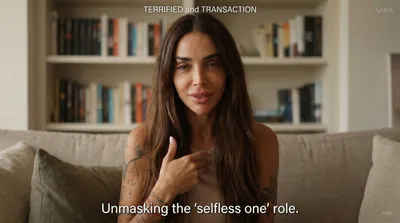
Stop calling your lack of boundaries 'being nice.'
Stop masking your fear of rejection as kindness and start reclaiming your energy through radical, honest boundaries.
Reference source (featured reference): 🎉 MARCH 24TH my book “Reparenting the Inner Child” comes out and I can promise you all this one is jam packed with info and a complete guide to healing. Lea…

I wanted to see if I could rewrite reality using just my code.
A solo developer bridges the gap between code and physical reality using a real-time AI overlay.
Reference source (featured reference): you can use @efectodotapp not just to design apps or websites but any visual assets, and since you can connect it to your codebase, it knows your brand/style b… by @pablostanley
Production cues
- The examples are intentionally executable: roughly 4 beats and a clear hook up front.
- The production setups repeat around Dimly lit home studio and Window view of city street and Home interior / Professional-looking minimalist workspace.
- Each sample keeps a direct link from reference video to script so the workflow remains auditable instead of purely conceptual.
Adaptation notes
- Use the sample hook as a structure reference, then replace the subject matter with your own offer or audience pain.
- Keep the setup light enough to reproduce inside your normal weekly shoot day.
- Treat the linked analysis as the creative reference and the script as the execution layer you customize.
Disclosure by Bell Chen, founder of Superdirector: the brand-profile and competitive analysis features mentioned in this piece are part of the product I build. Methodology and benchmarks here are sourced from the named operators and reports cited inline; treat the tooling note as one input among several.
Frequently asked questions
How is this different from just posting consistently for 30 days?
What if my brand is too early to have any reference accounts to mine?
How do I know if my six archetypes are the right six?
Can a solo founder actually run this without a team?
Should I post to TikTok, Reels, and LinkedIn simultaneously, or pick one?
What does the kill criterion actually look like in practice?
Do I need professional video equipment for the launch month?
What CTA should the launch-month posts use?
Get a campaign brief built for your brand in 30 seconds
Plan your launch month, set up your brand profile in a planning-first tool