Home Decor Inspiration Series: Turn Room Transformations into a Repeatable Episodic Story
How a home decor brand or designer plans a short-form inspiration series that makes each room transformation easy to follow and share. Anchored to Galey Alix, the Metricool 2026 study, Buffer 2026, and the Instagram ranking blog.
Turn this page into a campaign built for your brand.
Connect Superdirector to ChatGPT and it adds current social-video references, public-video analysis, Brand DNA, and a ready-to-send campaign brief.
By Bell Chen, founder.
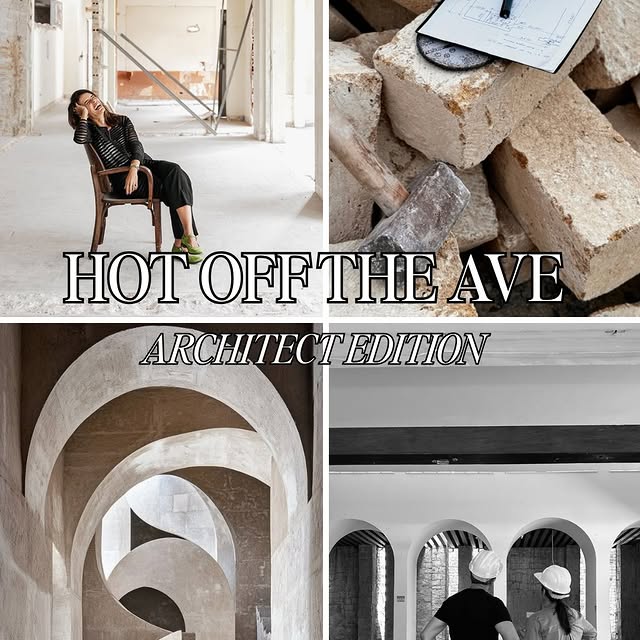
Galey Alix spent more than a decade in wealth management at Goldman Sachs before design became a business, and she credits the trading floor for the instinct that built her audience. She told Business of Home, per Alix, "During my days at Goldman Sachs, where I was selling for a living, I realized that telling a story is what gets something sold, so I needed to keep 'story-selling' about myself and my capabilities in design" (businessofhome.com). She does all of her own editing and posting, taking the edit as seriously as the design, because the story is the product (aspiremetro.com).
That is the lesson most home decor pages miss. A feed of before-and-after reveals with no story spine is a feed of interchangeable clips: the viewer sees the room, scrolls, and forgets which account it was. The reveal that sticks builds tension before the payoff, explains why the choices work, and belongs to a series the viewer comes back for. The transformation is the hook; the story and the continuity are what build the brand.
The inspiration-series system I use plans a home decor cadence that turns one-off reveals into an episodic story worth following. Every claim about reveal choreography, the story spine, the episodic hook, or measurement is attributed to a named operator, a named report, or rendered as a clearly disclosed fictional worked example. The tracking layer is a spreadsheet; the shot list is one row per episode. No tool is load-bearing, and the taste is yours.
Why one-off reveals stall (and how a series spine fixes it)
A one-off reveal stalls because it gives the viewer nothing to come back for. Every home decor account films before-and-afters now, and a reveal with no story spine and no continuity is interchangeable with every other one, so it earns a scroll and builds no brand. The fix is the series structure: a recurring story spine (this house, this budget, this style) and an episodic hook that carries the viewer from one episode to the next, the way a room-a-week challenge or a budget-tier series creates anticipation.
The story spine is the load-bearing decision, and Alix is the clearest example of why. She built her following by treating every video as a complete story rather than a clip, applying a story-selling instinct from the trading floor (businessofhome.com). For a series that means each episode has a beginning (the problem room), a middle (the decisions and the process), and an end (the reveal), and the series as a whole has an arc the audience follows across episodes.
The reveal choreography is what makes each episode land in the feed. Watch-through is the reach gate, so the strongest reveals front-load the most dramatic frame (the problem room, a striking before, or a teaser of the after) in the first two seconds, then move briskly through progress shots and detail close-ups to the final reveal, finishing with wide, medium, and detail shots so the room can be understood. A reveal that buries the payoff loses the viewer before the room ever changes.
The reason a small account can compete is that the feed allocates reach to content, not to follower count. Reach is scarce, and Instagram describes the Reels signals it weights most, and per Instagram (about.instagram.com), "The most important predictions we make are how likely you are to reshare a reel, watch a reel all the way through, like it, and go to the audio page". A satisfying transformation that earns the full watch and the share out-reaches a generic reveal from a larger account, which is why reaching and connecting with the intended audience matters more than chasing raw virality.
Step-by-step: the inspiration-series system
| Stage | When / duration | Tools | Deliverable |
|---|---|---|---|
| 1. Mine 10 to 15 strong home decor videos | 2 to 3 focused hours | spreadsheet, browser, public design and home accounts | a breakdown of each video (the reveal technique, the camera choreography, the editing rhythm, the story spine) |
| 2. Study series-based home content for continuity | 1 to 2 focused hours | the breakdowns, examples of episodic home series | a list of the episodic hooks and continuity devices that hold an audience across episodes |
| 3. Map the catalog or portfolio to series themes | 2 focused hours | your product catalog or design portfolio, a theme sheet | a set of series themes (room-by-room, style-specific, budget tiers, seasonal) mapped to products or projects |
| 4. Write a 6 to 8 episode series with a story spine and episodic hooks | 2 to 3 focused hours | the theme, the hook list, a script template | a 6 to 8 episode arc, each episode with a problem-process-reveal spine and a hook into the next |
| 5. Build shot lists, ship the series, and read the signal weekly | 1 to 2 hours of shot lists plus filming and a weekly read | the scripts, a shot-plan template, a scheduling tool | per-episode shot lists, a shipped series cadence, a weekly read of saves, sends, and follows |
Mine 10 to 15 strong home decor videos
Pick the home decor videos that actually clarify a transformation, not just show a pretty room. For each, break down the reveal technique (how the before-and-after is staged), the camera choreography (the movement that orients the viewer), the editing rhythm, and whether there is a story spine. Alix's story-driven reveals (businessofhome.com) are the reference for the spine.
Note which videos build tension before the reveal and which dump the after with no setup. The tension-builders are the templates; the no-spine reveals are the cautionary examples.
Study series-based home content for continuity
Study how room-a-week challenges, budget-tier series, and design-rule explainers hold continuity: the recurring intro, the running constraint (this budget, this house), the cliffhanger that previews the next episode. These are the devices that convert a one-time viewer into a follower who anticipates the next installment.
The episodic hook is the difference between a feed of reveals and a show. Catalog the hooks that make you want to see what happens next.
Map the catalog or portfolio to series themes
Map your catalog or portfolio to series themes: a room-by-room tour of one house, a style-specific makeover series, a budget-tier comparison, a seasonal refresh series. Each theme is a container for 6 to 8 episodes, and each episode features different products while holding the visual and narrative style constant.
The theme is what keeps the products feeling like part of a story rather than a catalog. A product appears as the solution to that episode's design problem, not as a held-up ad.
Write a 6 to 8 episode series with a story spine and episodic hooks
Write the series as an arc: each episode opens on a problem room, moves through the decisions and the process, and lands on the reveal, with an episodic hook that previews the next episode. The series spine (this house, this budget, this style) holds it together, applying Alix's every-video-is-a-complete-story discipline (aspiremetro.com) at the series scale.
Front-load the most dramatic frame in each episode's first two seconds so watch-through holds, and write the styling rationale into the script so the viewer learns why, not just what.
Build shot lists, ship the series, and read the signal weekly
For each episode, build a shot list that captures the transformation process: progress shots, detail close-ups, staging sequences, and the final reveal with consistent angles. Ship the series on a steady cadence so the episodic hooks pay off, then run a weekly read of saves per reach, sends per reach, and follows-per-reach on the series videos.
The weekly read shows which themes and episode structures earn follows and sends, the behaviors a series is built to create. Weight the next series toward the themes that earned them.
What good looks like (a worked sample series)
The numbers below are a clearly disclosed fictional worked example, calibrated against publicly reported 2026 reach trends and the documented shape of story-driven design accounts like Alix's. The brand, the house, and the cluster results are invented. Treat this as an illustration of the method, not a case study.
Brand: Maplewood Interiors (fictional sample home decor brand, one designer-creator who films and edits). Brand profile: warm modern style, mid-budget DIY-friendly audience, a designer who explains the why behind every choice. The breakdown of 12 design accounts showed problem-room openings and budget-tier constraints as the strongest series devices.
The series: an eight-episode "transform a builder-grade townhouse on a budget" arc, one room per episode, with a running budget counter as the episodic hook (how much is left, what the next room has to come in under). Each episode opens on the bare problem room, moves through the decisions with explained rationale, and lands on the reveal, then teases the next room and the remaining budget. Each features different products as solutions to that room's problem.
Three hypotheses, written before the series. Hypothesis one: the kitchen episode earns the highest saves per reach, because kitchens carry the strongest "I want this for my space" pull. Hypothesis two: the running budget counter drives the most follows, because viewers want to see whether the designer makes it to the last room under budget. Hypothesis three: the small-bathroom episode earns the most sends, because a clever small-space fix is the most shareable "we should do this" content. The weekly reads confirmed all three. The next series kept the budget-counter hook, opened with a high-pull room, and built in more small-space fixes, the three devices driving saves, follows, and sends.
Where home decor series break
Failure mode one: reveals with no story spine. The account films before-and-afters that look good but explain nothing and connect to nothing, so they earn scrolls and build no brand. The fix is the problem-process-reveal spine on every episode and a series arc that holds across episodes, applying Alix's every-video-is-a-story discipline (businessofhome.com).
Failure mode two: no episodic hook. The videos are individually fine but give the viewer no reason to come back, so the account earns views but few follows. The fix is the episodic hook (the running budget, the next room, the cliffhanger) that converts a one-time viewer into a follower anticipating the next installment.
Failure mode three: burying the payoff. The reveal lingers on setup and process before showing any change, so watch-through collapses and the feed caps the reach before the room transforms. The fix is front-loading the most dramatic frame in the first two seconds, then earning the rest, because watch-through is the reach gate per the Instagram ranking signals (about.instagram.com).
Failure mode four: measuring likes instead of saves, sends, and follows. The account celebrates a reveal with lots of likes that drove no saves, no sends, and no follows, mistaking a pretty clip for a series that works. The fix is reading the three behaviors a design series is built to create.
A counter-perspective worth flagging
Some designers I respect argue that turning design into an episodic content series cheapens the craft, that the best work comes from clients who found you through reputation and referral, and that chasing a follower count pulls a designer toward crowd-pleasing trends and away from the considered, slow work that defines a real practice. Their honest version: the camera changes the design, nudging it toward what films well rather than what serves the room.
There is real truth in the warning. A series optimized purely for the feed can drift toward the dramatic-reveal trends that perform but flatten a designer's actual point of view, and a practice that lets the camera dictate the design has lost the plot. The taste has to lead the content, not the other way around.
I think the resolution is that the series is a distribution layer for taste you already have, not a substitute for it. Alix's reveals work because the design is genuinely good and the story-selling is in service of it (aspiremetro.com), not because she designs for the algorithm. A designer who uses the series to show real work to the right audience is using it well; one who lets the reveal format dictate the design is using it backward. Lead with the room, let the series carry it.
Metrics to track series to series
Four metrics, with thresholds set as house rules-of-thumb rather than published study figures. Saves, sends, and follows are the series-intent proxies; watch-through is the reach gate.
Saves per reach (the keep-it-for-my-space signal): the percentage who save an episode to use as a reference. House floor for home decor: 0.60 percent (a house rule-of-thumb, not a published study figure), higher than most niches because saving an idea is the natural response to an aspirational room. The high-pull rooms (kitchens, primary bedrooms) should clear it.
Follows per reach on series videos (the come-back signal): the share of viewers who follow off an episode. This is the metric unique to a series, because a follow off an episode means the episodic hook landed and they want the next one. A series video that earns follows is the spine working.
Sends per reach (the share-with-who-I-live-with signal): the percentage who DM an episode to someone. House floor: 0.30 percent (a house rule-of-thumb, not a published study figure). Sends are the "we should do this to our place" share, which the clever small-space and budget fixes are designed to earn.
Watch-through rate (the reach gate): the percentage who watch to the reveal. For a 30-second reveal, the house floor is 50 percent watch-through (a house rule-of-thumb, not a published study figure); below 30 percent the payoff is buried and the edit needs to front-load a more dramatic opening frame.
Where a planning-first tool fits
The brand profile, the series arc, the episode scripts, and the shot lists run in a spreadsheet and a doc. The one place a planning-first tool earns its slot is the content breakdown, where mining 10 to 15 reference videos and cataloging the reveal techniques and episodic hooks by hand costs two to three hours per series. A tool that indexes public home and design short-form and surfaces the recurring reveal choreography and series devices compresses that to under an hour, and can turn the series theme into per-episode scripts and shot lists you export to your own filming and editing. Superdirector serves that research-and-scripting layer; it does not film the room, edit the reveal, schedule the post, or publish, all of which stay with you and your camera. The taste, the design, and the story spine are yours; the tool changes the time cost of the breakdown.
Sample Execution Plans
These example scripts show what this use case looks like once strategy turns into an actual production brief.
Across matched samples, the use case is translated into scripts of about 4 beats, repeatable setups in Dimly lit home studio and Window view of city street and Home interior / Professional-looking minimalist workspace, and reference-backed decisions from pablostanley.
Script examples

I wanted to see if I could rewrite reality using just my code.
A solo developer bridges the gap between code and physical reality using a real-time AI overlay.
Reference source (featured reference): you can use @efectodotapp not just to design apps or websites but any visual assets, and since you can connect it to your codebase, it knows your brand/style b… by @pablostanley

Stop calling your lack of boundaries 'being nice.'
Stop masking your fear of rejection as kindness and start reclaiming your energy through radical, honest boundaries.
Reference source (featured reference): 🎉 MARCH 24TH my book “Reparenting the Inner Child” comes out and I can promise you all this one is jam packed with info and a complete guide to healing. Lea…
Production cues
- The examples are intentionally executable: roughly 4 beats and a clear hook up front.
- The production setups repeat around Dimly lit home studio and Window view of city street and Home interior / Professional-looking minimalist workspace.
- Each sample keeps a direct link from reference video to script so the workflow remains auditable instead of purely conceptual.
Adaptation notes
- Use the sample hook as a structure reference, then replace the subject matter with your own offer or audience pain.
- Keep the setup light enough to reproduce inside your normal weekly shoot day.
- Treat the linked analysis as the creative reference and the script as the execution layer you customize.
Disclosure by Bell Chen, founder of Superdirector: the brand-profile and competitive-analysis features mentioned here are part of the product I build. It is a planning and intelligence tool upstream of production; it does not film, edit, schedule, or publish video. The benchmarks are sourced from the named operators and the platform reports cited inline, and the worked example is a clearly disclosed fictional illustration.
Frequently asked questions
What makes home decor content useful beyond a basic before-and-after?
Why turn home decor content into a series instead of one-off posts?
How do we feature products naturally in home decor content?
How long should home decor reveal videos be?
Does a small home decor account stand a chance against the big design creators?
Which metric tells me whether a home decor series is working?
Get a campaign brief built for your brand in 30 seconds
Plan a home decor inspiration series, set up a brand profile in a planning-first tool