Fashion Brand Lookbook: Planning Collections as Short-Form Stories, Not Slideshows
How fashion brands turn collection assets into feed-native lookbook video instead of static slideshows, with the edit and the arc from teaser to reveal. Anchored to Marc Jacobs (The Drum), the Metricool 2026 study, and Buffer 2026.
Turn this page into a campaign built for your brand.
Connect Superdirector to ChatGPT and it adds current social-video references, public-video analysis, Brand DNA, and a ready-to-send campaign brief.
By Bell Chen, founder.
On October 4, 2024, The Drum documented how Marc Jacobs had become one of the most-watched heritage fashion brands on TikTok by doing something its archive would have considered heresy (thedrum.com): handing the feed to creators who lip-synced absurd audio while modeling bags, and letting the brand's luxury identity collide with platform-native chaos. Agency strategist Paul Hewitt told The Drum there was "something so beautifully unhinged in that lux being born out of these two opposites," per Hewitt, and another, Jamie Ray, called it a "masterclass in reactive and authentic brand engagement," per Ray. The collision was the point. The collection was the same; the format was unrecognizable from a campaign slideshow.
That is the lesson most fashion brands have not internalized. A lookbook is still produced as a beautiful slideshow with a music bed, posted as one asset, and measured by nothing it can reuse. The slideshow loses on the only metric that allocates reach now: watch time. A still-to-still transition gives the viewer a reason to leave at every cut. A planned outfit transition, synced to a beat, gives them a reason to stay until the reveal. Reach is scarce enough that the difference is decisive: organic reach on Instagram Reels has tightened year over year as feed overcrowding pushes more posts into the same finite distribution.
Here is the method I use to plan a collection as a short-form story arc rather than a slideshow. Every claim about transition choreography, music sync, the editorial arc, or measurement is attributed to a named operator, a named report, or rendered as a clearly disclosed fictional worked example. Everything lives in one spreadsheet tab and a running shot list. Every taste decision is yours to make.
Why slideshows lose and arcs win
A lookbook slideshow is a sequence of stills with a music bed. It treats the feed like a magazine spread, and the feed is not a magazine. The recommendation surface ranks on watch time first, and a slideshow forfeits watch time at every transition because a still gives the viewer no motion reason to stay. A short-form lookbook arc treats motion and transition as the content, not the decoration: the outfit becomes the next outfit on a beat, the fabric reveals its texture in a macro pan, the hero piece lands at the music drop. The viewer stays for the choreography.
The trap for over-templated brand content is that every post starts to look the same: trends perform but do not build brand equity. For fashion this cuts two ways. A brand that posts only trend-jacked transition videos sells nothing distinctive about its collection. A brand that posts only slideshows builds no platform-native equity at all. The arc threads between them: trend-aware transitions in service of a collection story that is unmistakably the brand's.
Marc Jacobs is the proof that the thread holds even for heritage luxury. The Drum's October 2024 piece (thedrum.com) documented a brand that kept its visual identity (the styling, the lighting, the product) and changed only the pacing and the format, adopting creator energy without becoming a creator. Hewitt's "two opposites" framing, per Hewitt, is the design principle: the luxury and the unhinged platform format are not in tension if the brand stays in control of the styling and lets the format carry the pacing.
The discovery shift underneath all of this is that the For You feed now allocates reach to the content itself rather than to follower count. A fashion brand with a small following and a strong transition arc out-reaches a brand with a large following and a slideshow, because the feed allocates to the format, not to the follower count. The collection arc is the move that takes that seriously.
Step-by-step: planning a collection as a video arc
| Stage | When / duration | Tools | Deliverable |
|---|---|---|---|
| 1. Pick five reference accounts in your aesthetic lane | 2 to 3 focused hours | spreadsheet, browser, public fashion accounts | a reference set of five accounts (three peer-stage in your lane, one larger benchmark, one indie below budget) |
| 2. Break down 12 to 15 strong fashion videos | 8 to 15 minutes per video | the reference set, a frame-scrub habit | one breakdown per video (transition technique, music sync point, reveal mechanic, hero-piece timeline position) |
| 3. Name the five to seven fashion-video archetypes | 2 focused hours | the breakdowns, a blank one-pager | a one-page playbook naming each archetype with one reference URL and one production note |
| 4. Map each collection piece to a video and plan the arc | 3 to 4 focused hours | the archetype playbook, the collection line sheet, a calendar | a teaser-to-reveal arc mapping each piece or capsule to an archetype and a release date |
| 5. Build the shot list around the edit | 2 focused hours before the shoot | the arc plan, a shot-list template | a shot list that calls for the exact transition frames, macros, and B-roll the platform edit needs |
Pick five reference accounts in your aesthetic lane
Pick accounts in your own lane (streetwear, luxury, sustainable, athleisure). A luxury brand mining streetwear references produces a misfit arc; the reverse produces a brand that looks like it is trying too hard. The reference set should include three peer-stage accounts, one larger benchmark whose distribution you study for ceiling, and one indie below your budget whose scrappy transitions you can copy cheaply.
For each account, note which collection drops earned the most saves and profile visits, not which campaign stills looked best. The save-and-visit signal is what tells you the arc landed commercially, not just aesthetically.
Break down 12 to 15 strong fashion videos
For each video write down four things. One: the transition technique (match-cut on movement, outfit-swap on a spin, hand-cover wipe, snap-to-beat). Two: the music sync point (where the hero reveal lands relative to the beat or drop). Three: the reveal mechanic (how the full outfit is unveiled, and how long the build was before it). Four: where the hero piece lands in the timeline (front-loaded for retention, or saved for the drop).
This is the step that separates a director-level breakdown from a bookmark folder. A bookmark captures the styling and misses the timing. The breakdown captures the timing decisions that the styling merely dresses. The styling is yours to bring; the timing is the reproducible recipe.
Name the five to seven fashion-video archetypes
The archetypes that recur across lanes: outfit transition (swap on movement), GRWM (the look built in real time), styling challenge (one piece, many looks), fabric/detail macro (the texture and construction close-up, strongest for premium), runway-to-street (the campaign look worn in the wild), and behind-the-seams (the making-of). Name the five to seven that fit your lane. Skip the misfits even when a competitor performs with them.
Rank by replicability and brand fit. The easy-and-fit archetypes carry the teaser and hero phases. The hard-and-fit archetypes (a complex transition, a location shoot) are the stretch shots reserved for the hero reveals where the production budget is justified.
Map each collection piece to a video and plan the arc
Map the arc across two to three weeks. Phase one (teasers): detail macros and fabric close-ups that establish curiosity without showing the full look. Phase two (hero reveals): full outfit transitions and runway-to-street reveals, one per hero piece, staggered so each gets its own distribution window. Phase three (behind-the-scenes and styling): the making-of and the styling-challenge content that extends the collection's shelf life after the reveal.
Ensure product visibility without sacrificing the story. Each video maps to a specific piece so the catalog connection is clear, but the piece is shown in motion and in context, not as a flat product card. The product-page CTA reads as natural when the viewer has seen the piece move.
Build the shot list around the edit
Translate the arc into capture requirements. Each transition needs its specific frames: the match-cut movement, the outfit-swap pivot, the hero reveal at the planned music position. The detail-macro teasers need the texture and construction close-ups. The runway-to-street videos need the location B-roll. If the shot list does not call for these, the edit improvises and the transitions feel arbitrary.
The shot list is the single document the shoot runs on. Planning the arc first turns the shoot into a capture session for a known edit, which is the largest reduction in re-shoots a fashion team can engineer.
What good looks like (a worked sample collection)
The numbers below are a clearly disclosed fictional worked example, calibrated against Metricool's published 2026 reach declines and the format approach The Drum documented for Marc Jacobs. The brand, the pieces, and the cluster results are invented. Treat this as an illustration of the method, not a case study.
Brand: Atelier Verde (fictional sample sustainable womenswear brand, founder plus a part-time editor, a 14-piece spring capsule). Reference set: three peer-stage sustainable brands, one larger benchmark for ceiling, one indie below budget. The breakdown of 14 videos surfaced six archetypes; the two strongest for the lane were the slow fabric/detail macro and the outfit transition synced to an ambient beat.
The arc: 11 videos across three weeks. Week one (teasers): four fabric/detail macros, each on a single hero piece, no full look shown. Week two (hero reveals): four outfit transitions, one per hero piece, the reveal landing on the music drop. Week three (extension): one runway-to-street, one behind-the-seams making-of, one styling challenge re-wearing the week-two pieces. Each video maps to a specific capsule piece and carries a hypothesis.
Hypothesis one: the fabric-macro teasers earn saves above 0.45 percent per reach but drive low profile visits (they are aesthetic, not commercial). Hypothesis two: the outfit-transition hero reveals drive profile visits above 1.5 percent per reach (they move viewers to the catalog). Hypothesis three: the week-three styling challenge out-performs week-one teasers on sends, because re-wear content is the most share-worthy. The weekly read confirmed all three: macros saved, transitions converted attention to visits, styling content earned sends. The next collection weights toward transitions and styling and trims the macro count, because the macros were beautiful but commercially quiet. That is the method compounding.
Where lookbook arcs break
Failure mode one: planning the arc after the shoot. The team shoots a beautiful campaign, then tries to cut a teaser-to-reveal arc from footage that was never captured for transitions. The transitions feel arbitrary because the match-cut frames and the reveal beats do not exist in the footage. The fix is to plan the arc first and build the shot list around the edit, so the shoot captures what the arc needs.
Failure mode two: posting the whole collection in one day. The team drops all 11 videos at launch, the feed shows one or two, the rest cannibalize each other for the same slot, and the collection burns its reach in a day. The fix is the staggered arc across two to three weeks, giving each hero reveal its own distribution window. Organic reach is scarce; spreading the arc is how you stretch it.
Failure mode three: trend-jacking with no collection story. The team chases every transition trend and ends up with 11 videos that look like everyone else's, building no brand equity, which is exactly the equity trap: trends perform but do not build brand equity. The fix is the thread Marc Jacobs walks: trend-aware pacing in service of a collection story that is unmistakably yours.
Failure mode four: measuring saves and ignoring profile visits. The team celebrates a macro teaser that earned huge saves and never notices it drove no traffic to the catalog. Saves prove the look landed; profile visits prove it moved the viewer toward purchase. A collection arc needs both signals read as separate jobs, or it optimizes for beauty and forgets commerce.
A counter-perspective worth flagging
A number of fashion creatives I respect argue that the structured arc method risks sanding the soul off a collection. Their honest version: the best fashion content on the feed is reactive and spontaneous (the Marc Jacobs chaos was not arc-planned six weeks out), and a brand that pre-plans every transition produces content that is competent and forgettable rather than electric and shareable.
There is real truth there. The Marc Jacobs approach The Drum documented (thedrum.com) leaned on creator spontaneity and reactive culture-jacking, which a rigid arc plan would have killed. Ray called it "reactive and authentic," per Ray, and reactive is the opposite of pre-planned.
I think the resolution is that the arc plans the spine, not every vertebra. The teaser-to-reveal structure and the shot list for the hero pieces should be planned, because re-shoots are expensive and the transitions must be captured on set. The extension phase (week three) is where reactive, spontaneous, creator-led content belongs, riding whatever the culture is doing that week. Plan the spine; leave the tail loose. A brand that plans everything is forgettable; a brand that plans nothing cannot capture the transitions it needs.
Metrics to track during a collection launch
Four metrics, with thresholds set as house rules-of-thumb rather than published study figures. The thresholds are floors for accounts in the 0-to-50K follower band; strong hero reveals clear them by 2x.
Watch-through rate (the first ranking signal): the percentage of viewers who reach the reveal. This is the metric a slideshow forfeits and a transition arc earns. For a 15-second hero reveal, the house floor is 45 percent watch-through (a house rule-of-thumb, not a published study figure); below 30 percent the transition is not holding and the edit needs a faster hook.
Saves per reach (look-landed signal): the percentage who save. House floor for fashion: 0.40 percent (a house rule-of-thumb, not a published study figure). The fabric-macro and hero-reveal archetypes should clear this; if a styling video does not, it is not memorable enough to revisit.
Profile visits per reach (commercial signal): the percentage who tap through to the brand profile and catalog. House floor: 1.2 percent (a house rule-of-thumb, not a published study figure). This is the metric that separates aesthetic content from commercial content. A collection that earns saves but no visits is a portfolio, not a store.
Sends per reach (share signal): the percentage who DM the clip. House floor: 0.20 percent on Reels (a house rule-of-thumb, not a published study figure). Styling challenges and re-wear content should be designed to earn sends, because re-wear is the most share-worthy fashion format and sends are the cheapest reach multiplier from a small following.
Where a planning-first tool fits
The arc planning, the shot list, and the calendar run in a spreadsheet. The one place a planning-first tool earns its slot is the reference-mining and breakdown pass, which by hand costs three to four hours per collection. Tools that index public fashion videos and surface the transition and reveal archetypes by lane compress that to one or two hours. A planning-first product can also turn the named archetypes into per-piece scripts and shot plans you export to your production process. The judgment about which archetype fits your lane and which piece anchors the arc is yours; the tool changes the time cost of the breakdown, not the creative decision. It does not shoot, edit, schedule, or generate the video.
Sample Execution Plans
These example scripts show what this use case looks like once strategy turns into an actual production brief.
Across matched samples, the use case is translated into scripts of about 4 beats, repeatable setups in Dimly lit home studio and Window view of city street and Home interior / Professional-looking minimalist workspace, and reference-backed decisions from pablostanley.
Script examples

I wanted to see if I could rewrite reality using just my code.
A solo developer bridges the gap between code and physical reality using a real-time AI overlay.
Reference source (featured reference): you can use @efectodotapp not just to design apps or websites but any visual assets, and since you can connect it to your codebase, it knows your brand/style b… by @pablostanley
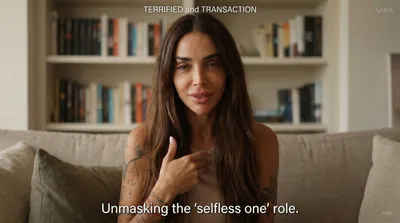
Stop calling your lack of boundaries 'being nice.'
Stop masking your fear of rejection as kindness and start reclaiming your energy through radical, honest boundaries.
Reference source (featured reference): 🎉 MARCH 24TH my book “Reparenting the Inner Child” comes out and I can promise you all this one is jam packed with info and a complete guide to healing. Lea…
Production cues
- The examples are intentionally executable: roughly 4 beats and a clear hook up front.
- The production setups repeat around Dimly lit home studio and Window view of city street and Home interior / Professional-looking minimalist workspace.
- Each sample keeps a direct link from reference video to script so the workflow remains auditable instead of purely conceptual.
Adaptation notes
- Use the sample hook as a structure reference, then replace the subject matter with your own offer or audience pain.
- Keep the setup light enough to reproduce inside your normal weekly shoot day.
- Treat the linked analysis as the creative reference and the script as the execution layer you customize.
Disclosure by Bell Chen, founder of Superdirector: the brand-profile and competitive-analysis features mentioned here are part of the product I build. It is a planning and intelligence tool upstream of production; it does not generate, edit, schedule, or publish video. Benchmarks and examples are sourced from the named reports and operators cited inline.
Frequently asked questions
What fashion video formats are useful starting points?
How do we make lookbook content feel native to TikTok without cheapening the brand?
How many videos should we produce per collection launch?
Why plan the editorial arc before the shoot instead of after?
Do luxury and premium brands need a different approach than streetwear?
How do we tie lookbook videos to actual product-page traffic?
Get a campaign brief built for your brand in 30 seconds
Plan your next collection as a video arc, set up a brand profile in a planning-first tool