E-Commerce Product Videos: A Director-Level Method for Selling on the Feed
How DTC operators script product videos that read as native feed content instead of ads: hook timing, use-before-reveal sequencing, and objection handling. Anchored to Crocs and Retail Dive, the Metricool 2026 study, Buffer 2026, and the platform commerce mechanics that actually move add-to-cart.
Turn this page into a campaign built for your brand.
Connect Superdirector to ChatGPT and it adds current social-video references, public-video analysis, Brand DNA, and a ready-to-send campaign brief.
By Bell Chen, founder.
In the quarter Retail Dive reported on February 13, 2026 (retaildive.com), Crocs direct-to-consumer revenue rose 4.7 percent while wholesale fell 14.5 percent, and CEO Andrew Rees told analysts that Crocs is now the number one footwear brand on TikTok Shop in the US and that he anticipates "significant future growth in social selling." A foam clog became a feed-native commerce product. The interesting part is not that Crocs sells on TikTok. It is that the videos which moved product did not look like the brand's wholesale catalog. They looked like content a person would save.
That gap between catalog and content is where most ecommerce teams lose. They ship a clean product shot, a price, and a buy-now close, and then wonder why it underperforms a competitor's grainy phone clip of the same category. The grainy clip won because it led with a use case and treated the product as a payoff. The clean shot lost because the recommendation feed read it as an ad in the first second and capped its reach. Reach is the scarce resource now: organic reach on Instagram Reels has tightened year over year as feed overcrowding pushes more posts into the same finite distribution.
What follows is the director-level method I use to plan product-video batches that read as native feed content rather than ads. Every claim about hook timing, the use-before-reveal sequence, objection handling, CTA design, or measurement is attributed to a named operator, a named report, or rendered as a clearly disclosed fictional worked example. The apparatus is a spreadsheet and a shot list, nothing more. No single tool is load-bearing.
Why product videos read as ads (and how to stop that)
A product video reads as an ad when the product enters the frame before the viewer has a reason to care. The recommendation feed is a recognition machine: in the first second it classifies the clip as content-to-watch or ad-to-skip, and a product-first opening triggers the second classification. The use-before-reveal structure inverts the order. The first three seconds show a person doing the thing the product helps with (the morning that goes wrong, the outfit that needs one more piece, the recipe step that always fails), and only then does the product appear as the resolution. The reveal is the payoff to a setup, not an interruption of a scroll.
The structural diagnosis behind this is that the For You feed now allocates reach to the content itself rather than to follower count. Discovery on TikTok and Instagram now runs through recommendation surfaces, not follower graphs, which means a DTC brand with 800 followers and a strong use-before-reveal clip can out-reach a brand with 80,000 followers and a product-first clip. The asymmetry is the whole opportunity. Spending the planning hour on hook structure rather than on follower-growth tactics is the move that takes the asymmetry seriously.
The corollary discipline is to measure narrowly rather than broadly: pick the two or three numbers that would actually change what you do tomorrow, because tracking everything is the same as tracking nothing. For a product-video batch, the two or three numbers are saves per reach and profile visits per reach, not the vanity like count. Saves tell you the product earned intent. Profile visits tell you the clip drove discovery toward the catalog. Those are the only two organic numbers worth promoting a clip into paid against.
The platform commerce mechanics reward this. TikTok Shop GMV in the US is concentrated in pre-recorded creator video rather than livestream, and the in-feed product tag is the bridge from a saved clip to an add-to-cart event. Crocs scaled there by promoting only the videos that earned organic saves first, per the Rees commentary in Retail Dive (retaildive.com). The brands that lost money on TikTok Shop are the ones that ran product-first videos straight into paid without an organic filter. The filter is the method.
Step-by-step: the product-video breakdown and batch
| Stage | When / duration | Tools | Deliverable |
|---|---|---|---|
| 1. Pick five reference accounts and pull the outliers | 3 to 4 focused hours | spreadsheet, browser, public competitor accounts | a spreadsheet of 15 reference videos (account, post URL, hook timestamp, saves-or-likes-per-follower estimate, observation notes) |
| 2. Break each video down at the director level | 8 to 15 minutes per video | the reference spreadsheet, a frame-scrub habit | one one-page breakdown per video (hook timestamp, first-frame composition, use-before-reveal beat, objection handled, CTA placement) |
| 3. Name the five to seven product-video archetypes | 2 to 3 focused hours | the 15 breakdowns, a blank one-pager | a one-page playbook naming each archetype with one reference URL and one production decision |
| 4. Generate product-specific scripts with use-before-reveal | 4 to 5 focused hours | the archetype playbook, a blank script template | 12 to 20 production-ready scripts, two pages or less each, each with hook (first 3 seconds of use), body (the reveal and the objection handled), and CTA (the last 2 seconds) |
| 5. Film against the shot list and read organic signal | one batch-film day plus a weekly 30-minute read | product samples, a clean surface, a phone, a scheduling tool | a shipped batch plus a weekly cluster read of saves per reach and profile visits per reach by archetype |
Pick five reference accounts and pull the outliers
Pick five accounts whose product videos your buyer already saves: three peer-stage DTC brands in your category, one larger benchmark whose distribution you are studying for ceiling, and one indie below your budget whose scrappy formats you can copy cheaply. For each account, pull the three videos that out-perform the account median by roughly 3x on saves per reach or sends per reach, not on surface likes. Fifteen videos total.
Strong is defined by intent signal, not vanity. Saves and sends are the organic proxies for purchase intent because they are the signals the recommendation feed weights for reach. When intent metrics are not visible publicly, sort by likes descending within the last 12 months as the working proxy and note which posts cluster around a repeating structure rather than which single post peaked.
Break each video down at the director level
For each of the 15 videos, write down five things. One: the hook timestamp, meaning the exact second the use case is established (it should be under three seconds). Two: what is on screen in the first frame (a face, a hand, a problem, never the product). Three: the use-before-reveal beat, meaning how many seconds of use precede the product entering frame. Four: the single objection the video handles (price, durability, "does it actually work," "is it worth it"). Five: where the CTA lands and what it asks for.
This is the step most teams skip in favor of bookmarking videos they like. A bookmark captures the aesthetic and misses the structure. The breakdown captures the structure: the timing decisions a director made that the aesthetic merely dresses. The aesthetic is copyable in an afternoon and worthless; the structure is the reproducible recipe.
Name the five to seven product-video archetypes
Across 15 broken-down videos you will see five to seven repeating archetypes. For physical-product DTC the archetypes I see consistently are use-case demo (person uses the product to solve a named friction), problem-agitation reveal (the friction is dramatized before the product fixes it), unboxing (the first-impression archetype, strongest for gifting categories), comparison (this versus the thing you already own), before/after within claim limits (strongest for beauty and home, riskiest legally), and quiet-product aesthetic (no narration, slow product motion, for premium positioning). Name them. The names are what your team uses for the next three months.
Rank each archetype by replicability (can you ship it with your budget and headcount) and brand fit (does it read native to your positioning). The easy-and-fit archetypes are your week-one batch. The hard-and-fit archetypes are your stretch shots. Skip everything that is a misfit even if it performs for a competitor, because a misfit archetype flattens your brand into a clone of theirs.
Generate product-specific scripts with use-before-reveal
Write the scripts so the product enters the frame as a payoff. The hook is three seconds of use or problem. The body is the reveal plus the single objection the archetype handles. The CTA is one of save, send, or comment, matched to the archetype, never a generic add-to-cart close. Weight the rotations toward the two strongest archetypes from the breakdown: six to eight scripts each for the top two, two to three each for the rest.
Each script gets one written hypothesis attached before it ships. The hypothesis names the metric (saves per reach), the threshold (your category floor), and the date you will read it. A script without a hypothesis is a guess you cannot learn from. A script with one is a test.
Film against the shot list and read organic signal
Most scripts need only a product sample, a clean surface, natural window light, and a phone. Batch-film the whole set in one block so the team has a single recovery window rather than re-mobilizing per video. Post on a cadence and, each week, run a 30-minute read that clusters the shipped videos by archetype and reads the median saves per reach and profile visits per reach of each cluster.
Promote only the clusters that clear your organic floor into paid. This is the filter that separated the brands that made money on TikTok Shop from the ones that burned budget. The organic read is cheap; the paid promotion of an unfiltered clip is expensive.
What good looks like (a worked sample batch)
The numbers below are a clearly disclosed fictional worked example, calibrated against Metricool's published 2026 reach declines and the public commerce shape Retail Dive documented for Crocs. The brand, the SKUs, and the cluster breakdowns are invented. Treat this as an illustration of the method, not a case study.
Brand: Lumen Cookware (fictional sample DTC kitchen brand, one founder plus a part-time editor, single SKU family launching a nonstick pan). Reference set: three peer-stage cookware brands, one larger benchmark (Our Place, for distribution ceiling study), one indie below budget. The breakdown of 15 videos surfaced six archetypes; the two strongest were use-case demo (the egg-slide test) and problem-agitation reveal (the burnt pan you are replacing).
The batch: 16 scripts, eight of them use-case demos (the egg test, the cleanup test, the high-heat sear), five problem-agitation reveals, and three comparison videos against a named cheaper competitor. Each script carries a hypothesis. Hypothesis one: the egg-slide use-case demo clears 0.50 percent saves per reach. Hypothesis two: comparison videos drive 60 percent of profile visits. Hypothesis three: problem-agitation reveals under-perform use-case demos on saves but over-perform on profile visits, because agitation drives curiosity toward the catalog rather than intent on the clip itself.
The weekly read after three weeks: the use-case demo cluster cleared 0.58 percent saves per reach (hypothesis one held), comparison videos drove 64 percent of profile visits (hypothesis two held), and problem-agitation reveals confirmed hypothesis three (lower saves, higher profile visits). The two clusters that cleared the floor (use-case demos and comparisons) get promoted into paid. The agitation cluster stays organic as a discovery driver. The method turned a 16-video batch into a ranked, hypothesis-tested creative pipeline rather than a pile of guesses.
Where product-video batches break
Failure mode one: the product enters the frame in the first second. This is the single most common reason a product video reads as an ad and gets capped on reach. The fix is the use-before-reveal rule, enforced at the script stage: if the product is named or shown before second three, the script goes back. The reveal is a payoff, never an opener.
Failure mode two: promoting an unfiltered clip into paid. The team ships a batch, one video looks good in the dashboard, and the founder promotes it into paid before the organic save rate is even readable. The paid spend then buys reach for a clip that never earned organic intent, and the conversion data comes back ambiguous. The fix is the organic floor: no clip enters paid until its archetype cluster clears your save-per-reach floor across the weekly read.
Failure mode three: reading single videos instead of clusters. A single product video carries enormous month-to-month variance. Reading the one video that peaked teaches you nothing reproducible. The fix is to cluster by archetype and read the median of each cluster, because the archetype is the asset and the individual video is the instance.
Failure mode four: a new format for every SKU. The team re-decides hook, structure, and shot list for each product, which is slow and produces inconsistent output. The fix is the archetype library: a use-case demo that worked is a template you re-shoot with a new product in the same beat map. Build the library once; instance it forever.
A counter-perspective worth flagging
Several DTC operators I respect argue that the breakdown-and-archetype method over-engineers what is, for a small catalog, a volume game. Their honest version: ship 40 cheap unscripted product clips, let the feed pick the winner, and clone the winner. For a brand with a single hero SKU and a high tolerance for noise, the volume approach can out-learn the structured one because it samples more of the format space faster.
There is real merit to that. The structured method costs four to five planning hours per batch that the volume method skips. If your category is fast-moving and your margins absorb the waste, volume can win on speed. The risk volume carries is the equity trap: trends perform but do not build brand equity. Forty cloned trend videos can sell this month and leave you with no distinctive product-video voice next quarter.
I think the choice is a function of margin and time horizon. A high-margin brand optimizing for this quarter should lean volume. A brand building a durable product-video identity across a multi-SKU catalog should run the structured method, because the archetype library is the compounding asset and the volume pile is not.
Metrics to track during a product-video batch
Four metrics, with thresholds set as house rules-of-thumb rather than published study figures. The thresholds are floors for accounts in the 0-to-50K follower band; the strong clusters clear them by 2x.
Saves per reach (primary intent signal): the percentage of unique viewers who tap save. This is the closest organic proxy for purchase intent and the metric you promote a clip into paid against. House floor for DTC physical product: 0.40 percent (a house rule-of-thumb, not a published study figure). Below 0.25 percent the archetype is decorative and should be cut from the next batch.
Profile visits per reach (discovery signal): the percentage of unique viewers who tap through to the brand profile. This isolates the discovery-driving archetypes (comparison, agitation) from the intent-driving ones (use-case demo). House floor: 1.2 percent for DTC consumer (a house rule-of-thumb, not a published study figure).
Sends per reach (word-of-mouth signal): the percentage of unique viewers who DM the clip. House floor: 0.20 percent on Reels, 0.40 percent on TikTok (house rules-of-thumb, not published study figures). Sends are the cheapest organic reach multiplier from a small audience, which is why the gifting and comparison archetypes should be designed to earn them.
Organic-to-paid promotion rate (process metric): the share of shipped clips that cleared the organic floor and were promoted into paid. If this is near 100 percent you are not filtering. If it is near zero your floors are too high. A healthy batch promotes roughly 20 to 35 percent of clips, which is the signal that the organic read is doing real triage.
Where a planning-first tool fits
The breakdown and the script generation run in a spreadsheet, a frame-scrub habit, and a shot list. The one place a planning-first tool earns its slot is the reference-mining and breakdown pass, because doing it by hand across 15 videos costs three to four hours per batch. Tools that index public category videos and surface the repeating archetypes compress that to one or two hours. Superdirector is one option among several here (Foreplay, a hand-built scraper feeding Notion, and Crayon all serve the same step). It does not film, edit, schedule, or generate the video; it sits upstream, turning the breakdown into scripts, shot plans, and a hypothesis-tagged batch you export to your production process. The judgment about which archetype belongs in the batch is yours; the tool changes the time cost of the breakdown, not the decision.
Sample Execution Plans
These example scripts show what this use case looks like once strategy turns into an actual production brief.
Across matched samples, the use case is translated into scripts of about 4 beats, repeatable setups in Dimly lit home studio and Window view of city street and Home interior / Professional-looking minimalist workspace, and reference-backed decisions from meshtimes and pablostanley.
Script examples

I wanted to see if I could rewrite reality using just my code.
A solo developer bridges the gap between code and physical reality using a real-time AI overlay.
Reference source (featured reference): you can use @efectodotapp not just to design apps or websites but any visual assets, and since you can connect it to your codebase, it knows your brand/style b… by @pablostanley

Project Neon: Visualizing the Bass
Most people just hear the music at a rave. I wanted to see it.
A solo creator unveils a custom generative AI app that maps SF nightlife soundscapes in real-time using a unique tactile interface.
Reference source (featured reference): most things are designed to be consumed passively. i wanted to design something that asks for interaction. something more mindful and intimate. comment "HEAR… by @meshtimes
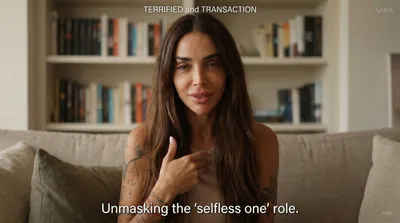
Stop calling your lack of boundaries 'being nice.'
Stop masking your fear of rejection as kindness and start reclaiming your energy through radical, honest boundaries.
Reference source (featured reference): 🎉 MARCH 24TH my book “Reparenting the Inner Child” comes out and I can promise you all this one is jam packed with info and a complete guide to healing. Lea…
Production cues
- The examples are intentionally executable: roughly 4 beats and a clear hook up front.
- The production setups repeat around Dimly lit home studio and Window view of city street and Home interior / Professional-looking minimalist workspace.
- Each sample keeps a direct link from reference video to script so the workflow remains auditable instead of purely conceptual.
Adaptation notes
- Use the sample hook as a structure reference, then replace the subject matter with your own offer or audience pain.
- Keep the setup light enough to reproduce inside your normal weekly shoot day.
- Treat the linked analysis as the creative reference and the script as the execution layer you customize.
Disclosure by Bell Chen, founder of Superdirector: the brand-profile and competitive-analysis features mentioned here are part of the product I build. It is a planning and intelligence tool that sits upstream of production; it does not generate, edit, schedule, or publish video. Benchmarks and examples are sourced from the named reports and operators cited inline.
Frequently asked questions
How do you make a product video feel organic instead of like an ad?
Should I read organic results before promoting a product video into paid?
What product categories work best with short-form video?
How many product videos do I need to learn anything from a test?
What CTA should an ecommerce product video use?
Do I need a separate video for every SKU?
Get a campaign brief built for your brand in 30 seconds
Plan your next product-video batch, set up a brand profile in a planning-first tool