What Is Social Listening for Content Creators?
Social listening is the practice of monitoring conversations across social platforms, comments, competitor posts, niche hashtags, and the language people use to describe a problem, to understand audience sentiment, spot emerging topics, and find content opportunities before they peak. It is distinct from social monitoring, which tracks direct mentions of your own brand reactively.
Turn this page into a campaign built for your brand.
Connect Superdirector to ChatGPT and it adds current social-video references, public-video analysis, Brand DNA, and a ready-to-send campaign brief.
By Bell Chen, founder.
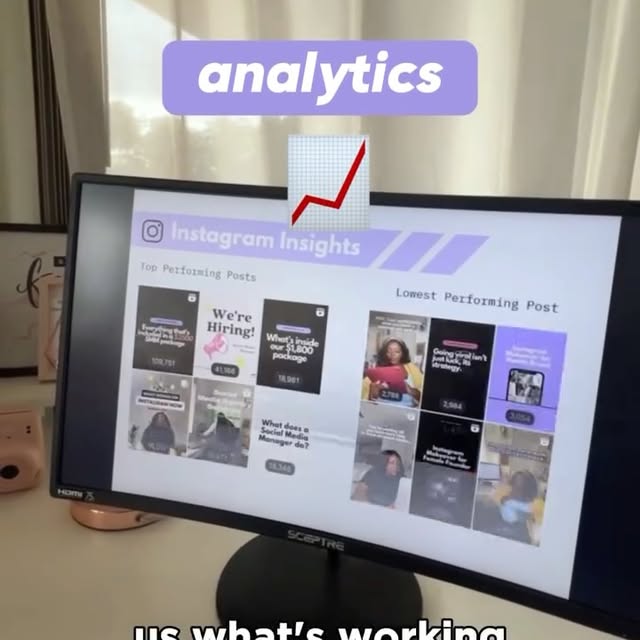
One of the most underrated principles in modern social strategy is that a lot of the best brand social is simply what the community wants the account to do, as Duolingo's run through its rise demonstrated and The Drum documented on February 25, 2025 (thedrum.com). That is social listening operationalized into a content engine. Duolingo did not guess at topics and hope; it read what its audience was already reacting to and made that. The discipline behind it is unglamorous, reading comments, watching how niche conversations shift, tracking the exact words people use for a problem, but it is the difference between content built on observed demand and content built on a hunch.
What social listening actually is
Social listening is proactive market intelligence drawn from public conversation. It is not the same as monitoring your own mentions, which is reactive customer service. Listening watches the whole niche: comments on strong reference videos, the questions and objections that repeat in competitor comment sections, the way niche hashtags gain or lose traction, and the precise language viewers use to describe a problem before any brand has named it well.
The output is not a metric, it is a backlog of validated topics. A listening practice produces a running log of what the audience cares about, ranked by how often the signal repeats, which becomes the input to the next content batch. The named platforms in this space, Brandwatch positioning around large-scale conversational analysis (brandwatch.com) and Sprout Social bundling listening into a wider suite (sproutsocial.com), automate the scanning, but the judgment about which signals are worth a post stays human.
Why listening moves the ranker
The mechanical payoff is in the first signal every short-form ranker reads. The TikTok Newsroom explainer (newsroom.tiktok.com) names user interactions as the most heavily weighted bucket. A post built on a topic the audience is already reacting to inherits early watch-through, comments, and saves that a guessed topic has to earn cold. Listening front-loads the interaction signal by ensuring the topic already has demand.
Duolingo's run is the proof at scale. By treating community signal as the brief, as documented in The Drum's profile of the account (thedrum.com), the team built content the audience had effectively pre-validated, which is why the account's biggest moments landed. The clearest example is the mascot death, the account's single biggest payoff, which depended on the team knowing, from listening, exactly how attached the audience had become to the character.
The honest counterweight is that listening shapes topic selection, not production. A perfectly listened topic still needs a hook that survives the first three seconds. Listening tells you what to make; it does not make it. Teams that treat a validated topic as a guarantee of reach miss that the watch-time curve still has to hold.
How to run a listening practice
Set a recurring block tied to your batching cadence and a fixed scan list: ten to fifteen competitor or niche-leader accounts, the comment sections on their strongest recent posts, and two or three niche search terms. The recurrence is the point, because a post built on rising demand inherits the early interactions the TikTok ranker weights first (newsroom.tiktok.com), and that only works if you catch the demand before it crests.
Log every signal in a shared sheet with columns for topic, frequency, sentiment, and a candidate angle. Frequency is the filter that separates a one-off comment from a real pattern; a question that appears once is noise, a question that appears in twenty comment sections is a content brief. Sentiment tells you whether to teach, defend, or celebrate.
When polished content keeps underperforming, run the listening log against your recent topics. If your posts are not on the subjects the log shows the audience reacting to, the problem is topic selection, not production, and another high-effort batch on the wrong subjects will not fix it. This diagnosis is the single most useful thing listening does for a team that thinks its problem is editing.
Common mistakes
The first mistake is confusing monitoring with listening. Tracking your own mentions answers what people say about you; it does not surface what the niche cares about. The named listening tools market themselves on broad conversational coverage (brandwatch.com) precisely because that is the part monitoring misses.
The second mistake is listening too late. A trend caught after it crests produces content that competes against everyone who waited, and the late post inherits crowded rather than rising demand, so the early-interaction advantage the TikTok ranker rewards (newsroom.tiktok.com) is gone.
The third mistake is treating a validated topic as a finished post. Listening de-risks the subject, not the execution. Duolingo paired community signal with relentless craft per The Drum (thedrum.com); the listening told them what to make and the team still had to make it well.
Where a planning-first tool fits
Superdirector supports the listening-to-planning handoff by turning reference videos into structured intelligence, the topics, hooks, formats, pacing, and audience cues that recur across the strongest content in a niche, so a team can extract the repeatable parts rather than relying only on manual scrolling. The judgment about which signals deserve a post, and the manual comment-reading that surfaces the rawest demand, stays with the operator.
Disclosure by Bell Chen, founder of Superdirector: the reference-analysis features mentioned here are part of the product I build. The mechanics and examples in this piece are sourced from the linked platform documentation, named-tool reporting, and operator interviews; treat the tooling note as one input among several.
Frequently asked questions
How is social listening different from social monitoring?
How can social listening improve my short-form video content?
What is the best social listening workflow for a small team?
What social listening tools do teams actually use?
How often should I do social listening?
Get a campaign brief built for your brand in 30 seconds
Analyze reference videos to discover what your audience wants