Competitor Content Analysis Workflow for Social Media Managers
A structured competitor analysis workflow that converts observed patterns into testable creative decisions for your own channels.
Turn this page into a campaign built for your brand.
Connect Superdirector to ChatGPT and it adds current social-video references, public-video analysis, Brand DNA, and a ready-to-send campaign brief.
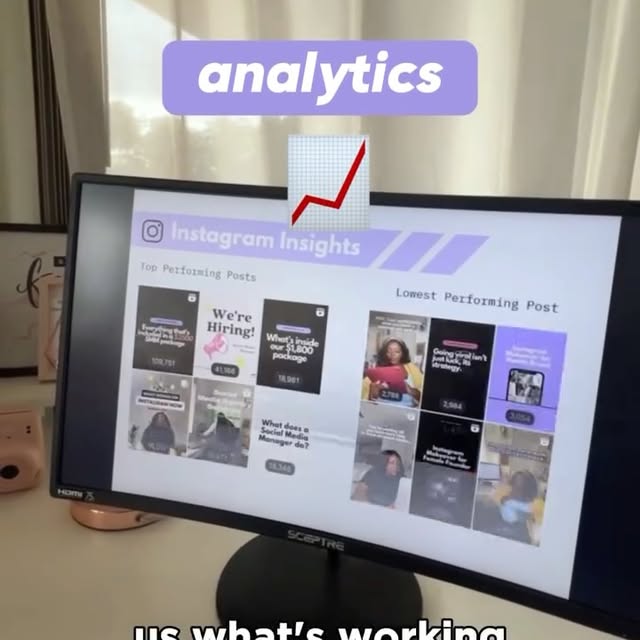
By Bell Chen, founder of Superdirector — how the analysis works.
The weekly scan most teams actually run is a screenshot pass: open a competitor profile, save the posts that caught your eye, close the app. A week later the folder has forty screenshots and nothing you can act on. A competitor analysis becomes an operating asset only when every scan ends in a recorded decision, a format you will test, a hook structure you will adapt, or a gap in the category you will fill before anyone else does. The workflow below exists to force that ending: a defined set of accounts each with a reason to be on the list, a scan that logs patterns instead of posts, an adaptation step that produces original scripts, and a monthly report that turns the accumulated notes into leadership material.
What is working right now
Benchmark on the three signals Instagram grades content on. Adam Mosseri, head of Instagram, named watch time, likes per reach, and sends per reach as the top ranking inputs in a January 21, 2025 reel. That rubric changes what a competitive scan should record: a competitor post with a large raw view count can still be weak on sends per reach, and a quiet post on a smaller account can be the one actually outperforming the category on the signals the ranking system reads.
Watch for formats, not individual posts. A single viral post tells you almost nothing; the same format surfacing across three accounts in one month is a pattern with an audience behind it. And log the date a format first appeared in your category, because that timestamp is what later tells you whether you moved early on a rising format or arrived late to a saturated one.
The weekly loop, stage by stage
Stage one is the competitor set: five to ten accounts, each listed for a named reason (format signals, shared audience, or the production bar you are building toward), so the weekly scan answers a defined question per account. Stage two is the scan, run the same day each week so the notes accumulate into a comparable record. Stage three is pattern identification: hook styles, lengths, formats, and topics that recur across multiple competitors, weighted toward repetition over one spectacular post. Stage four is adaptation: original scripts that apply the format and psychology trigger to your brand voice, where the test is that a viewer who saw the original would still watch yours. Stage five, monthly, is the competitive intelligence report, structured as what the category did, what worked and why, and what you will test next month.
A worked example (Vespera Skin, fictional)
Take Vespera Skin, a hypothetical direct-to-consumer skincare label with a single founder, one part-time editor, $4M ARR in 2026, and 22,000 Instagram followers. The Monday scan covers Topicals, Glossier, Ami Colé, and two aspirational accounts. The week’s pattern note records three findings: the category’s strongest format over the last 60 days is founder-on-camera ingredient explainer Reels with named-number hooks; no competitor is shipping behind-the-scenes content from the formulation process; and the category’s cadence leader posts three times a week on a fixed rhythm.
The adaptation decision that follows: test one behind-the-scenes formulation Reel the following week, because the format is validated in the category but unclaimed by anyone in the direct set. Two weeks later the scan logs whether anyone else moved first, which is the early-versus-late readout the first-seen-date habit exists to give you. The monthly report then leads with the pattern and the test result rather than with screenshots.
Where this typically breaks
The screenshot-folder failure. The scan produces forty screenshots and zero decisions. Record each pattern in one place with a date attached: format, hook style, typical length, and what the audience was responding to. A screenshot is evidence; a pattern note with a date is a decision input.
The single-spectacular-post bias. One viral post on the category leader is anecdote, not pattern. The same format on three average accounts within a month is a pattern there is an audience behind. Weight cross-account repetition over one spectacular post.
The payload copy.Adapting a competitor’s topic and phrasing reads as derivative within a few weeks, and it teaches your audience to prefer the original. Adapt the format and the psychology trigger; replace the claim, the hook, and the payload with yours.
The unlogged first-seen date. Without a first-seen timestamp, every format looks equally fresh. Six weeks later you cannot tell whether you moved early on a rising format or joined a saturated one, and the misjudgment repeats every quarter.
What to track
Sends per reach on adapted formats
Benchmark your adapted versions against the category average on the rubric above; a quiet format with a rising sends-per-reach is worth testing before it peaks.
Format first-seen date
Log the week each recurring format first appeared in your scan; the age of a format is what tells you whether you are adapting early or late.
Retention on adapted scripts versus the source format
If your adaptation loses viewers earlier than the format typically holds them, the adaptation changed the hook, not just the payload.
By the fourth weekly scan the notes are a searchable record of category behavior, and the monthly report assembles from the notes rather than from a new research session.
Where a planning-first tool fits
A planning-first tool compresses the scan and the adaptation drafts: it sweeps the competitor set’s recent content, surfaces the recurring formats, and drafts brand-adapted scripts against them, which is the two paid hours of this loop every week. The scan day still belongs to you; the tool compresses the collection, not the decision.
Featured Script Starters
These scripts show how this workflow translates from QA or planning into concrete, publishable deliverables.
Matched examples stay compact at about 4 beats, stay practical to film in Dimly lit home studio and Window view of city street and Home interior / Professional-looking minimalist workspace, and remain traceable to real references such as pablostanley.
Script examples
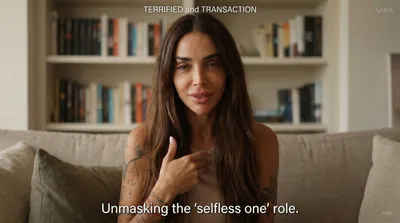
Stop calling your lack of boundaries 'being nice.'
Stop masking your fear of rejection as kindness and start reclaiming your energy through radical, honest boundaries.
Reference source (featured reference): 🎉 MARCH 24TH my book “Reparenting the Inner Child” comes out and I can promise you all this one is jam packed with info and a complete guide to healing. Lea…
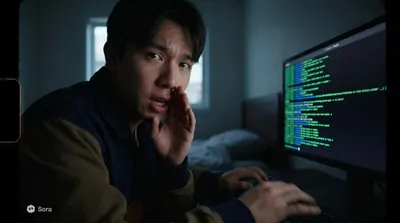
I wanted to see if I could rewrite reality using just my code.
A solo developer bridges the gap between code and physical reality using a real-time AI overlay.
Reference source (featured reference): you can use @efectodotapp not just to design apps or websites but any visual assets, and since you can connect it to your codebase, it knows your brand/style b… by @pablostanley
Production cues
- Most examples remain concise: roughly 4 beats from hook to payoff.
- Production stays realistic with repeatable setups like Dimly lit home studio and Window view of city street and Home interior / Professional-looking minimalist workspace.
- Each card links to a reference analysis so reviewers can validate style and structure before approving scripts.
Adaptation notes
- Keep the beat order, then rewrite the promise to match your client goal and compliance requirements.
- Design the first two shots for dimly lit home studio and window view of city street to keep production easy to batch.
- Use the reference analysis link to validate pacing first, then adapt wording to the client brand voice.
Start Your Competitor Analysis
Paste your Instagram or TikTok profile URL to get a niche reference feed, then generate brand-fit scripts and shot plans from the same workflow.