Agency Influencer Coordination Workflow: The Brief, the Handoff, and the Two-Round Revision Cap
A 6-stage influencer coordination workflow built on creator-fit notes, per-creator brief angles, and a two-round revision cap that protects agency margin.
Turn this page into a campaign built for your brand.
Connect Superdirector to ChatGPT and it adds current social-video references, public-video analysis, Brand DNA, and a ready-to-send campaign brief.
By Bell Chen, founder of Superdirector — how the analysis works.
Lia Haberman, who writes ICYMI to in-house and agency social media managers, keeps her newsletter to a tight, recurring digest of platform and marketing updates. The same discipline applies one level up to the agency-creator handoff. The agencies that retain past the first 3 campaigns are the ones whose briefs are pithy enough that a creator can produce against them in 48 hours, weekly enough that the creator-fit analysis is current, and updated enough that the brand-twist note reflects the platform reality of the same week the creator is filming.
In my experience commissioning UGC for my own products during the Q1 2026 launch window, and in the four creator deals I evaluated in the same window for friends-of-the-house brands, the agency-creator coordination workflow that survives a real client roster has five load-bearing parts.
It runs on creator-fit notes built from analyzed content style rather than follower count, on reference-based briefs that translate the client brand into specific operator decisions a creator can produce against, on a brief that is approved by the client before it goes to any creator, on a two-round revision cap that protects both the agency margin and the creator relationship, and on a manual campaign debrief that converts performance data into the next campaign brief.
Why most agency-creator campaigns require three to four revision rounds
The standard agency-creator revision cycle in 2026 runs three to four rounds on the first draft before the deliverable is approved. The cost of each revision round is structural. Each round costs the agency 4 to 8 hours of coordination time, the creator a half-day of editing time they did not price into the deal, and the client 2 to 5 business days of campaign timeline. A campaign with 8 creators running four revision rounds each is 32 revision rounds, which is the full-time equivalent of one agency staff member for two weeks.
The structural cause is the brief, not the creator. The same constraint shows up in reporting discipline: the reader does not need to know every line of your spreadsheet, only the broad strokes. Most agency briefs invert this: they include every line of the brand guidelines (which the creator skims) and almost no operator-specific direction (which the creator needs).
Sprout Social research found that a third of consumers think it is embarrassing when brands jump on viral trends. The agency-creator translation is that the brief has to commit to a specific brand twist that distinguishes the campaign from the trend-chasing baseline. Generic agency briefs default to the trending format with no brand-twist, which produces content that scores below the brand median engagement and reads to the audience as inauthentic.
Brand-creator campaigns running per-creator brief angles (versus a shared brief across all creators) tend to outperform on engagement rate by reach. The per-creator angle is roughly 15 to 30 minutes of additional work per creator at the brief stage, and it repays that front-loaded work against the avoided revision cycles, plus the engagement lift.
The named-operator playbook
Lia Haberman, ICYMI
ICYMI: more than 45,000 subscribers; UCLA Extension lecturer
Haberman publishes ICYMI Sunday night to more than 45,000 in-house and agency SMMs and has taught influencer marketing and social media strategy at UCLA Extension since 2018. Her selection discipline is closer to a clustering exercise than a demographic filter.
Her working frame is to evaluate creators against their last 5 posts and the three engagement-per-reach numbers (saves, sends, comments) rather than against follower count, and to look for the creators whose audience already does the behavior the campaign wants. The agency-coordination application is that creator-fit notes are built from content style and audience-behavior signals, not from the follower-count line of a Modash export.
Rachel Karten, formerly social media lead at Bon Appétit, now Link in Bio
100,000 subscribers, in-house and agency social media managers
A weekly what-formats-are-working scan is the working primary source for what is performing in any given category in a given week. The agency-coordination translation is that the per-creator brief angle has to reference what is performing this week in the creator’s specific category. A brief built around a format that was working three months ago is structurally a stale brief. A recurring post-formats-to-try-this-week scan is the kind of signal operators open first when running content-calendar consulting calls.
The one-brief-five-creators default, and its failure mode
Per-creator brief discipline
The common agency failure mode on multi-creator campaigns is running one brief across five creators, treating the roster as a distribution list. Per-creator briefs produce structurally different deliverables, which is what the client wanted when they signed off on five creators in the first place. The agency-coordination application is to build the per-creator angle into the brief at stage two, before the brief leaves the agency.
Kendall Hope Tucker, Ramp head of creative experimentation
Glass-box livestream, the brand-twist rule
Ramp's glass-box livestream campaign became a widely cited example of a recurring, brand-twisted conceit. The transferable rule is to borrow the recognizable frame but always carry a brand-specific twist. The agency-coordination translation is that every per-creator brief has to carry the brand-twist note. If the twist is generic across all five creators in the campaign, the campaign produces five generic Reels rather than five differentiated ones.
Adam Mosseri, head of Instagram
The three top ranking signals: watch time, likes per reach, sends per reach
In a January 21, 2025 Reel, Mosseri named Instagram’s three top ranking signals as watch time, likes per reach, and sends per reach. The Mosseri framing tells the agency which success metric to put in the brief. A creator-deal brief that names “we want this to go viral” is unworkable. A brief that names “we want 3.0 percent sends per reach in the 72-hour window after publish” is a brief the creator and the agency can evaluate against.
The six-stage influencer coordination workflow
The workflow has six stages. The first three are pre-brief work. The fourth is the brief handoff. The fifth is the review and revision. The sixth is the debrief. Total agency-side time investment: roughly 5 to 7 hours per creator across a 3-to-4-week campaign cycle, with the heaviest investment in stages one through three.
Stage one: campaign signal research and creator-fit notes (1 hour per creator). Pull the creator’s last 15 posts. Run the three-pass review on the three strongest-performing posts and the three weakest-performing. Note the format, the hook timing, the cut cadence, the captions style, the CTA mechanism, and the audience comment patterns. The creator-fit note is one page per creator and contains four sections: content style summary, audience-behavior signal, brand-fit hypothesis, and rate hypothesis based on engagement-per-reach rather than follower count.
Stage two: brief development with client alignment (45 minutes per creator). Build the per-creator brief using the creator-fit note as the input. The brief follows the five-section frame: objective with named success metric, audience with example persona, creative direction with reference videos and three-pass annotations, deliverable specs with format and budget, and guardrails with a what-this-is-NOT section. The brief has one per-creator angle drawn from the creator-fit note and the brand-twist rule. The client approves the brief and the references in writing before any creator sees it.
Stage three: creator brief handoff pack (30 minutes per creator). Prepare the handoff pack: the campaign goal, the reference links with the three-pass annotations, the required proof points, the do-not-say constraints, the shot list, the usage notes, and the revision checklist. The do-not-say section is the highest-ROI addition to the handoff pack. Three to five do-not-say items, each with a one-sentence reason. Creators find the do-not-say items roughly as useful as the positive briefing, because the do-not-say items protect the creator from filming a take that the brand manager will reject.
Stage four: content review and revision management (20 minutes per deliverable, capped at two rounds). When the creator submits the first draft, review the deliverable against the brief checklist within 24 hours.
Six checks: does the hook match the specified timing, does the brand-twist note land in a recognizable beat, are all required proof points present, are all do-not-say items absent, does the captions style match the spec, does the CTA mechanism match the spec. Each check is a yes or no. The two-round cap is structural. Round one is the agency revision request to the creator. Round two is the client revision request after the agency approval.
Stage five: founder or creator handoff QA (30 minutes per creator). Before the creator publishes, review the final deliverable against the campaign goal one more time. Six checks: hook, proof, shot list, claims, disclosures, brand voice. Export the brief and the final deliverable to the founder or social lead at the client organization. Confirm the FTC disclosure language is in the first three lines of the caption. Confirm the link-in-bio or coupon-code attribution is set up. Confirm the platform-specific publishing window is on the calendar.
Stage six: manual campaign debrief (1 hour per campaign). After the campaign window closes, run a manual debrief converting performance data into the next campaign brief. Per creator, capture: views, engagement-per-reach, comments, saves, sends, click-throughs if tracked, and qualitative creator-fit notes. Compare results against the original brief. Capture what to repeat and what to drop. The debrief is the artifact that compounds across campaigns.
A worked example campaign (a fictional brand, clearly disclosed)
The brand is Vespera Skin, a hypothetical direct-to-consumer skincare label. The campaign is a UGC partnership with three creators producing one Reel each, total campaign budget $4,800 (three creators at $1,600 each), launch window early July 2026, primary success metric 3.0 percent sends per reach in the 72-hour window after publish.
Stage one: creator-fit notes. Three creators selected from the agency’s existing roster, all in the 30k to 95k follower band, all in the skincare or skincare-adjacent category. Maya, 48k followers, 3.8 percent ER, ingredient-explainer style. Audience signal: saves per reach. Brand-fit hypothesis: founder-collab Reel where Maya interviews the Vespera founder on the niacinamide formulation.
Janelle, 71k followers, 2.6 percent ER, founder-routine style. Audience signal: sends per reach. Priya, 89k followers, 1.9 percent ER, contrarian commentary style. Audience signal: comments. The fit notes drove three different per-creator brief angles, which is the structural protection against the “five creators produce five generic Reels” failure mode.
Stage two: brief development. Three per-creator briefs, each running the five-section frame, each anchored to the creator-fit angle from stage one. The references for Maya’s brief are Topicals ingredient-explainer Reels; for Janelle, Ami Colé founder-routine Reels; for Priya, Glossier contrarian-commentary Reels. The client approves each brief and the reference set in writing on Monday June 22, 2026.
Stage four: review and revision. Maya delivers on Tuesday June 30, on the original timeline. Six-check passes on all six. The agency approves and routes to the client with a recommend-approve note. The client approves on Wednesday July 1 with one line edit. One round, one line edit, no revision spiral. Janelle delivers on Wednesday July 1.
Six-check fails on one: the brand-twist note (named-number opener) lands at 2.4 seconds rather than the spec 0.5 to 1.5 second window. The agency requests a single revision with a specific line item. Janelle delivers the revision on Thursday July 2. The agency approves and routes to the client. Client approves Friday with no additional edits. Two rounds inside the agency, one inside the client.
Stage six: debrief. Maya: 84,200 views, 3.4 percent sends per reach. Janelle: 117,500 views, 2.9 percent sends per reach. Priya: 62,800 views, 1.7 percent sends per reach with 142 comments. The campaign missed the 3.0 percent sends-per-reach target on average (2.77 percent weighted by views), carried by Maya’s ingredient-explainer angle, which cleared the target individually.
Priya’s contrarian-commentary angle underperformed on sends but over-performed on comments, which is a different intent metric and worth flagging for the next contrarian-style campaign brief. The two-round cap held, and the debrief writes the miss into the next brief rather than into a third revision round.
Where this typically breaks
The one-brief-five-creators failure. The agency drafts a single brief and sends it to all five creators in the campaign. The five creators deliver five Reels that each match the brief but are structurally too similar, which produces a campaign that the client reads as “this is one creative direction repeated five times, not five different angles.” The fix is the per-creator brief angle from stage two, anchored to the creator-fit note from stage one. The 15 to 30 minutes per creator of additional brief-stage work repays itself against the avoided revision rounds.
The unapproved-brief failure. The agency drafts the brief and sends it to the creator before the client has approved it in writing. The creator delivers exactly what was briefed, and the client hates it because they did not see the brief before the production cycle started. The fix is stage two mandatory client approval. The broad-strokes framing applies in reverse: the broad strokes are the client’s responsibility to approve before the creator is in motion.
The no-revision-cap failure. The agency accepts revision round three on the same deliverable. The creator margin on the deal goes negative around round three. The creator quietly writes the agency off their referral list. The fix is the two-round cap from stage four. If the deliverable needs a third round, the underlying brief or fit problem has to be addressed at the brief level, not by adding another revision cycle. The same discipline shows up in durable brand series: every campaign commits to one twist and ships against it.
Where a planning-first tool fits
Most planning-and-creator-coordination tools, including Superdirector, are built around the recurring weekly cadence of an established client engagement, with creator-fit analysis and brief production as supporting workflows. The stage-one creator-fit notes and the stage-two brief development are the two places a tool earns its slot, because the manual versions cost roughly 1 hour of analysis per creator and 45 minutes of brief drafting per creator.
Tools that compress the per-creator analysis to 15 to 20 minutes and the per-creator brief drafting to 25 minutes recover their cost several times over across a 5-creator campaign. The stage-three handoff pack, the stage-four review, the stage-five QA, and the stage-six debrief are all judgment work that lives in a document and a series of conversations. The tool can speed the analysis. The brand-twist decision and the per-creator angle are the agency editorial work and no tool replaces them.
Featured Script Starters
These scripts show how this workflow translates from QA or planning into concrete, publishable deliverables.
Matched examples stay compact at about 4 beats, stay practical to film in Dimly lit home studio and Window view of city street and Home interior / Professional-looking minimalist workspace, and remain traceable to real references such as pablostanley.
Script examples
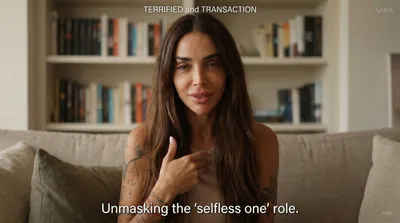
Stop calling your lack of boundaries 'being nice.'
Stop masking your fear of rejection as kindness and start reclaiming your energy through radical, honest boundaries.
Reference source (featured reference): 🎉 MARCH 24TH my book “Reparenting the Inner Child” comes out and I can promise you all this one is jam packed with info and a complete guide to healing. Lea…
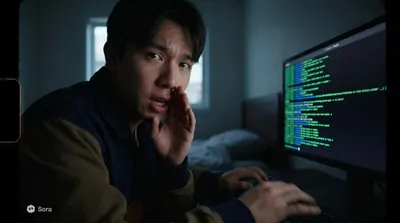
I wanted to see if I could rewrite reality using just my code.
A solo developer bridges the gap between code and physical reality using a real-time AI overlay.
Reference source (featured reference): you can use @efectodotapp not just to design apps or websites but any visual assets, and since you can connect it to your codebase, it knows your brand/style b… by @pablostanley
Production cues
- Most examples remain concise: roughly 4 beats from hook to payoff.
- Production stays realistic with repeatable setups like Dimly lit home studio and Window view of city street and Home interior / Professional-looking minimalist workspace.
- Each card links to a reference analysis so reviewers can validate style and structure before approving scripts.
Adaptation notes
- Keep the beat order, then rewrite the promise to match your client goal and compliance requirements.
- Design the first two shots for dimly lit home studio and window view of city street to keep production easy to batch.
- Use the reference analysis link to validate pacing first, then adapt wording to the client brand voice.
Streamline Your Influencer Campaigns
Paste your Instagram or TikTok profile URL to get a niche reference feed, then generate brand-fit scripts and shot plans from the same workflow.