What Is B-Roll in Short-Form Video?
B-roll in short-form video is the supplemental footage layered over the primary on-camera A-roll to support what the speaker is saying, illustrate the claim being made, or accelerate the pacing past a beat that would otherwise lose the viewer. The term traces to the film-cutting era when the negative was literally split across two reels (A-roll and B-roll) for assembly; the editorial logic carries forward to the digital short-form era.
Turn this page into a campaign built for your brand.
Connect Superdirector to ChatGPT and it adds current social-video references, public-video analysis, Brand DNA, and a ready-to-send campaign brief.
By Bell Chen, founder.
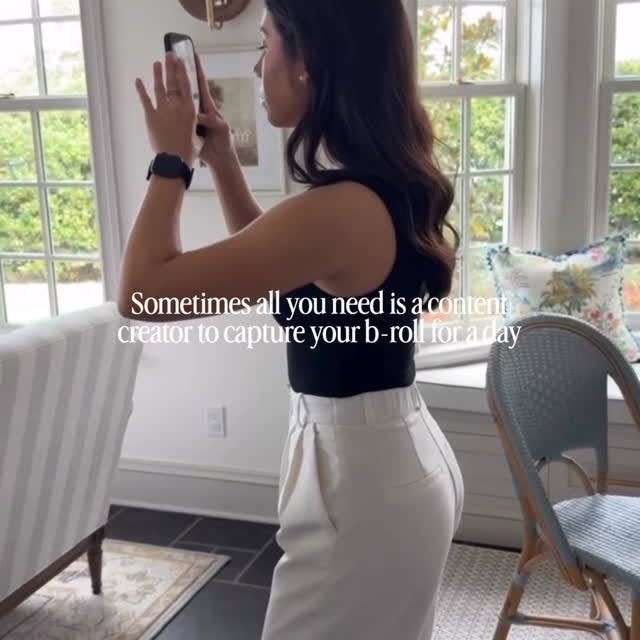
MrBeast has been the most-watched creator on YouTube since 2022, and his operation is unusually direct about retention as a production discipline, framing viewer attention as the load-bearing constraint: every shot in the cut is there to keep the audience watching the next one, or it should not have been cut in. The framing matters because B-roll is the most over-shot and under-used asset in short-form video. Creators collect hours of cutaway footage and then cut to it on rhythm rather than on meaning, which produces clips that feel polished and retain badly. B-roll in short-form video is the supplemental footage layered over the primary on-camera A-roll to support what the speaker is saying, illustrate the claim being made, or accelerate the pacing past a beat that would otherwise lose the viewer.
What B-roll actually means
The American Cinematographer Manual, the canonical reference published by the American Society of Cinematographers, traces the A-roll versus B-roll split to the film-cutting era when the negative was literally separated across two reels for assembly. The strict definition that survives into the digital short-form era — any footage that is not the primary A-roll camera, cut into the timeline to support, illustrate, or pace the narration — works because the editorial logic never changed: A-roll carries the voice and the structure, B-roll carries the texture and the proof.
Where the term gets misused is when teams conflate B-roll with cutaway, insert, transition, or filler. They are not the same. A cutaway is a B-roll shot that lets you cut around a continuity problem in the A-roll. An insert is a tight B-roll shot that shows a specific object (a price tag, a screen, a hand). A transition is a B-roll shot whose primary job is to bridge between A-roll segments. Filler is what B-roll becomes when it is cut in on rhythm instead of on meaning. The four uses are different jobs and they reward different shot lists.
The numbers that matter
Three platform signals tell you whether the B-roll is doing structural work. The first is the three-second retention signal. Per Buffer's 2026 TikTok algorithm guide (buffer.com), watch time is perhaps the most important of the engagement signals the system weighs, and a rewatch or share may signal stronger interest than a like or follow. B-roll in the first three seconds of a short-form clip is doing the hook's work, not the supplement's work. The most common B-roll mistake in 2026 is opening on a generic establishing shot (a coffee being poured, a laptop screen, a person walking) when the audience needs a specific named noun in frame in the first second. Jenny Hoyos, who has shipped more than a dozen YouTube Shorts past 100 million views per video, gave the operational test in Marketing Examined's short-form playbook (marketingexamined.com). Hoyos said her hook "needs to be so good that you can be watching the video on mute and still know what it's about". The mute test is the cleanest B-roll diagnostic in circulation, because a B-roll opener that survives muting is one carrying the promise of the clip without leaning on the voiceover.
The second is the midpoint retention dip. Adam Mosseri, who runs Instagram, posted a video on January 21, 2025 (instagram.com) naming the three signals the Reels ranker keys off, in priority order: watch time, likes per reach, and sends per reach. Watch time is downstream of the midpoint of the clip, which is where a script's pacing is most likely to fail. B-roll is the standard fix for a flat midpoint, because cutting from the A-roll talking head to a tight insert shot resets the visual attention budget. The fix only works when the insert is specific. Cutting to a generic cityscape at second eleven does not reset attention. Cutting to a tight shot of the $1,200 invoice the speaker just named does.
The third is the completion-rate signal on the final beat. Completion rate tends to sit higher on smaller accounts than on large ones, and the completion drop concentrates at the ending, where the script's payoff has to land. B-roll on the payoff beat is where most short-form clips lose the ending. The default mistake is to hold the A-roll talking-head shot for the punchline. The fix is to cut to the visual proof of the punchline (the screen reading the result, the face reacting, the artifact existing) in the final second.
Practical floors in 2026 for B-roll in short-form: in a 30-second clip, three to six B-roll cuts is the working range. Below two, the clip reads as flat unless the speaker is unusually compelling. Above eight, the clip reads as overproduced and the audience loses the thread of the A-roll. Each cut should answer a specific question the A-roll just raised.
How real creators apply it
Casey Neistat, the most influential vlog creator of the 2010s (at peak, 12 million YouTube subscribers, vlog grammar imitated across the platform), built the B-roll discipline that produced the Beme-era daily vlogs around a simple idea: treat every shot as a potential cover frame, because the editor does not know which shot is needed until the cut. The discipline is over-shoot in production, under-cut in edit. The Beme-era vlogs leaned on a high ratio of footage shot to footage used, and that surplus is what gives the editor enough material to cut on meaning rather than on rhythm.
Marques Brownlee (MKBHD), the most-followed tech reviewer on YouTube with more than 20 million subscribers, runs a widely studied B-roll pattern. Brownlee's product-review cutaways are tight insert shots of specific surfaces (the back of a phone, a connector, a hand pressing a button) rather than wide establishing shots. The editorial reason is that the insert shot is the proof the speaker is showing the artifact rather than describing it. Every claim the A-roll makes about the product is paired with an insert shot of the part being claimed about. That is the single most copied B-roll pattern in the tech-review category for a reason: it converts the A-roll claim into a watchable artifact.
MrBeast has been the most-watched creator on YouTube since 2022. Per his Lex Fridman conversation Episode 351 in January 2023 (lexfridman.com), the MrBeast operation anchors its production decisions to retention data. For short-form supplemental footage, a working rubric divides shots into three production tiers: action footage (capturing the event happening), reaction footage (capturing the contestants and crew responding), and stake footage (capturing the prize, the consequence, or the artifact at the center of the challenge). The three-tier rubric is what lets the editor assemble retention curves with fewer talking-head holds and more visual proof.
How to diagnose it on your own content
Pull the retention curve on the last ten posts in the same format. Mark the B-roll cut points on each curve. If the curve dips immediately before a B-roll cut, the cut is arriving too late and the A-roll has already lost the viewer. If the curve flattens during a B-roll sequence, the B-roll is generic or unrelated to the A-roll claim. If the curve climbs during a B-roll insert, the cut is working and that pattern should be replicated.
Then run the mute test on the same ten posts. Watch each with the sound off and write down what each is about from the first frame alone. Then check whether the B-roll, by itself, communicates the A-roll's claim. If the muted footage tells the story, the B-roll is doing structural work. If the muted footage looks like a perfume ad, the B-roll is decorative and the next shoot should swap rhythm cuts for specific-noun cuts.
Finally, audit the shot-tier balance. Count how many cuts in each clip are action, reaction, or stake using the MrBeast handbook rubric. If more than half the cuts are reaction and the action and stake tiers are under-shot, the clip will feel emotional but unanchored. If more than half are stake without action or reaction, the clip will feel transactional but unbinding. The 40-30-30 split (action, reaction, stake) is the working balance for short-form challenge and demo content. For tutorial and explainer content, 60-10-30 (action, reaction, stake) is closer to the right ratio because the tutorial format leans heaviest on showing the work.
Common mistakes
The first mistake is cutting B-roll on rhythm. The visible signature of rhythm-cut B-roll is that the cuts arrive on the editor's musical instinct rather than on the A-roll's semantic structure. The clip feels polished and tests poorly. The fix is to mark every B-roll cut against a specific A-roll claim before assembling. The signature on accounts that have shipped rhythm-cut B-roll for an eight-week stretch: three-second retention holds near 58 percent while second-eight-to-second-fifteen retention drops by around 22 percentage points against the same account's earlier rhythm-free clips. The audience reads the polished clips as ornamental and disengages at the midpoint.
The second mistake is using generic B-roll. Stock-style coffee-pouring shots, hands-on-keyboard shots, sunset-over-cityscape shots, and generic walking-down-the-street shots have commoditized in 2026. They do not earn the viewer's attention because the viewer has seen them ten thousand times and the brain has learned to filter them. The fix is to shoot the specific named noun the A-roll references. Alex Hormozi, who runs Acquisition.com and has been a top-five most-followed marketing creator on every short-form platform since 2023, demonstrated the principle in prose with his escalation tweet on March 21, 2024 (x.com) that opened, "I lost $10k on my way to my first $100k," escalating by a factor of ten across three lines and landing on "It's not a loss, it's the price of tuition." The specificity of the number is what carries the line; the B-roll equivalent is the specificity of the artifact. If the speaker says "the $1,200 invoice," cut to that invoice. If the speaker says "the founder reading the rejection email," cut to that email.
The third mistake is overproducing the B-roll relative to the A-roll. The clip's A-roll is what carries the script, the voice, and the personality. If the B-roll is more expensive-looking than the A-roll, the audience reads the clip as an ad, which compresses the trust budget the A-roll was supposed to build. The fix is to match the production value of the B-roll to the A-roll within roughly one tier. A handheld A-roll asks for handheld B-roll. A locked-off A-roll asks for locked-off B-roll. The mismatch is what produces the tonal break that costs the rewatch ratio.
Where a planning-first tool fits
For competitive-set diagnosis, the brand-profile analysis I built inside Superdirector pulls the shot-density and cut-tier stack across an account's last 30 clips and an adjacent creator's last 30. Useful as one input among several, not as a substitute for the editor's judgment about whether each cut is action, reaction, or stake. The mute test, the retention-curve cross-check, and the shot-tier audit stay the load-bearing diagnostics.
Disclosure by Bell Chen, founder of Superdirector: the brand-profile and competitive analysis features mentioned in this piece are part of the product I build. Methodology and benchmarks here are sourced from the linked platform documentation, industry reports, and named-creator interviews; treat the tooling note as one input among several.
Frequently asked questions
What is the difference between A-roll and B-roll?
How much B-roll do I need for a 30-second short?
Is B-roll the same as cutaway?
Where do I get B-roll if I cannot shoot it?
Should every cut be a B-roll cut?
How does B-roll affect the algorithm?
Get a campaign brief built for your brand in 30 seconds
See which B-roll patterns fit the content goal your script is actually writing for